Bus Travel in Vietnam: Sleeper Buses, Open Tour Tickets, and Booking Tips
Vietnam's long-distance bus network is extensive, cheap, and — on the main tourist routes — surprisingly comfortable. For budget travelers and anyone skipping domestic flights, buses are often the most practical way to cover ground, especially overnight.
Sleeper Buses vs Seated Buses
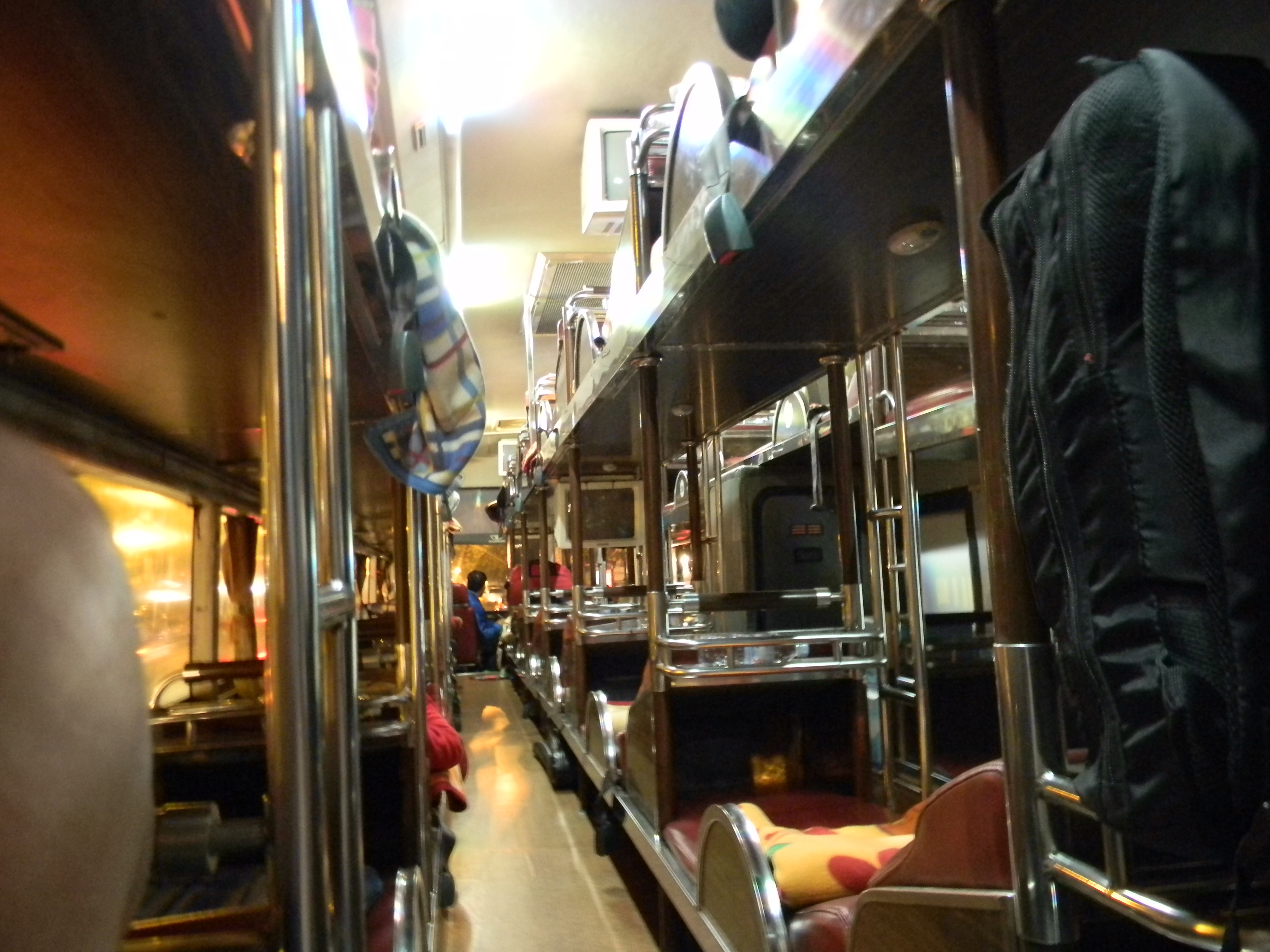
Sleeper buses ("xe giường nằm") are the standard for long routes (6+ hours) and run the length of the country. Instead of upright seats, you get a reclined pod-style berth, usually arranged in three rows across two levels, with a thin pillow and blanket. They're narrow and not built for anyone over about 1.8m, but they're genuinely more comfortable than they sound, and a real money-and-time saver for overnight legs like Hanoi–Hue or Nha Trang–Ho Chi Minh City.
Seated buses run shorter routes (2–5 hours) — Hanoi–Ninh Binh, Hoi An–Hue, Da Lat–Nha Trang — with standard reclining coach seats and air conditioning.
Open Tour Buses
The classic backpacker option is an "open tour" bus ticket — a single multi-leg pass (Hanoi to Ho Chi Minh City, or vice versa, stopping at all the major towns along the way) sold by companies like Sinh Tourist or Hanh Cafe. You can hop off at any stop, stay as long as you like, and hop on a later bus with the same ticket. It's slower than flying but genuinely one of the better ways to see the country layer by layer, and it's cheaper than booking each leg separately.
Booking a Bus
- Book through your hostel or hotel, or directly through an operator's website/app (Futa Bus Lines, The Sinh Tourist, and Phuong Trang/FUTABus are the most reliable national operators). Staff will usually arrange pickup from your accommodation.
- Futa Bus Lines (also branded Phuong Trang) has the widest network and the most consistent service quality — a safe default if you're unsure which company to pick.
- Book a day or two ahead for popular routes and holiday periods (Tet especially); on quieter routes you can often buy same-day.
- Tickets are inexpensive — a 10-hour overnight sleeper bus typically costs 250,000–450,000 VND (about $10–18), a fraction of the equivalent flight.
What to Expect on Board
- Shoes off — you'll be asked to remove your shoes and store them in a bag near the entrance before boarding a sleeper bus.
- Bring a light jacket or scarf — the air conditioning runs cold, and blankets provided are often thin.
- Keep valuables with you, not in the overhead or under-bus luggage compartment; bag snatching from stowed luggage during rest stops is an occasional problem.
- Rest stops happen every few hours at roadside restaurants — useful for a bathroom break and cheap food, though hygiene standards vary, so many travelers bring their own snacks.
- Motion sickness is common on winding mountain routes (Ha Giang, the road to Sapa, the coastal roads around Hai Van Pass) — sit toward the front/middle of the bus and consider motion sickness tablets if you're prone to it.
Safety
Vietnamese long-distance buses have a mixed safety reputation on rural mountain roads, largely tied to driver fatigue on overnight routes. Sticking to well-known operators (Futa/Phuong Trang, The Sinh Tourist, Hanh Cafe) rather than the cheapest unbranded option meaningfully reduces this risk — established companies have better-maintained fleets and stricter driver rotation.
Bus vs Train vs Flying
Buses win on price and route flexibility, especially for shorter hops and areas without rail access (Ha Giang, Mai Chau, the Mekong Delta). Trains are more comfortable and more reliable on the north-south spine but serve fewer places. Flights make sense for the longest hauls (Hanoi–Ho Chi Minh City, Hanoi–Phu Quoc) where a 30-hour bus ride isn't worth the savings. Most travelers end up mixing all three depending on the leg.
Buses remain the backbone of budget travel in Vietnam — not glamorous, but reliable, cheap, and often the only way to reach smaller towns off the main tourist circuit.
Protecting Your Belongings on Board
Sleeper buses are generally safe, but theft from bags stored in the under-bus luggage hold or overhead areas does occasionally happen, particularly on long overnight routes with multiple stops. Keep your passport, cash, cards, and any electronics in a small bag you bring into your berth with you rather than in checked luggage, and consider using a small cable lock to secure your daypack to the bunk if you plan to sleep deeply. Some operators provide a locker or under-bunk storage compartment for valuables — use it if available. It's also worth photographing your checked bag and noting its tag number before boarding, which makes any post-trip claim with the bus company far more straightforward if something does go missing.
Choosing a Reliable Operator
Not all bus companies maintain the same standard, and a night on an uncomfortable or poorly maintained sleeper bus can sour an otherwise good trip. Established, well-reviewed operators — several run daily routes along the main north-south corridor and between major tourist hubs — are worth the modest price premium over the cheapest option, since bunk comfort, driver conduct, and punctuality vary noticeably between companies. Reading recent reviews (rather than year-old ones) matters because ownership and quality of some routes can change; a company known for reliable service two years ago isn't guaranteed to still be the best choice today.
Frequently Asked Questions
Are sleeper buses actually comfortable enough to sleep through the night?
Comfort varies by operator and by your own tolerance for a bunk that's slightly short for taller travellers (most are sized for the average Vietnamese passenger), but well-reviewed operators generally offer a reasonably comfortable, reclined sleeping position with a blanket and pillow. Road noise, occasional sharp braking, and stops to pick up or drop off passengers along the route mean it's rarely a perfectly uninterrupted sleep, but most travellers manage several hours of real rest.
Can I bring luggage other than a small bag, and where does it go?
Yes — larger luggage typically goes in the under-bus storage compartment, loaded and unloaded by staff at the station or during pickup. Bring a padlock for extra security if your bag doesn't have a built-in lock, and keep valuables with you rather than in checked bags as noted above.
Do open tour buses let me get on and off wherever I want along the route?
Open tour tickets typically allow flexible stopovers at the designated stops along a fixed route (for example Hanoi to Ho Chi Minh City via Hue, Hoi An, and Nha Trang), letting you break your journey for as many days as you like at each stop before continuing on a later bus. They don't usually allow detours off the fixed route itself — for that, you'd book point-to-point tickets instead.
Is it cheaper to book online in advance or at the bus station?
Online booking through the operator's website or a booking platform is usually the same price as booking in person, but secures your seat or bunk in advance, which matters on popular routes and during holiday periods when buses can sell out. Booking at the station on the day is fine for less popular routes or off-peak travel, but risks limited availability during busy periods like Tet.
Information notice: Prices, opening hours, and travel conditions can change. Content on EnViet is reviewed periodically but may not reflect the most current situation. Please verify important details with official or local sources before travelling or booking.
EnViet Editorial Team
The EnViet Editorial Team creates practical Vietnam travel and food guides using local knowledge, public sources, and manual editorial review. Content is reviewed before publication and updated periodically.


