Vietnam Temple and Pagoda Etiquette: What to Wear, Do, and Avoid
Vietnam's pagodas and temples are active places of worship, not just tourist attractions, and most are genuinely welcoming to respectful visitors. A little preparation goes a long way toward being one.
What to Wear
Cover shoulders and knees — this applies to both men and women. A light scarf or shawl is an easy fix if you're caught out in a tank top or shorts; many temples keep loaner wraps at the entrance for exactly this situation, though it's better not to rely on it. Remove shoes before entering the main hall at most temples and pagodas; look for a shoe rack or pile of sandals near the entrance as a cue.
Incense and Offerings
Buying and offering incense is a welcomed way to participate, not something reserved only for worshippers. Hold the sticks between your palms, raise them to forehead height, and bow gently before placing them upright in the incense urn — don't push them in deep or force them to stand if the urn is full. Blowing out incense smoke or the flame is considered impolite; wave it out by hand instead. Odd numbers of incense sticks (one, three, five) are traditional.
Bowing and Behavior
A small bow toward the altar shows respect, though it's not obligatory for non-worshippers who'd simply like to look around quietly. Keep voices low, phones on silent, and avoid pointing your feet or camera lens directly at Buddha statues or altars, which can come across as disrespectful. Walking around the main altar area, follow the general flow of local visitors rather than cutting through the center of ceremonial space.
Photography
Most temples allow photography in courtyards and general areas, but some restrict it inside main worship halls or during active ceremonies — look for signage, and when in doubt, ask a monk or attendant rather than assuming. Never pose in front of an altar as if it's a photo backdrop, and be especially mindful during Tet and other major religious holidays when temples are busiest with worshippers rather than tourists.
Common Mistakes to Avoid
- Wearing sleeveless tops or short shorts without a cover-up on hand.
- Sitting with feet pointed at a Buddha statue, especially when resting on temple steps.
- Touching statues or ritual objects without invitation.
- Talking loudly or answering phone calls inside worship halls.
- Interrupting an active ceremony to take photos or walk through the space.
A Few Etiquette Notes by Site
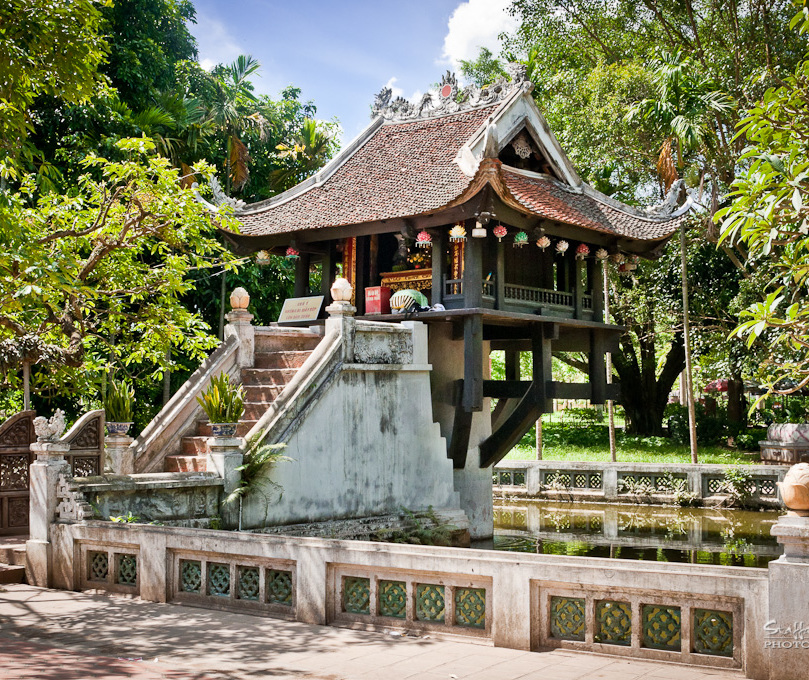
Large, tourist-frequented sites like the One Pillar Pagoda in Hanoi or the Jade Emperor Pagoda in Ho Chi Minh City see so much foot traffic that minor missteps are unlikely to cause offense — locals are generally understanding of visitors who are clearly trying. Smaller neighborhood pagodas, where you might be the only outsider, call for a bit more care and quiet, since you're more visibly a guest in someone's regular place of worship.
None of this is about rigid rules — it's about treating an active place of worship the way you'd want a visitor to treat yours. Most temple staff and worshippers are happy to have curious, respectful visitors, and small missteps are usually met with a smile rather than a scolding.
Pagoda, Temple, or Communal House — Why the Distinction Matters
Vietnamese religious sites aren't a single uniform category, and the etiquette expectations shift slightly depending on which type you're visiting. A chùa (pagoda) is Buddhist and typically the most visitor-friendly, with monks or nuns often present and a generally relaxed attitude toward respectful tourists. A đền (temple) usually honours a specific deity, historical figure, or spirit — the Temple of Literature in Hanoi, dedicated to Confucius and Vietnam's scholarly tradition, is a well-known example — and can carry more formal, ritual-specific customs around offerings. A đình (communal house) is a village institution honouring a guardian spirit or founding figure and is used for community ceremonies as much as worship; these are less commonly visited by tourists and it's worth being especially unobtrusive if you do. This blending reflects Vietnam's Tam Giao ("Three Teachings") tradition, where Buddhism, Confucianism, and Taoism have coexisted and intermingled for centuries rather than existing as separate, competing systems — which is part of why offering practices and imagery can look different from site to site.
Making an Offering Respectfully
If you'd like to make an offering rather than simply observe, fruit, flowers, or a small amount of money placed in the donation box are all appropriate for a visitor, and no one expects a foreign tourist to know detailed ritual specifics. What matters more is manner: approach the altar calmly, don't reach over or in front of someone who is actively praying, and if you're unsure where to place something, a quick glance at what other visitors are doing (or asking a temple attendant) is far better than guessing. Burning incense is common, but at a large or crowded temple during festival periods, adding to already-thick incense smoke isn't always welcome or necessary — some sites now discourage bringing your own incense and provide it, or ask visitors to limit how many sticks they burn, for air quality and fire safety reasons.
Frequently Asked Questions
Can I visit temples during a religious festival, or should I avoid those times?
Visiting during a festival is generally welcomed and can be a genuinely rewarding cultural experience, but come prepared for large crowds, longer waits, and a more ritual-heavy atmosphere where you should be extra mindful of not disrupting worshippers who are there for the occasion itself rather than sightseeing.
Is it okay to bring children to temples and pagodas?
Yes, children are welcome at almost all sites, though the same dress code and behaviour expectations apply to them as to adults — modest clothing and a reasonably quiet, respectful demeanour, particularly in inner sanctuary areas.
What if I accidentally do something wrong, like pointing my feet at a statue or stepping over an offering?
Minor accidental breaches are generally met with understanding, especially from foreign visitors clearly making an effort. A quick, quiet correction of your position or a brief apologetic nod if someone points it out is sufficient — there's no need for elaborate apology, just adjust and move on respectfully.
Do I need to remove my shoes at every site?
It depends on the site — some inner altar rooms or specific halls require shoes off, indicated by a shoe rack or other visitors' shoes at the entrance, while outdoor courtyards and many general temple grounds don't require it. When in doubt, look for cues (a pile of shoes, a sign, or what other visitors are doing) rather than assuming either way.
Information notice: Prices, opening hours, and travel conditions can change. Content on EnViet is reviewed periodically but may not reflect the most current situation. Please verify important details with official or local sources before travelling or booking.
EnViet Editorial Team
The EnViet Editorial Team creates practical Vietnam travel and food guides using local knowledge, public sources, and manual editorial review. Content is reviewed before publication and updated periodically.


