Vietnamese Weddings: Traditions, Customs, and What to Expect as a Guest
Getting invited to a Vietnamese wedding as a traveler is one of those strokes of luck that can turn a trip into something you actually remember for years - and it happens more often than you'd think, since Vietnamese hospitality tends to extend invitations generously to friends, coworkers, and even friendly acquaintances. If it happens to you, it helps to know roughly what you're walking into, because a Vietnamese wedding involves more ceremony, more family, and a different set of etiquette than a Western wedding.
It's Not One Event, It's Several
A full traditional Vietnamese wedding actually unfolds across multiple ceremonies, often spread over different days. The le dam ngo (engagement ceremony) happens first, sometimes months before the wedding itself, when the groom's family formally visits the bride's family to ask for her hand, bringing gifts wrapped in red - the color of luck and prosperity in Vietnamese culture - carried on lacquered trays by an odd number of young, unmarried relatives or friends.
The actual wedding day itself typically includes the le ruoc dau (the procession where the groom's family arrives to collect the bride), a ceremony at the family altar honoring ancestors, and finally the reception that most guests - including any travelers lucky enough to be invited - actually attend. As a visitor, you'll almost always be invited to this final reception rather than the earlier family ceremonies, which tend to stay more private and immediate-family-focused.
The Ao Dai Is Everywhere
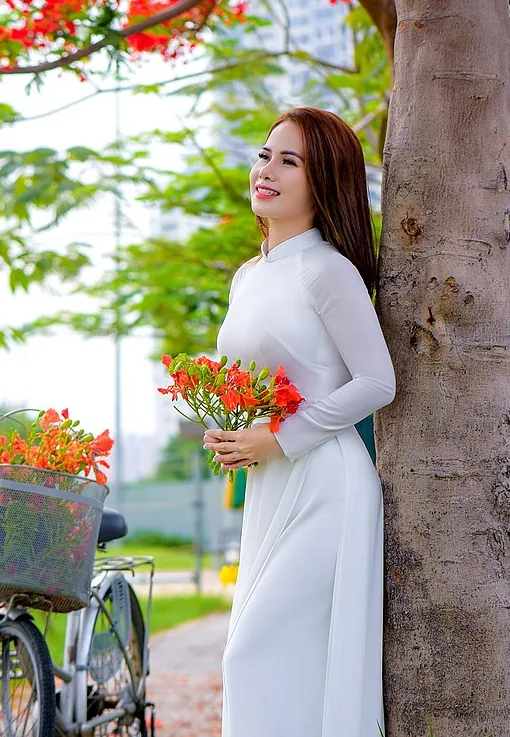
The traditional ao dai - a long, fitted tunic worn over flowing trousers - is central to Vietnamese wedding dress, and you'll see it constantly throughout the day. Brides commonly change outfits multiple times, often starting in a red or gold ao dai for the family ceremonies (red symbolizing luck, gold symbolizing prosperity) before switching to a white Western-style wedding gown for the reception, and sometimes a third outfit for the evening's photos and dancing.
As a guest, you're not expected to wear an ao dai yourself, but dressing more formally than you might for a Western wedding is appreciated - think smart, modest, and colorful rather than casual. One color you should actively avoid is black, which carries funeral associations in Vietnamese culture, and it's worth steering clear of all-white outfits too, since that risks visually competing with the bride.
The Red Envelope
Cash gifts, not registry gifts, are the standard at Vietnamese weddings, given in a red envelope (phong bi) rather than handed over directly or left on a gift table. There's a soft expectation around the amount - enough to roughly cover the cost of your seat at the reception, which is a genuine consideration given that receptions are often large, catered banquet-style events - but nobody will fault a foreign guest for not knowing the precise local benchmark. When in doubt, asking a Vietnamese friend or colleague what's typical for the region and the couple's social circle is the easiest way to get it right without feeling awkward.
Numbers matter here too: even amounts are generally preferred over odd ones for celebratory occasions like weddings, the opposite convention from what's used for funeral gifts, so it's worth keeping that distinction in mind.
The Reception Itself
Vietnamese wedding receptions are typically large, loud, multi-course banquet affairs, often held in a dedicated wedding hall or restaurant rather than a hotel ballroom, with dishes arriving course by course rather than as a single plated meal. Expect toasts - a lot of them - along with karaoke-style performances, games, and a general atmosphere that's closer to a big, joyful party than the more subdued formality some Western weddings carry.
Punctuality is looser than you might expect for the reception's official start time, but arriving reasonably on time is still the polite default, and leaving before the meal properly wraps up (including the final toasts) can come across as rude even if the room has visibly begun thinning out.
A Few Practical Notes
If you're bringing a plus-one, check first - not every invitation automatically extends to a partner, and it's worth confirming with whoever invited you rather than assuming. Photography is generally welcome and even encouraged, since it's a celebration meant to be documented and shared, but it's still worth being mindful about where the professional wedding photographers are working and not stepping into their shots during key moments like the couple's entrance or the ring exchange.
Above all, treat the invitation as the genuine honor it is. Vietnamese weddings bring together extended family and close community in a way that says a lot about how the couple - and by extension, whoever invited you - sees you. Showing up with genuine warmth, a red envelope, and a willingness to eat, toast, and maybe even attempt some karaoke will go a long way toward making it a memorable night for everyone involved, not just the happy couple.
Regional Differences Are Real
A wedding in Hanoi and a wedding in the Mekong Delta won't look identical - northern ceremonies tend to lean more formal and ritual-heavy, while southern celebrations, particularly around Ho Chi Minh City, often feel looser and more party-oriented, with more elaborate stage setups and louder entertainment at the reception. Central Vietnam, and Hue in particular, carries some of the more elaborate ceremonial traditions tied to the region's history as the imperial capital. None of this changes what's expected of a foreign guest, but it's part of why two Vietnamese weddings can feel quite different from each other even within the same broad framework.
If You're the One Getting Married
A growing number of foreign couples choose to include Vietnamese wedding customs in their own ceremony, particularly if one partner is Vietnamese or the couple has strong ties to the country - an ao dai for part of the day, a tea ceremony honoring both families' ancestors, or a red-envelope element worked into the reception. Wedding planners in major cities like Hanoi, Ho Chi Minh City, and Da Nang increasingly cater to exactly this kind of blended ceremony, and it's worth having an honest conversation with both families early on about which elements matter most to them, since the traditions carry real weight for Vietnamese relatives even when the couple themselves is approaching the day more casually.
Information notice: Prices, opening hours, and travel conditions can change. Content on EnViet is reviewed periodically but may not reflect the most current situation. Please verify important details with official or local sources before travelling or booking.
EnViet Editorial Team
The EnViet Editorial Team creates practical Vietnam travel and food guides using local knowledge, public sources, and manual editorial review. Content is reviewed before publication and updated periodically.