Chau Doc & Sam Mountain
Chau Doc & Sam Mountain Travel Guide
Meta description: Discover Chau Doc — a Mekong Delta border town where Vietnamese, Khmer, and Cham cultures overlap, floating fish farms line the riverbanks, and Sam Mountain rises straight out of the rice fields.
Why Visit Chau Doc
Most travelers who make it to the Mekong Delta stop at Can Tho and turn back. Chau Doc, close to the Cambodian border in An Giang province, rewards the extra few hours on the road with something the more-visited delta towns don't quite have: a genuine cultural overlap. This is where ethnic Vietnamese, Khmer, and Cham communities have lived side by side for generations, visible in the mix of pagodas, mosques, and floating villages along the Hau River. It's also simply less touristed, which means the floating markets and riverside life here feel less like a show and more like an actual Tuesday morning.
Quick Facts
Chau Doc sits on the Hau River (one of the Mekong's two main branches in Vietnam) about 5 kilometers from the Cambodian border, roughly 250 kilometers southwest of Ho Chi Minh City. It's the last major Vietnamese town before the river crosses into Cambodia, which is why it doubles as a border-crossing hub for travelers continuing on to Phnom Penh by boat.
Top Things to Do
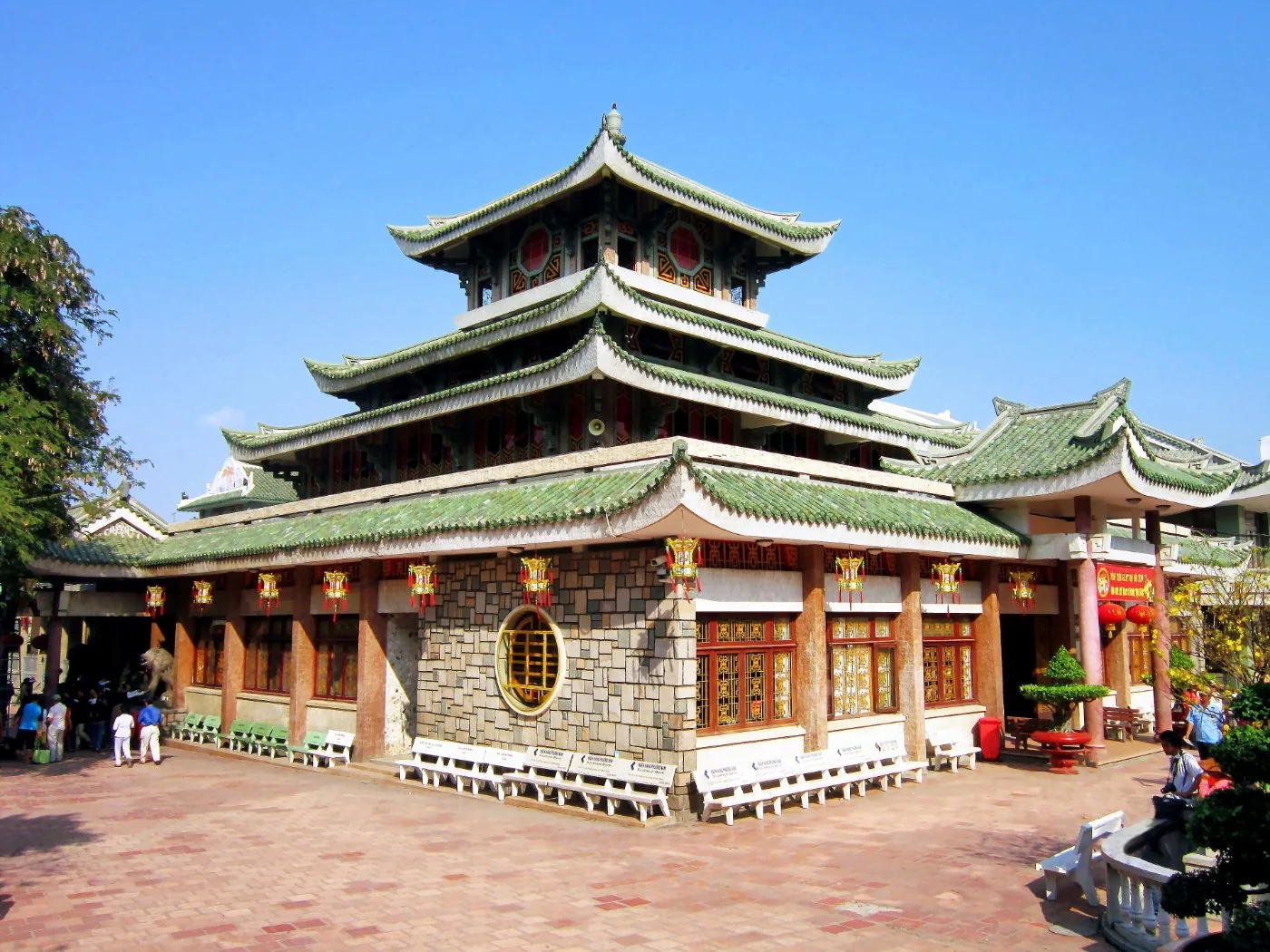
Sam Mountain, rising abruptly out of the flat delta landscape just outside town, is the area's most recognizable landmark and its spiritual center. The mountain is dotted with pagodas and shrines, most notably Ba Chua Xu Temple at its base, one of the most heavily visited pilgrimage sites in southern Vietnam, especially during the temple's spring festival when pilgrims arrive by the thousands to pray for fortune. A paved road winds to the summit for those who'd rather skip the climb, and the view from the top — rice paddies stretching toward the Cambodian hills — is worth the trip on a clear day.
Down on the river, Chau Doc's floating fish farms are a distinctive sight: wooden houses built over submerged cages where families raise fish for market, an entire livelihood conducted from a floating porch. Boat tours through the Cham fishing village of Chau Giang, just across the river, take in stilt houses, a mosque, and a slower pace of life than anything on the main road.
The Tra Su Melaleuca Forest, a flooded cajuput forest about 30 minutes from town, offers a genuinely different kind of Mekong scenery — narrow canals threading through bright green forest, small boats poled by hand, and a bird sanctuary that comes alive with storks and herons, particularly during the flood season from roughly August to November when water levels are highest and the canals are easiest to navigate.
Local Food
Chau Doc's food scene reflects its cross-cultural position. Bun ca (fish noodle soup) made with the delta's abundant freshwater fish is a local specialty, along with a distinctive version of banh xeo studded with the same fish. The town's Cham and Khmer communities have also shaped the local food culture — expect to find dishes and spice combinations here that you won't see in Can Tho or Ho Chi Minh City, along with the region's namesake export, mam (fermented fish paste), sold in bulk at the central market and used as the base for countless delta dishes.
Best Time to Visit
The flooding season, roughly August through November, is when the surrounding countryside and Tra Su Forest are at their most dramatic, with water levels high enough to access parts of the forest that are dry and less interesting the rest of the year. The dry season from December through April offers more comfortable traveling weather generally, with less rain and lower humidity, though the flooded forest scenery is the main draw lost outside flood season.
Where to Stay
Chau Doc town itself has a modest but sufficient range of hotels, mostly clustered near the riverfront and central market, and it's the practical base for exploring both Sam Mountain and the floating villages. There's little reason to stay elsewhere in the area, since the town is compact and most attractions are a short drive or boat ride away.
How to Get There
Buses run regularly from Ho Chi Minh City to Chau Doc, taking around 6 hours, and it's also reachable by boat from Can Tho along the Mekong's main channels for travelers who want to keep moving by water rather than road. For those continuing into Cambodia, fast boats run from Chau Doc directly to Phnom Penh, a popular and scenic way to cross the border without backtracking to Ho Chi Minh City first.
Final Thoughts
Chau Doc doesn't have a single headline attraction the way Ha Long Bay or Hoi An do, and that's rather the point — it rewards travelers who want a slower, more layered look at the Mekong Delta's cultural mix, rather than a checklist of sights. Between Sam Mountain's pilgrimage crowds, the quiet floating villages, and the flooded forest at Tra Su, it's one of the more genuinely distinctive stops in the entire delta.
A Note on the Border Crossing
Travelers using Chau Doc as a gateway to Cambodia should factor in visa requirements ahead of time — most nationalities can get a Cambodian e-visa or visa on arrival at this crossing, but it's worth confirming current requirements before booking the boat, since border policy details shift more often than the boat schedules do. The Chau Doc–Phnom Penh boat route takes most of a day, with a stop at the actual border checkpoint partway through, and it's a noticeably more scenic way to make the crossing than the overland bus routes further south.