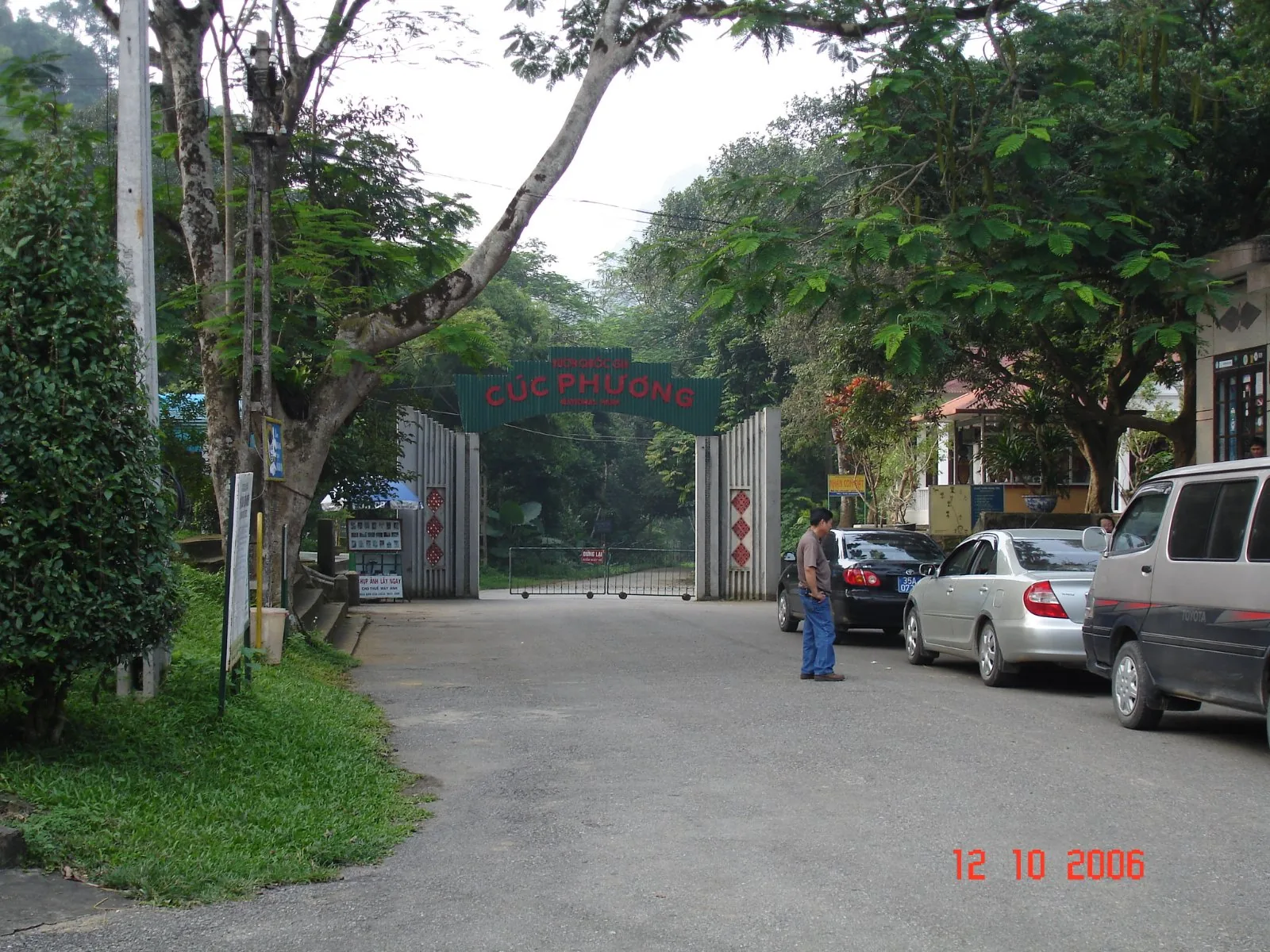
Cuc Phuong National Park: Vietnam's Oldest Rainforest Reserve
Published on August 15, 2026
Why Visit Cuc Phuong
Established in 1962, Cuc Phuong is Vietnam's oldest national park, spread across 25,000 hectares where Ninh Binh, Hoa Binh, and Thanh Hoa provinces meet. It protects one of the last substantial stretches of old-growth limestone forest in northern Vietnam, home to more than 2,000 plant species and over 300 vertebrate species — including several primates found nowhere else on Earth.
Endangered Primate Rescue Center
The park's best-known attraction is the Endangered Primate Rescue Center (EPRC), a conservation facility that rehabilitates langurs, gibbons, and lorises confiscated from the illegal wildlife trade. Guided visits let you see species like the Delacour's langur and grey-shanked douc langur up close — both critically endangered and found almost nowhere else. A nearby Turtle Conservation Center does similar work for native turtle and tortoise species.
The Thousand-Year-Old Tree
A well-marked trail leads to Cho Chi, an enormous Tetrameles nudiflora tree estimated at over 1,000 years old, with a trunk wide enough that its buttress roots form small caves. The walk there passes through dense old-growth forest and is one of the park's most popular half-day hikes.
Night Safaris and Birdwatching
Cuc Phuong is one of the better spots in northern Vietnam for spotting wildlife after dark — guided night walks (by jeep or on foot) look for civets, flying squirrels, and slow lorises using torchlight. The park is also a serious birdwatching destination, with over 300 recorded species, and is home to some of the country's richest butterfly diversity, especially in the rainy months (April–June) when swarms can number in the thousands.
Muong Villages and Cave Sites
The park sits on land traditionally inhabited by the Muong ethnic minority, and a visit to a nearby Muong village offers a look at stilt-house architecture and daily rural life. Con Moong Cave, within the park, has yielded archaeological evidence of human habitation dating back roughly 12,000 years.
Getting There
Cuc Phuong is about 45 km northwest of Ninh Binh city and 120 km from Hanoi — roughly a 2.5-hour drive from the capital. Many visitors combine it with a Ninh Binh / Trang An trip, either as a day trip or an overnight stay at the park's own guesthouses.
Practical Notes
- Bring sturdy shoes — trails are often muddy, especially after rain.
- Book the primate center visit in advance where possible, as guided visit slots are limited.
- Leech socks are worth packing in the rainy season (May–September).
- Stay inside the park if you want to do the night safari, since it starts after the day-trip crowds have left.
Vietnam's First National Park
Cuc Phuong holds a specific distinction that's easy to miss in a quick visit: established in 1962, it was Vietnam's first national park, designated more than a decade before the country had any formal national park system. That head start matters ecologically — the core protected forest has had over sixty years without logging, which is part of why the limestone forest canopy here feels genuinely old-growth in a way that younger reserves elsewhere in the country don't quite match. The park now covers around 220 square kilometres across three provinces (Ninh Binh, Hoa Binh, and Thanh Hoa), with terrain ranging from flat valley floor to limestone karst peaks over 600 metres.
What a Typical Visit Looks Like
Most independent visitors follow some version of the same loop: an early start from Ninh Binh (about 1.5–2 hours by car or motorbike), a stop at the Endangered Primate Rescue Center as it opens, the walk out to the Thousand-Year-Old Tree, and either a return by early afternoon or an overnight stay to fit in a night safari. If you're short on time, prioritise the Primate Rescue Center and the ancient tree trail — together they take about half a day and cover the park's two signature experiences. With a full day or overnight, add the Mac Lake area for birdwatching at dawn and one of the cave sites near the Muong villages, which get a fraction of the primate center's visitor traffic.
Frequently Asked Questions
Is Cuc Phuong worth visiting if I'm already going to Ninh Binh for Trang An or Tam Coc?
Yes, and the two pair naturally — Trang An and Tam Coc are about limestone karst and boat rides through flooded caves, while Cuc Phuong is dense primary rainforest with wildlife and trekking. They're roughly an hour apart and cover genuinely different terrain, so combining them into a two- or three-day Ninh Binh itinerary avoids repeating the same scenery.
Do I need a guide, or can I hike independently?
The main trails to the Thousand-Year-Old Tree and around the visitor center are well-marked and safe to walk independently. Night safaris and some of the deeper forest or cave routes are better done with a park ranger or guide, both for wildlife spotting (guides know where animals are typically active) and because trails are unmarked and easy to lose after dark.
What's the best time of year to visit?
The dry season, roughly November to April, offers the most comfortable hiking conditions and the clearest visibility for the night safari. May through October is hot and humid with a real chance of heavy rain, though the forest is at its most lush and green during and just after the wet months.
Is it suitable for children?
The Primate Rescue Center and the walk to the ancient tree are manageable for most families with older children — the tree trail is a few kilometres each way on a mostly flat, shaded path. Night safaris and longer treks are better suited to older kids and adults given the length and lack of lighting.