Da Lat
Published on May 28, 2026
Da Lat Travel Guide
Meta description: Discover Da Lat — Vietnam's cool highland city of pine forests, flower farms, French villas, and exceptional coffee. Complete Da Lat travel guide for 2025.
Why Visit Da Lat
At 1,500 meters above sea level in the Lam Dong highlands, Da Lat operates on a different register from Vietnam's coast and lowlands. The temperature rarely exceeds 25°C and drops to 12–15°C on winter nights. Pine forests cover the hillsides. French colonial villas line the roads. Flower farms produce 80 percent of Vietnam's cut flowers. The valley markets sell artichokes, avocados, strawberries, and persimmons alongside the tropical produce found everywhere else in the country.
The French chose Da Lat as their highland retreat in the 1890s, building a miniature replica of a Normandy hill town — complete with a railway, a golf course, a cathedral, and dozens of villas. The colonial architecture survived the 20th century remarkably intact, and Da Lat's microclimate and scenery have made it Vietnam's most popular domestic honeymoon and weekend destination ever since.
For international travelers, Da Lat offers something no other Vietnamese city provides: genuine seasonal coolness, a landscape that changes from tropical to temperate within minutes of leaving the valley, and a cafe and restaurant culture that has developed around local produce of exceptional quality.
Quick Facts
- Location: Lam Dong Province, Central Highlands, 300 km northeast of Ho Chi Minh City
- Best time to visit: November to April (dry season; coolest December–February)
- Recommended stay: 2–4 days
- Daily budget: Budget $25–45 | Mid-range $55–100 | Luxury $120+
- Altitude: 1,500 m (city center); surrounding peaks reach 2,167 m
Top Things to Do in Da Lat
1. Xuan Huong Lake and Central Walking Street
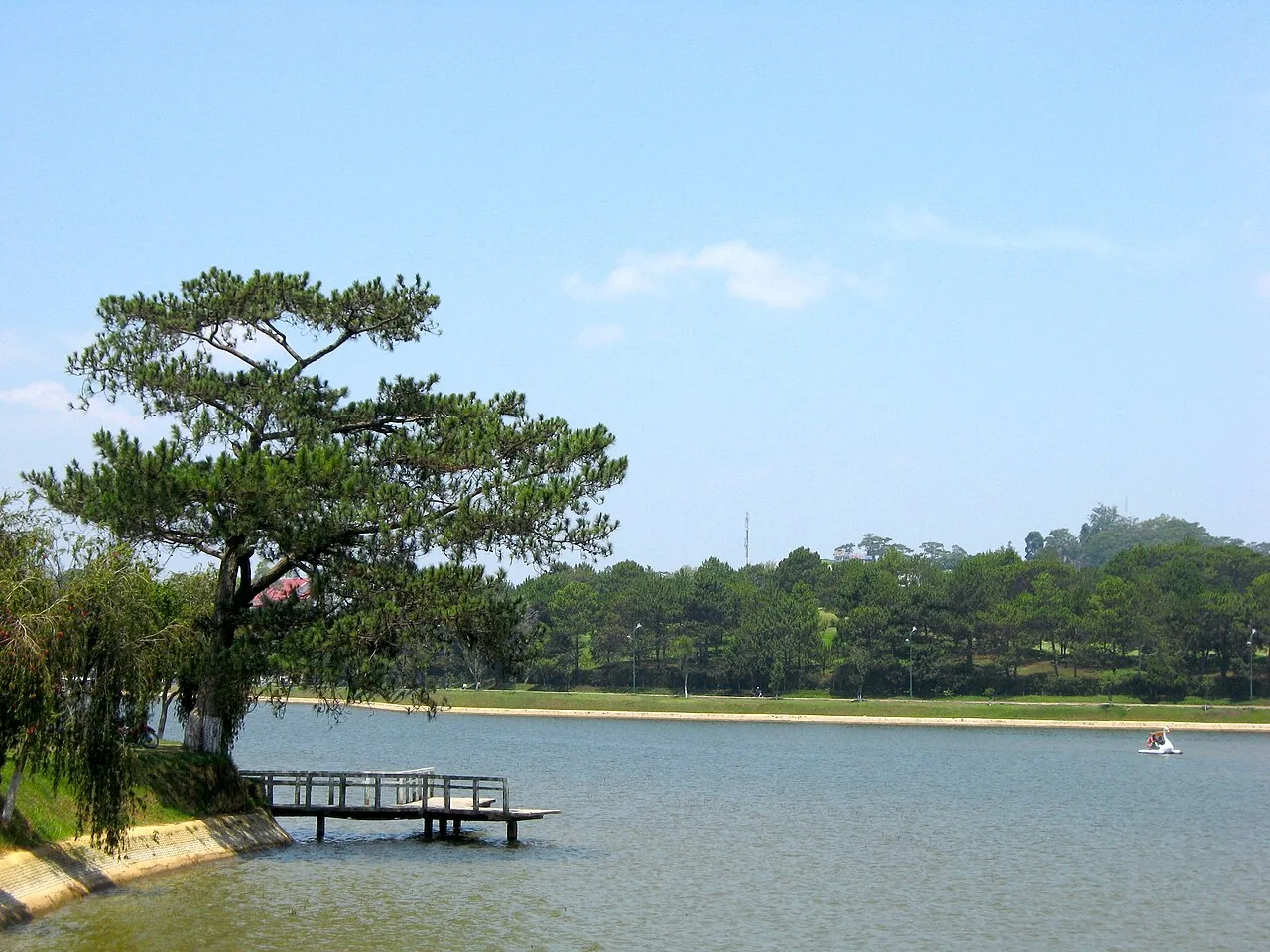
The artificial lake at Da Lat's center — created by a dam in 1919 — provides a focal point for the city's morning and evening social life. The 7-km circuit around the lake is popular with joggers, cyclists, and couples. The Nguyen Thi Minh Khai pedestrian zone above the lake hosts flower vendors, food stalls, and street performers from 6pm. Duration: 1–2 hours. Tip: Rent a pedal boat on the lake for a different perspective of the surrounding hills.
2. Langbiang Mountain
The twin peaks of Langbiang, 12 km north of Da Lat, rise to 2,167 m and offer the region's best highland hiking with panoramic views over the plateau. A jeep track runs to a lower observation point; a 2-hour forest trail reaches the true summit. The mountain carries a Romeo-and-Juliet love story from the local K'Ho ethnic minority — the peaks are said to be the lovers turned to stone. Duration: Half to full day. Tip: Hire a local guide from the base ($10–15) for the summit trail; start before 9am to reach the top before afternoon clouds build.
3. Valley of Love (Thung Lung Tinh Yeu)
A scenic valley 5 km from the city center, developed as a nature park with a lake, pine forest walks, horse riding, and scenic viewpoints. The name was given by a French governor in the early 20th century; the setting lives up to its romantic reputation. Best at dawn or dusk when mist sits in the valley. Duration: 2 hours. Tip: 50,000 VND entry; rent a horse or take a short horse-drawn carriage for a different perspective.
4. Flower Gardens and Farms
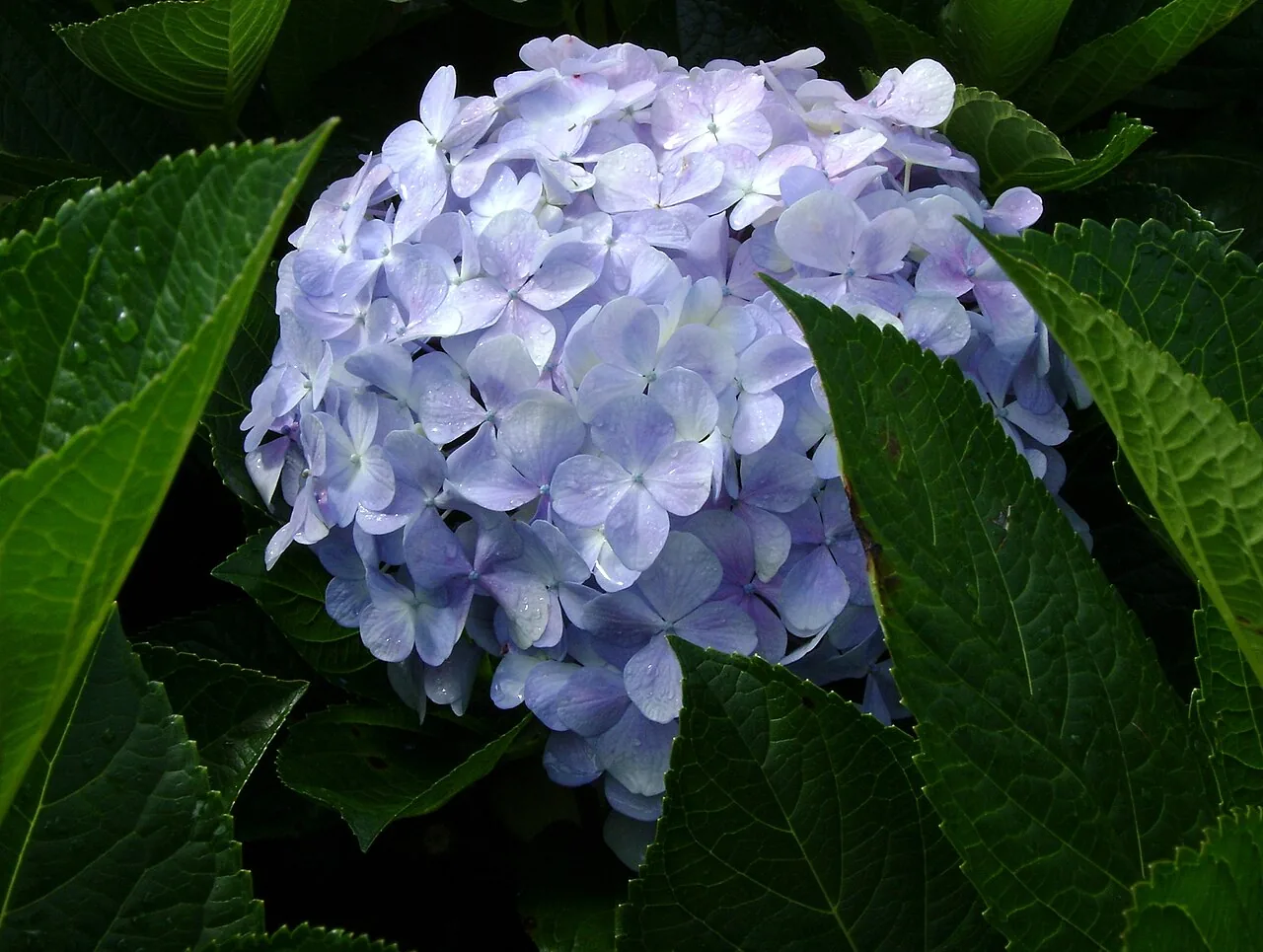
Da Lat's flower industry produces hydrangeas, roses, chrysanthemums, and orchids for markets across Vietnam year-round. The Da Lat Flower Garden near Xuan Huong Lake offers a curated display; working farms outside the city allow you to walk between growing beds. The flower market near Hoa Binh Square operates overnight and is at its most atmospheric at 3–5am when growers bring in the day's cut flowers. Duration: 1–2 hours at the garden. Tip: The overnight flower market on Da Lat Market Street is one of the most unusual spectacles in the Central Highlands — set an alarm.
5. Crazy House (Hang Nga Guesthouse)
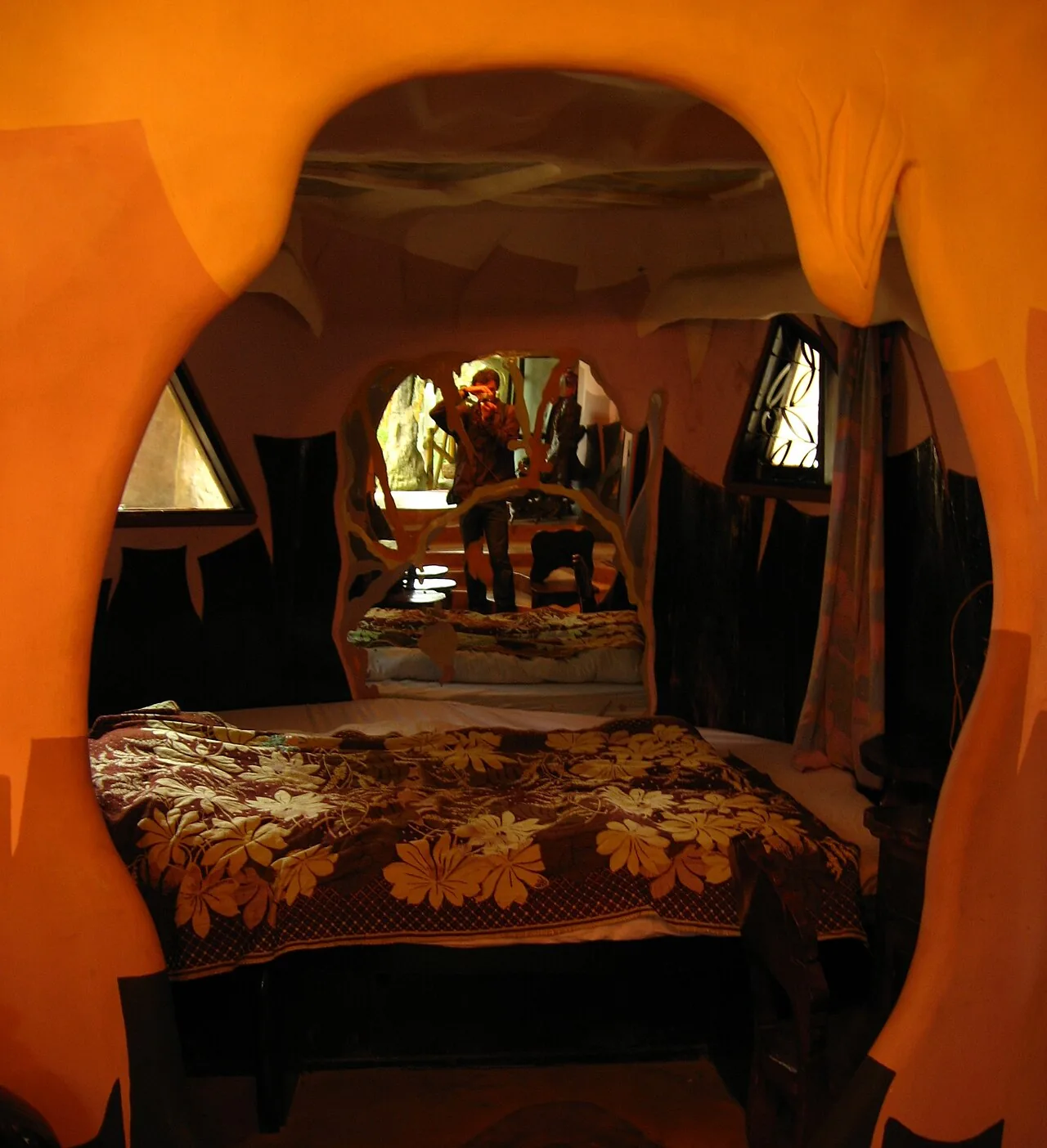
An architectural project 30 years in the making, the Crazy House is a residential guesthouse designed by Vietnamese architect Dang Viet Nga in an organic style that draws comparisons to Gaudi and fairy-tale illustration. Tree-trunk staircases, cave-like rooms, rooftop walkways, and surrealist animal sculptures create a labyrinthine structure that is still under construction and still accepting guests. Duration: 1–1.5 hours. Tip: 40,000 VND to visit; book a stay in one of the themed rooms (from $30/night) for the most unusual accommodation in Vietnam.
6. Da Lat Railway Station and Vintage Train
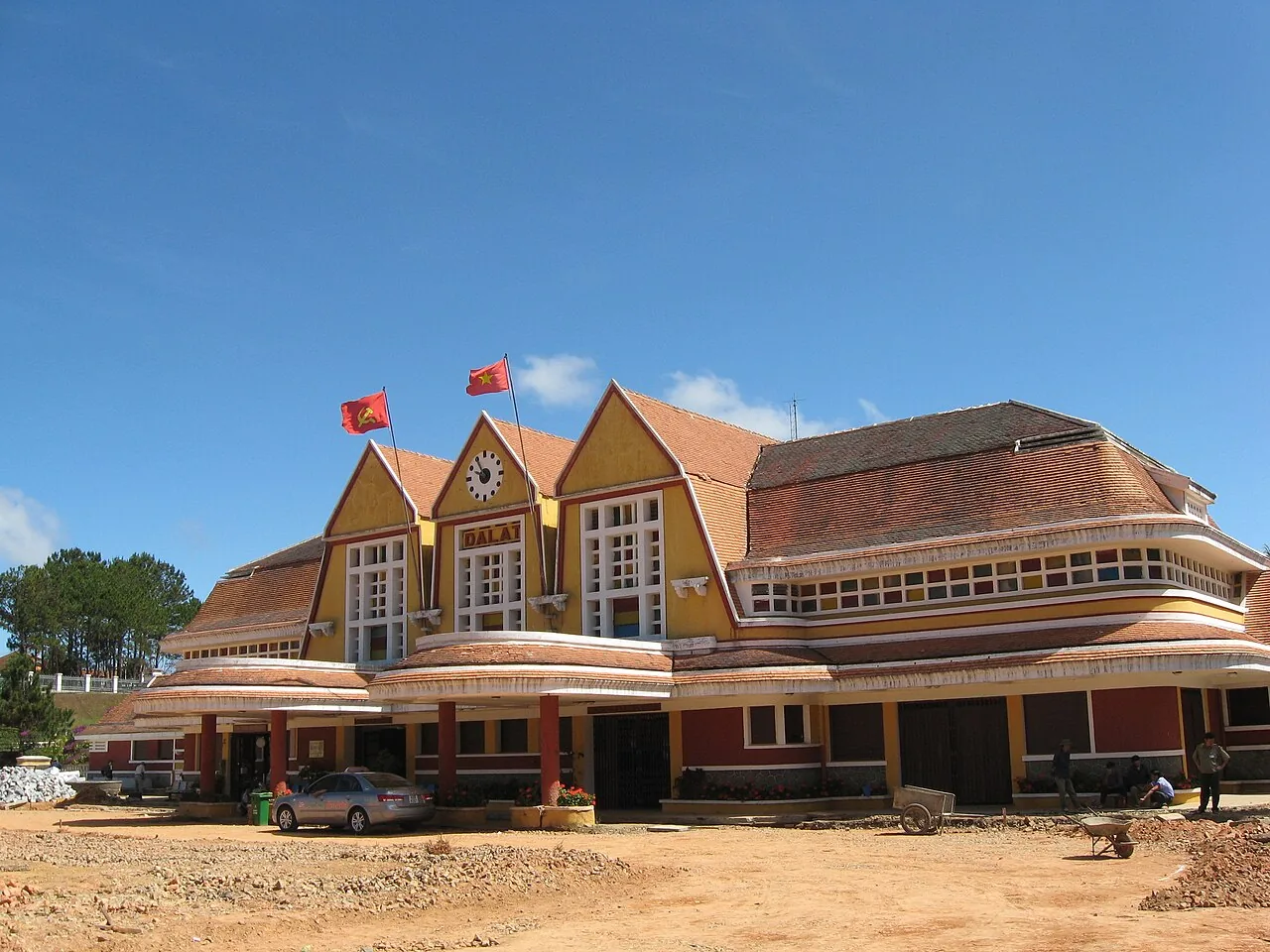
Da Lat's preserved colonial-era railway station — built in 1932 in French alpine style — is one of the most beautifully maintained historic transport buildings in Vietnam. A restored vintage train runs from the station to Trai Mat village, passing through Da Lat's pine-forested outskirts, 8 km in 30 minutes. Duration: 1.5 hours including the round trip. Tip: 96,000 VND return; trains run several times daily. The station itself is worth visiting even without the train.
7. Coffee Culture and Cafe Hopping
Da Lat has developed one of Vietnam's most distinctive cafe scenes — a blend of French colonial nostalgia, creative Vietnamese design, and outstanding local arabica coffee grown on the surrounding hillsides. The coffee quality is some of the best in the country (Da Lat arabica has higher altitude and acidity than the robusta that dominates Vietnamese coffee elsewhere). Notable cafes: Cafe Tung (open since 1952), La Viet Coffee, and the many hillside "greenhouse cafes" north of the city. Duration: As long as you like. Tip: Da Lat arabica is significantly different from standard Vietnamese coffee; order it as a pour-over or filter for the best expression of the bean's character.
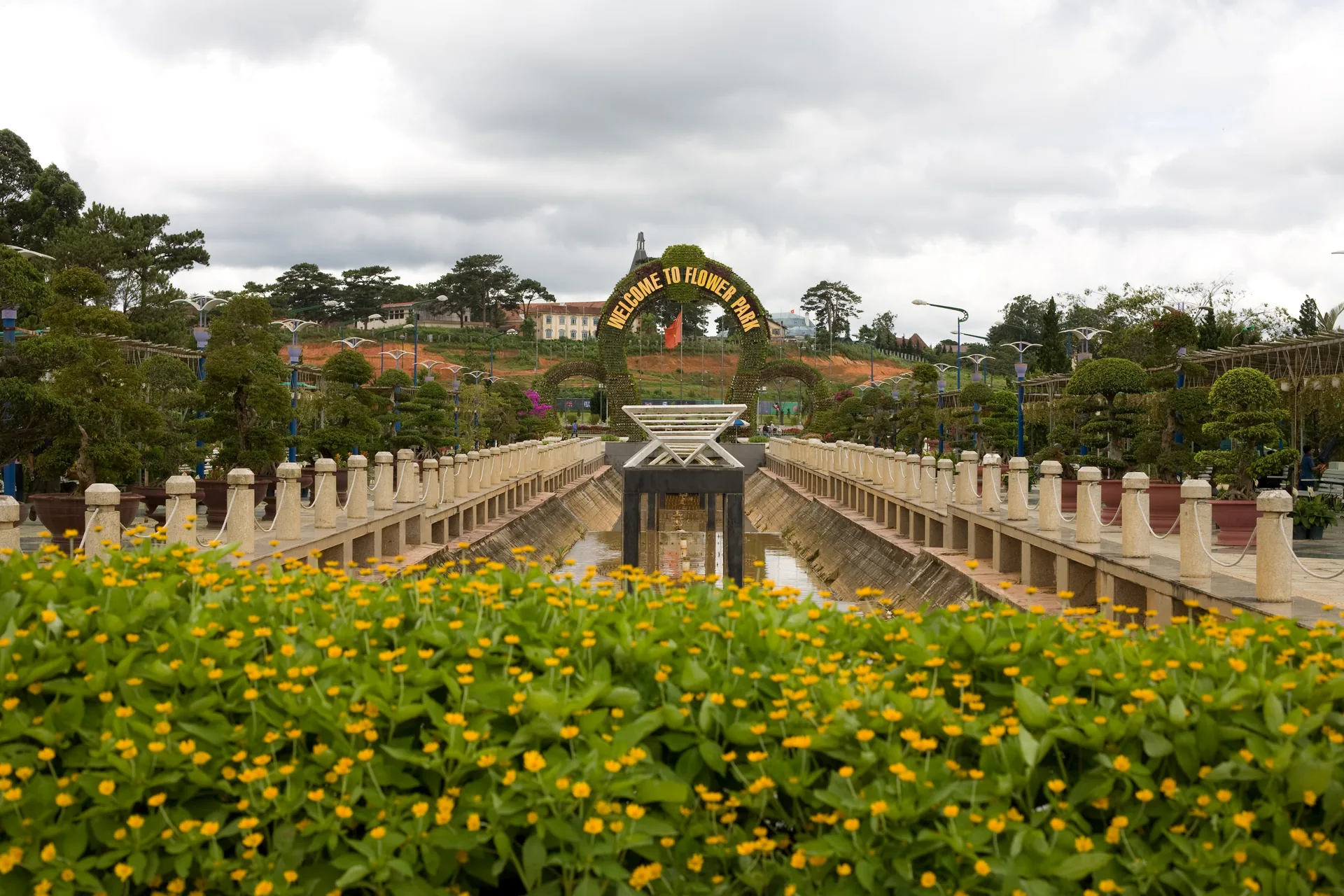
Da Lat city centre — the French colonial architecture survives in pockets around the central market area; the city sits at 1,500m giving it a perpetual spring climate
8. Elephant Falls (Thac Voi)
A powerful waterfall 25 km southwest of Da Lat, accessible via a steep path through jungle vegetation. The falls drop 30 meters into a rocky pool, and a narrow passage allows visitors to stand behind the cascade. The surrounding landscape of bamboo and mixed forest is beautiful. Duration: 2–3 hours including transport. Tip: 20,000 VND entry; wear shoes with grip — the path is consistently wet and slippery.
9. Da Lat Night Market and Street Food
Da Lat's night market, on Nguyen Thi Minh Khai Street, runs every evening from 5pm and offers the city's best concentration of local street food: grilled corn with scallion butter, strawberry wine, baked sweet potatoes, banh can (small rice cakes with quail eggs), and hot soy milk. The atmosphere is social and unhurried. Duration: 1–2 hours. Tip: Banh can, a Da Lat specialty, is best eaten directly from the small clay molds at the vendor's cart — 3,000–5,000 VND each.
10. Pongour Falls
The widest waterfall in the Central Highlands, Pongour falls in seven tiers over a 40-meter basalt escarpment, 50 km south of Da Lat. The site is most spectacular during and after the rainy season (June–October); in the dry months the flow reduces but the landscape remains striking. The full moon festival each January draws thousands of K'Ho pilgrims. Duration: Half day including transport. Tip: Combine with a visit to a nearby coffee or vegetable farm for a more complete Central Highlands day.
Local Food and Specialties
Banh Can: Tiny rice-flour cakes cooked in small clay molds with quail eggs, spring onion, and dried shrimp. The texture is somewhere between a pancake and a dumpling; the flavors are delicate. Served with a sweet-sour dipping sauce and fresh herbs. A Da Lat invention found almost nowhere else in Vietnam.
Avocado Ice Cream (Kem Bo): Da Lat's cool climate produces the country's finest avocados, and the city has turned them into ice cream — creamy, not-too-sweet, served in the avocado skin. Available from street carts throughout the city.
Strawberries: Da Lat grows the only strawberries in Vietnam. Fresh, dried, in jam, in wine — they appear on every menu and in every market. Strawberry-picking farms on the outskirts offer 80,000–100,000 VND/hour of picking.
Artichoke Tea: Cultivated since the French introduced the plant in the 1930s, Da Lat artichokes are brewed into a mild, slightly bitter herbal tea served hot at most cafes. Considered beneficial for liver health; sold dried in market bags as a take-home item.
Banh Trang Nuong (Grilled Rice Paper): Rice paper grilled over charcoal with egg, dried shrimp, spring onion, and chili — a popular street snack in Da Lat's night market.
Best Time to Visit Da Lat
November–April: The dry season. December and January are coolest (evenings 12–15°C); February–April warm to a comfortable 20–24°C. The flower season peaks in December and January.
May–October: Rainy season, with afternoon showers that cool the air. Mornings are often clear; planning outdoor activities before noon works well. The waterfalls are at their most dramatic.
December–January: Peak domestic tourism season; Da Lat fills with Vietnamese honeymooners and families. Book accommodation well in advance.
Where to Stay in Da Lat
Budget (under $25/night): Dreams Hotel Da Lat and Da Lat Backpackers Hostel offer clean, central rooms near the market.
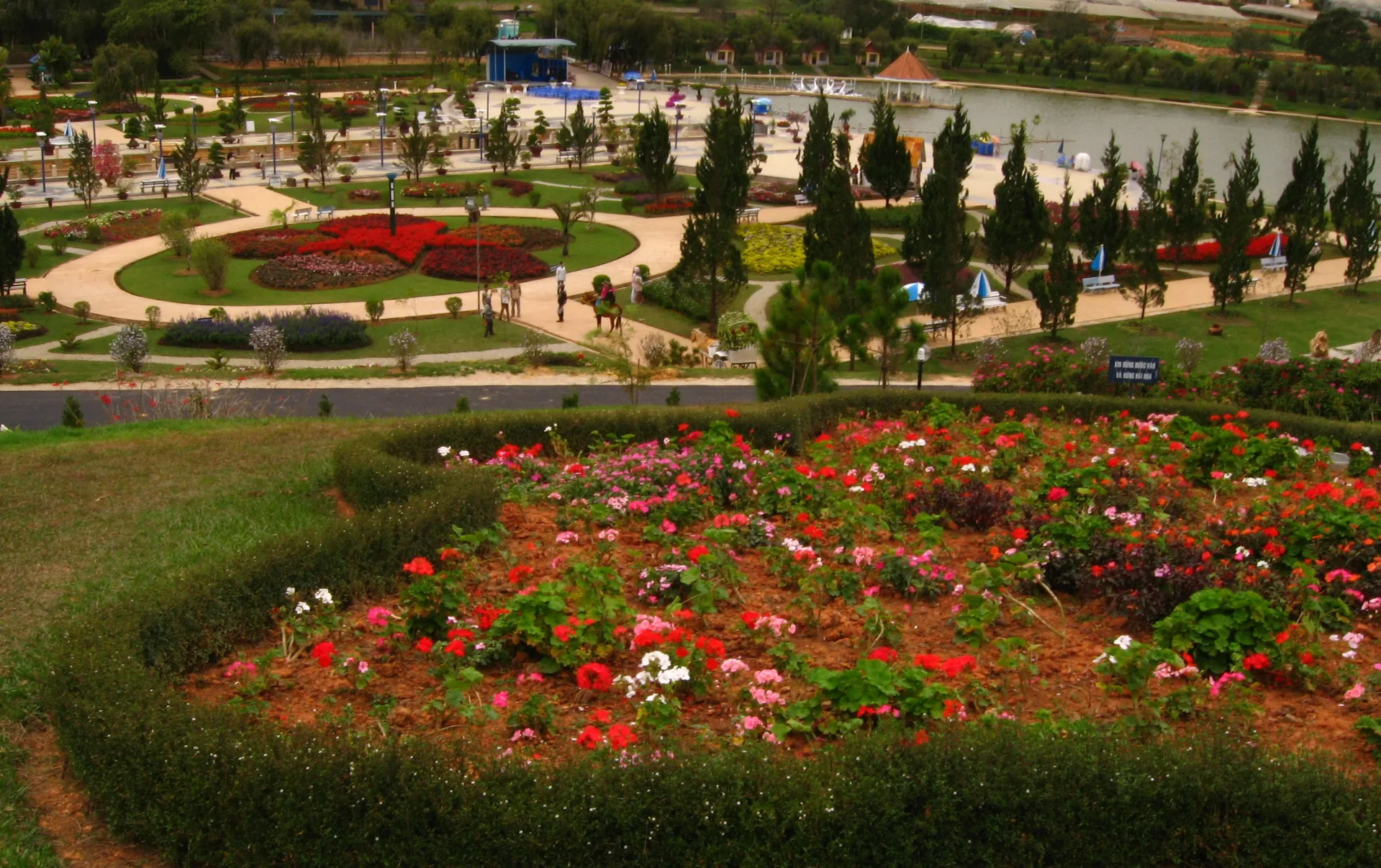
Da Lat flower farms — the city supplies 70% of Vietnam cut flowers; hydrangeas, roses, and mimosa grow in the cool highland air year-round
Mid-range ($45–90/night): Dalat Palace Heritage Hotel (a restored 1920s French hotel) and Da Lat has numerous boutique options in restored colonial villas — Bich Dao Flower Homestay and The Willow Retreat are well-regarded.
Luxury ($100+/night): Dalat Palace Heritage Hotel is the premier luxury option — a grand 1922 French palace hotel overlooking Xuan Huong Lake. Golf Valley Resort offers more modern luxury with a championship golf course.
Recommended area: The streets around Xuan Huong Lake combine proximity to the night market, cafes, and transport with relative quiet. Avoid rooms directly above the central market for noise reasons.
How to Get to Da Lat
By air: Lien Khuong Airport, 30 km south of Da Lat, receives flights from Hanoi (1 hour 40 min), Ho Chi Minh City (50 min), and Da Nang. Taxi to city: 150,000–200,000 VND.
By bus from Ho Chi Minh City: Regular express buses take 6–7 hours; sleeper buses run overnight. Departure from Pham Ngu Lao area (Sinh Cafe, Phuong Trang). Cost: 150,000–250,000 VND.
By bus from Nha Trang: 4–5 hours via the mountain pass road, with scenic views over the coast.
By motorbike: The Ngoan Muc Pass (Highway 27) from Phan Rang and the Prenn Pass from the south are two of Vietnam's most scenic mountain roads — genuinely worthwhile for experienced riders.
Suggested Itineraries
1 Day
Morning: Xuan Huong Lake walk, Da Lat Railway Station. Lunch: Banh can at the market. Afternoon: Crazy House, Flower Garden, Valley of Love. Evening: Night market, strawberry wine.
2 Days
Day 1 as above. Day 2: Langbiang Mountain hike morning, Elephant Falls afternoon, coffee farm visit, cafe hopping in the evening.
3 Days
Days 1–2 as above. Day 3: Strawberry picking, Pongour Falls, artichoke tea tasting, final evening at a hillside greenhouse cafe.
Local Culture and History
Da Lat's founding is credited to physician Alexandre Yersin, who discovered the Lam Vien Plateau in 1893 and recommended it to French colonial authorities as a highland retreat. The city that developed over the following decades was consciously modeled on a French provincial hill town — a fantasy of Normandy in the tropics that served as a sanatorium, vacation destination, and administrative center.
The indigenous K'Ho ethnic minority, who had inhabited the plateau for millennia before French arrival, were largely displaced to surrounding villages as the colonial town expanded. Their cultural presence today is maintained through the Langbiang area, traditional villages, and the annual Pongour Falls festival.
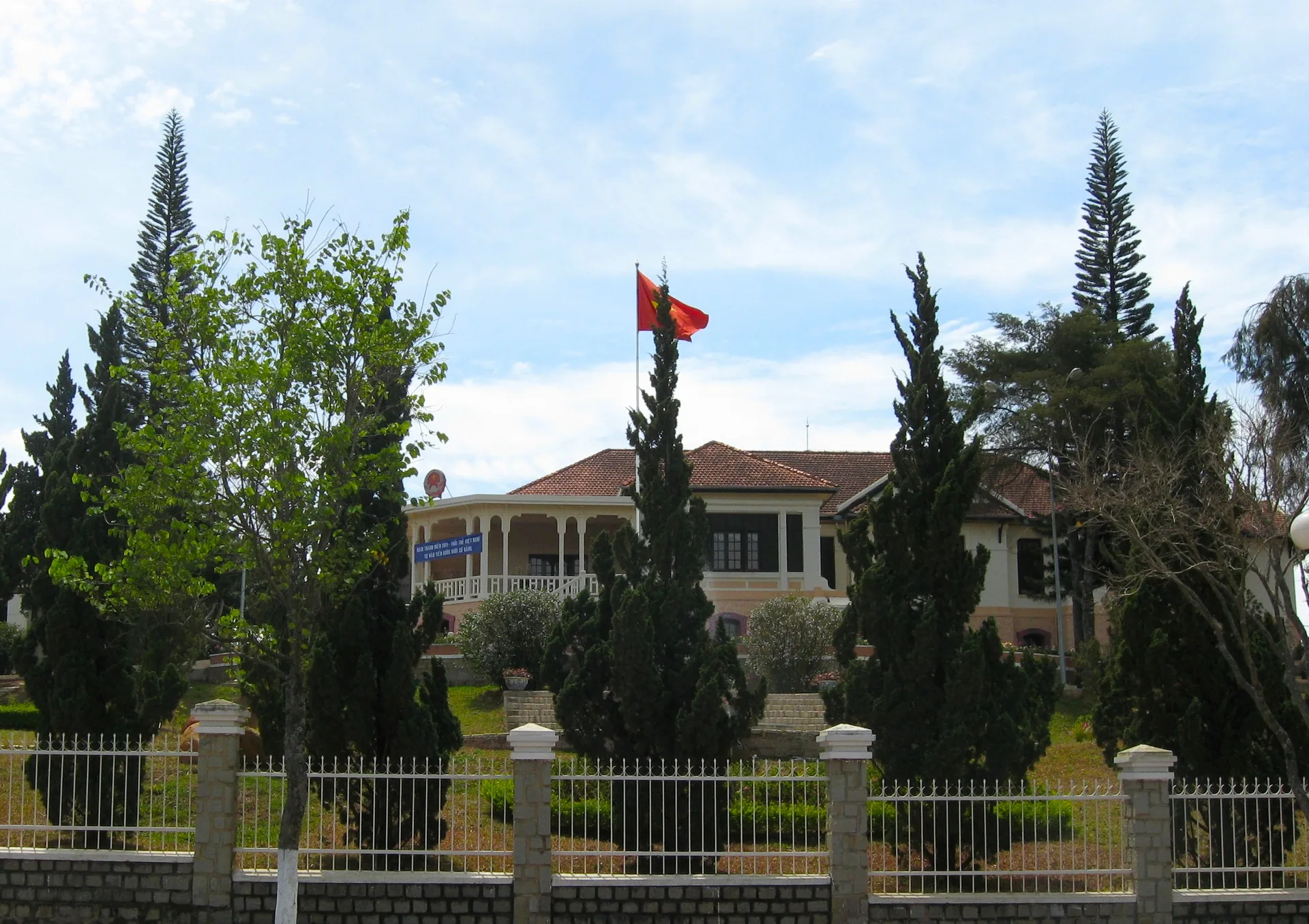
Lam Dong Province — Da Lat sits within this highland province; the surrounding area has waterfalls, silk farms, and the Valley of Love (Thung Lung Tinh Yeu)
After 1975, Da Lat's colonial architecture was preserved by accident rather than policy — the city's relative isolation and low industrial development meant the villas and public buildings were not demolished for industrial or residential construction. The current government has designated the historic center a protected urban zone.
Travel Tips
- Weather layers: Even in the dry season, Da Lat evenings require a light jacket or sweater. Night temperatures can catch lowland-adapted travelers off guard.
- Traffic: Da Lat's hilly terrain makes cycling less practical than in Hoi An or Ninh Binh. Motorbike rental ($8–10/day) is the most effective way to reach the outlying attractions.
- Easy Rider tours: Da Lat originated the "Easy Rider" motorbike guide phenomenon — local guides who take travelers on multi-day motorbike tours of the Central Highlands. The original Easy Rider group operates from the central cafes; tours run from $50–80/day.
- Strawberry farms: Not all strawberry-picking farms maintain the same quality; ask your guesthouse for current recommendations.
Frequently Asked Questions
Is Da Lat cold? By Vietnamese standards, yes. Pack a sweater and light jacket for evenings, especially December–February. By temperate climate standards, it is mild — similar to a warm spring day in Europe.
How is Da Lat coffee different? Da Lat grows arabica at altitude, which produces higher acidity and more complex flavor than the robusta grown in the lowland Central Highlands. Order it filtered or as a pour-over for the best result.
Is Da Lat suitable for families? Excellent — the Valley of Love, strawberry picking, Crazy House, and train ride appeal to children. The cool weather is more comfortable for young children than coastal heat.
Can I combine Da Lat with Mui Ne? Yes — Da Lat to Mui Ne takes 3–4 hours by bus, making them a natural combination for a central Vietnam loop.
Final Thoughts
Da Lat is unlike anywhere else in Vietnam — cooler, greener, more European in architectural character, and blessed with produce that the rest of the country cannot replicate. It rewards travelers who use it as a destination rather than a transit point: linger in the cafes, eat the strawberries, hike to Langbiang, and watch the flower market at 4am. The city's scale is forgiving, its pace is gentle, and its pleasures are exactly the kind that require no agenda.
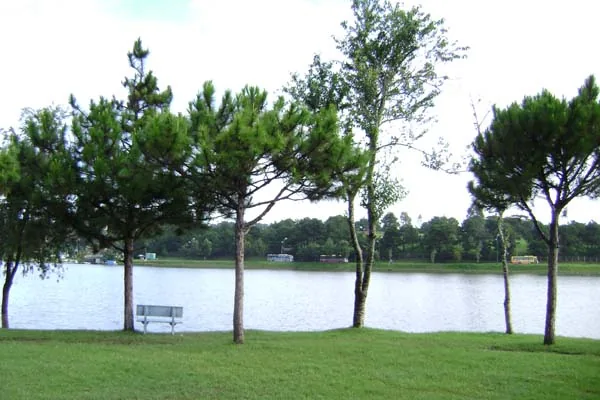
Xuan Huong Lake — the crescent-shaped lake at the centre of Da Lat; the 6km perimeter path is the most pleasant morning walk in the city, with colonial-era villas visible through the mist
Keywords: Da Lat travel guide, things to do in Da Lat, best time to visit Da Lat, Da Lat coffee, Langbiang Mountain, Da Lat flower farms, where to stay in Da Lat