Da Nang City
Published on May 28, 2026
Da Nang Travel Guide
Meta description: Discover Da Nang — Vietnam's most livable city with white-sand beaches, the Marble Mountains, and Ba Na Hills. Your complete Da Nang travel guide for 2025.
Why Visit Da Nang
Da Nang occupies a unique position in Vietnam's travel landscape — it is simultaneously a modern city and a beach destination, a cultural hub and a gateway, a place where you can eat exceptionally well, swim in the South China Sea, and reach two UNESCO World Heritage Sites (Hoi An and My Son) within an hour.
The city sits midway along the country, at the point where the Hai Van Pass divides the north's climate from the south's. It has invested heavily in infrastructure over the past decade — Da Nang regularly ranks as Vietnam's most livable city in domestic surveys — and the result is a destination that combines genuine attractions with the practical ease that more storied cities sometimes lack. Roads are wide and well-maintained, beaches are cleaned and supervised, and the restaurant and accommodation density means genuine choice at every price point.
For the traveler, Da Nang works as both a destination in its own right and as a base for the surrounding region. Stay here and explore Hoi An and Hue as day trips. Or use it as nothing more than an easy entry point for central Vietnam — the airport is efficient, the taxis are honest, and the hotels are good value.
Quick Facts
- Location: Central Vietnam, 964 km south of Hanoi, 964 km north of Ho Chi Minh City
- Best time to visit: March to August (dry season; beach-optimal May–August)
- Recommended stay: 3–4 days as a base; 5–7 days if combining beach and day trips
- Daily budget: Budget $30–50 | Mid-range $60–120 | Luxury $150+
- Airport: Da Nang International Airport (DAD), 3 km from city center
Top Things to Do in Da Nang
1. My Khe Beach
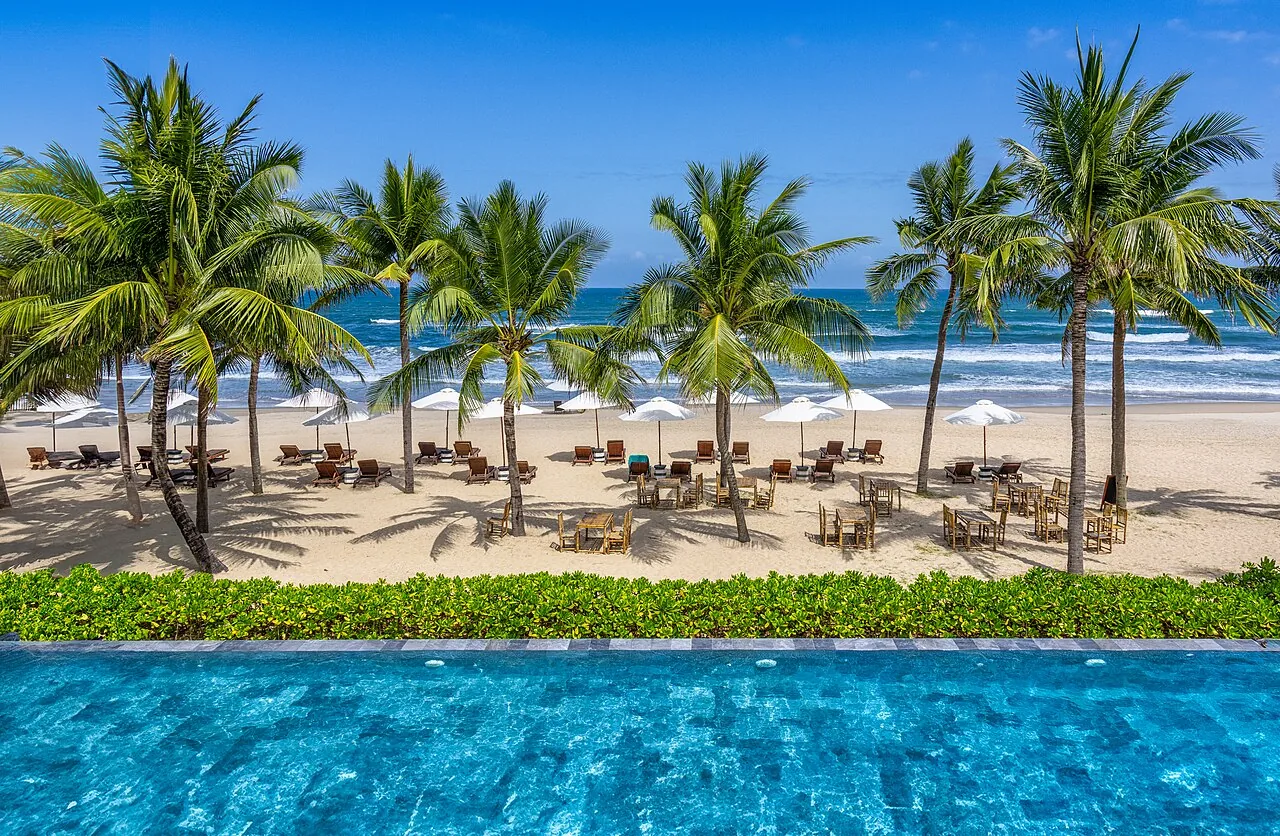
My Khe is one of Vietnam's finest urban beaches — a 30-km arc of fine white sand running from the Son Tra Peninsula to the Marble Mountains. The surf is consistent from September to December (popular with bodyboarders); the sea is calm and swimmable from March to August. The beach is cleaned nightly, lifeguards are present, and the beachfront strip of seafood restaurants and smoothie bars makes it genuinely enjoyable. Duration: Half to full day. Tip: Rent a beach umbrella and sunbed for around 50,000 VND from vendors along the shore.
2. Ba Na Hills and the Golden Bridge
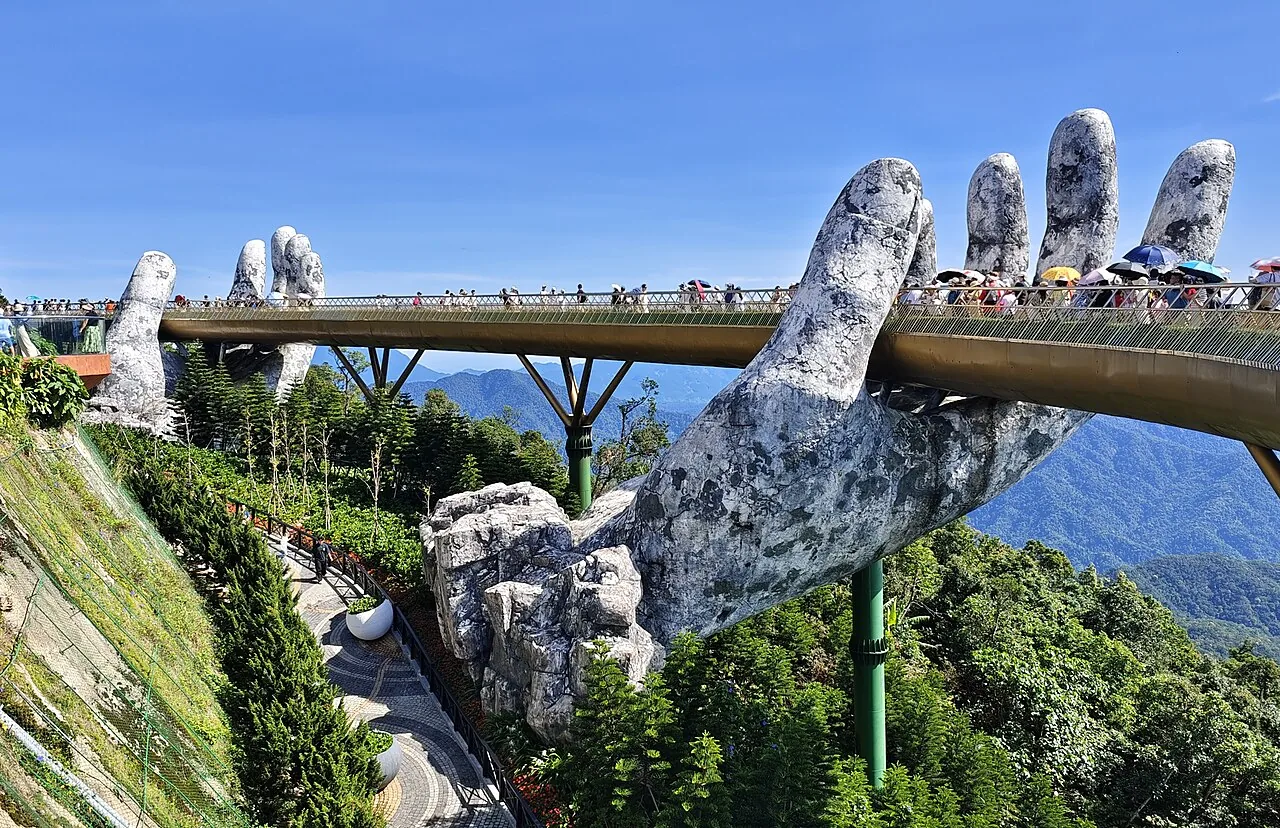
Ba Na Hills is a theme park and cable car complex 25 km from the city center, set at 1,400 meters in the Truong Son Mountains. The complex has divided travel opinion — it is manufactured and expensive — but the Golden Bridge, a pedestrian walkway held aloft by two enormous stone hands, has become one of Vietnam's most photographed structures. The mountain setting, at cloud level, also provides relief from coastal heat. Duration: Full day. Tip: Buy tickets online in advance (750,000 VND/adult); go on weekdays to avoid domestic tour groups.
3. Marble Mountains (Ngu Hanh Son)
Five limestone and marble outcroppings rise from the coastal plain 9 km south of Da Nang, each named for one of the five elements. Thuy Son — the largest and most accessible — contains cave pagodas, Buddhist shrines, carved stone deities, and viewpoints over the city and sea. The caves, cut by natural forces and enlarged by human hands over centuries, have an atmospheric depth that few expect from a roadside attraction. Duration: 2–3 hours. Tip: Climb via the north entrance elevator (15,000 VND) and descend via the south — it avoids retracing your steps and adds the Quan Am cave temples.
4. Dragon Bridge (Cau Rong)
Da Nang's most iconic landmark, a 666-meter bridge in the form of a gold-scaled dragon that crosses the Han River. The engineering is impressive; the scale is almost absurd — and on weekend evenings (9pm, Saturdays and Sundays), the dragon breathes fire and water to a crowd gathered on the riverbanks. Duration: 20 minutes for fire show. Tip: Arrive early to get a riverbank position; the fire lasts about 5 minutes but the bridge is photogenic at any hour.
5. Son Tra Peninsula (Monkey Mountain)
A 4,370-hectare nature reserve jutting into the sea north of Da Nang, Son Tra is home to the red-shanked douc langur — one of the world's most endangered primate species — as well as eagles, deer, and a rich coastal forest. The Linh Ung Pagoda at the peninsula's base houses a 67-meter standing Buddha visible from across the city. Duration: Half day to full day. Tip: Rent a motorbike for the winding summit road; red-shanked doucs are most visible in early morning along the forest edges.
6. Han Market
Da Nang's central market is the city's busiest everyday trading ground — silk, dried seafood, spices, fresh produce, clothing, and snacks across two crowded floors. Less tourist-packaged than Hoi An's market but more representative of how Da Nang's residents actually shop. Duration: 1–1.5 hours. Tip: The ground floor dried-food section has excellent locally made rice crackers and dried squid for under 50,000 VND.
7. Museum of Cham Sculpture
Home to the world's largest collection of Cham artifacts, this museum holds more than 500 stone sculptures from the Cham Kingdom that ruled central Vietnam from the 2nd to 15th centuries. The collection includes the most significant pieces recovered from My Son Sanctuary and other Cham sites. The building itself — designed in 1915 — is a French colonial landmark. Duration: 1.5–2 hours. Tip: Entry is 60,000 VND; audio guides available. Visit before My Son day trip for valuable context.
8. Hai Van Pass
The mountain pass north of Da Nang is one of Vietnam's great drives — a 21-km road snaking over a 496-meter peak that divides the weather systems of central and northern Vietnam. The views from the summit take in the Da Nang bay to the south and the Lang Co lagoon to the north simultaneously. Duration: Half day including transport. Tip: Hire a motorbike for the experience; the pass can also be driven. The old French fort at the summit is worth exploring.
9. Day Trip to Hoi An
Da Nang's proximity to Hoi An makes it the most logical accommodation base for travelers wanting Hoi An's atmosphere without its highest prices. The 30-km drive takes 30–40 minutes by Grab taxi (around 200,000 VND one way). Duration: Full day. Tip: Take a taxi down in the morning and arrange a pre-booked return or use Grab for the evening trip back.
10. Seafood at Bien My Restaurant Row
The stretch of seafood restaurants along Tran Thi Ly Street and the beachside strip near My Khe offers fresh fish, crab, prawns, and shellfish at prices that remain remarkably reasonable by international standards. Mantis shrimp (tom tit), mud crab (cua huynh de), and local clams are particularly good. Duration: 1.5–2 hours for dinner. Tip: Prices are per kilogram of live seafood selected at the tank — confirm the per-kg price before ordering.
Local Food and Specialties
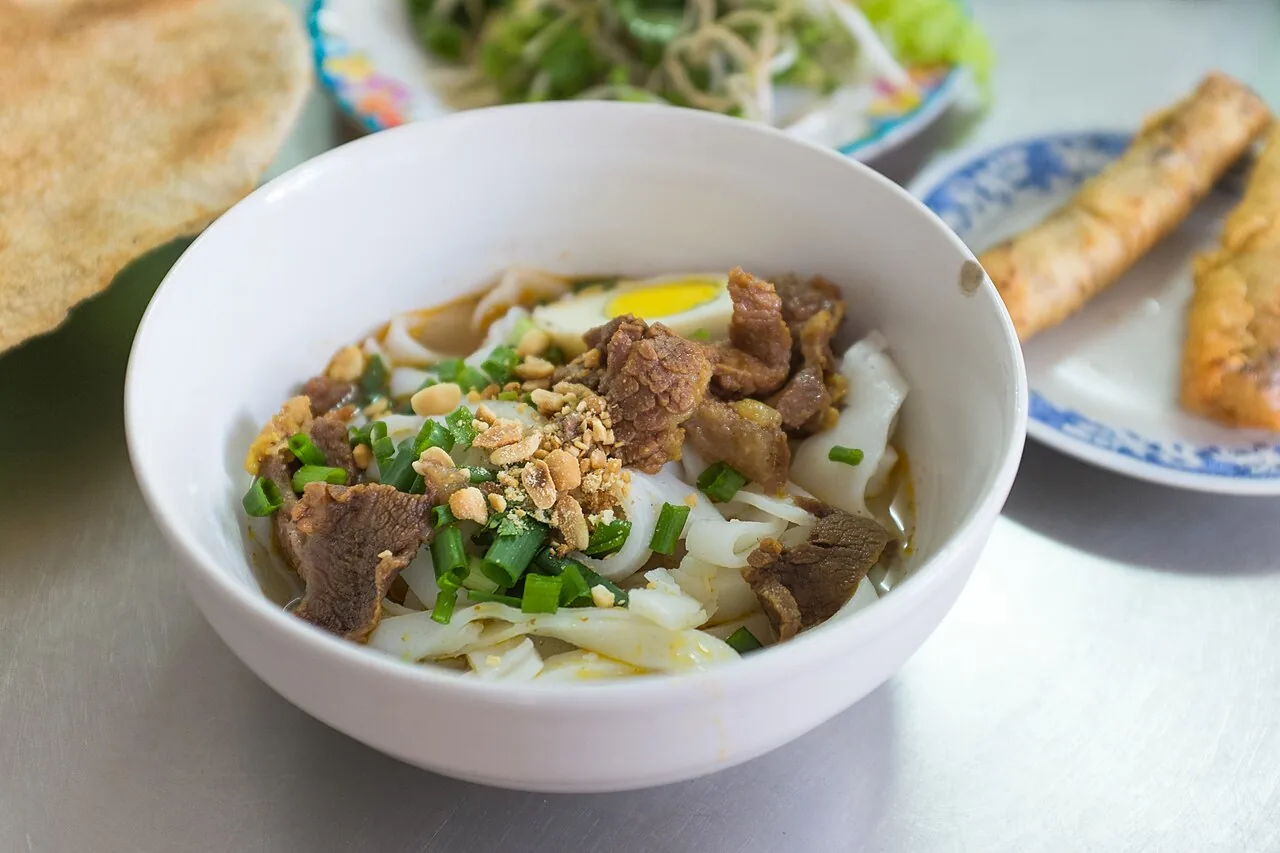
Mi Quang: Da Nang's signature dish — rice noodles in a small amount of turmeric-rich broth, topped with pork, shrimp, quail eggs, peanuts, and puffed rice crackers. The dish is specific to Quang Nam Province; you will find versions throughout the central coast, but Da Nang's is considered the standard-bearer. Try it at Mi Quang Thi on Tran Binh Trong Street.
Banh Trang Cuon Thit Heo: Fresh rice-paper rolls with pork belly, herbs, green mango, and a dipping sauce of crushed sesame and peanuts. A Da Nang specialty that appears on menus across the central coast but originates here.
Com Ga (Chicken Rice): Da Nang's com ga is different from the Hoi An version — the chicken is shredded, the rice more herb-infused, and the broth served separately. Best at Ba Buoi on Hoang Dieu Street.
Banh Canh (Thick Noodle Soup): A hearty soup with thick udon-like rice noodles in a rich pork or crab broth. Found at market stalls from around 6am for 30,000–40,000 VND.
Local seafood: Da Nang's seafood is among the freshest in Vietnam — the city sits on the coast with active fishing fleets. Oc huong (trumpet snails), chem chep (blood clams), and ca thu (mackerel) are regional specialties rarely found in this quality elsewhere.
Best Time to Visit Da Nang
March–August: The dry season on Da Nang's coast. May to August offers the most consistent beach weather — hot (32–35°C), sunny, and with calm seas. March and April are slightly cooler and less crowded.
September–November: Transitional months with increasing rainfall; September can bring typhoon activity. The sea becomes rougher and swimming inadvisable from October onward.
October–December: Peak rainy season. Heavy rain and occasional flooding; the Marble Mountains can be slippery. Not recommended for beach-focused travel.
January–February: Cool, dry, and quieter. Temperatures drop to 20–22°C, occasionally reaching 17°C. Not beach weather but good for cultural sightseeing.
Where to Stay in Da Nang
Budget (under $35/night): Memory Hostel Da Nang and Go2Sleep Hostel are well-located near the beach with clean facilities.
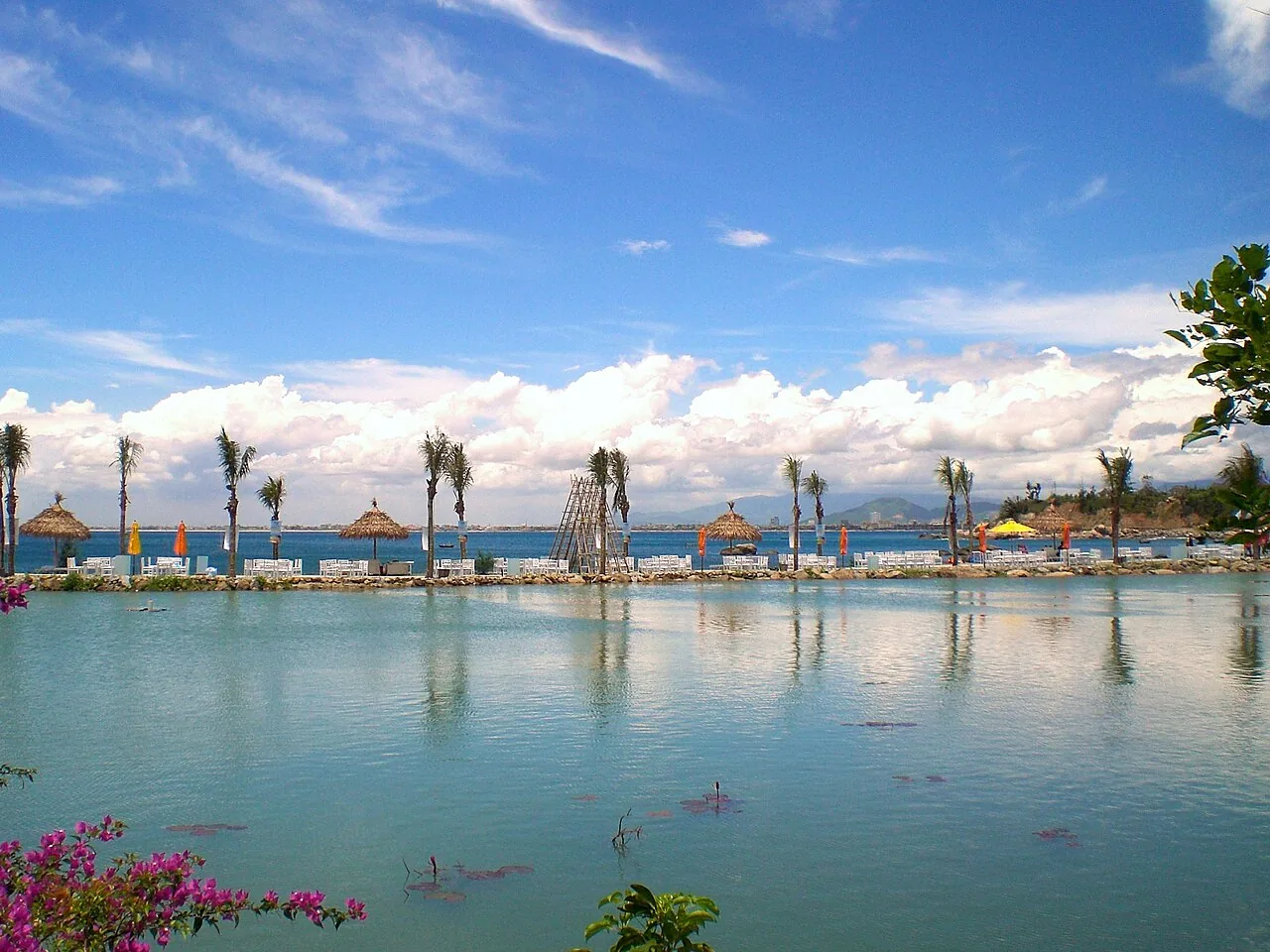
Mid-range ($60–130/night): Fusion Suites Da Nang Beach, Sanouva Da Nang Hotel, and Premier Village Da Nang Resort offer strong value mid-range options, most with beach access or ocean views.
Luxury ($150+/night): Four Points by Sheraton Da Nang, Pullman Da Nang Beach Resort, and InterContinental Da Nang Sun Peninsula Resort (on Son Tra Peninsula) represent the upper end. The InterContinental is consistently ranked among Asia's finest resorts.
Recommended areas: My Khe Beach strip for easy beach access; Han River area for restaurants and city sightseeing; Son Tra Peninsula for seclusion and nature.
How to Get to Da Nang
By air: Da Nang International Airport is Vietnam's third busiest, with direct international connections from Singapore, Bangkok, Seoul, Tokyo, Hong Kong, and Taipei, plus domestic flights from Hanoi (1 hour 15 min) and Ho Chi Minh City (1 hour 20 min). The airport is 3 km from the city center; taxis run 80,000–120,000 VND.
By train: The Reunification Express connects Da Nang to Hanoi (14–16 hours) and Ho Chi Minh City (16–18 hours). The route through the Hai Van Pass from Hue (2.5–3 hours) is one of the most scenic rail journeys in Southeast Asia.
By bus: Open-tour buses connect Da Nang to Hue (2.5 hours), Hoi An (45 minutes, 50,000 VND), and most major Vietnamese cities.
From Hue: The Hai Van Pass route by car or motorbike takes 1.5–2 hours and is one of Vietnam's great road trips.
Suggested Itineraries
1 Day
Morning: My Khe Beach swim, Marble Mountains. Lunch: Mi Quang at a local market stall. Afternoon: Cham Museum, Han River walk. Evening: Dragon Bridge fire show (Saturday/Sunday), seafood dinner.
2 Days
Day 1 as above. Day 2: Ba Na Hills and Golden Bridge full day trip.
3 Days
Days 1–2 as above. Day 3: Full day in Hoi An by Grab taxi, return to Da Nang for dinner on the beach strip.
Local Culture and History
Da Nang's modern character was shaped by conflict and reconstruction. As a French colonial naval base from 1888, a US military hub during the Vietnam War (the first US combat troops landed at Da Nang's Red Beach in March 1965), and a site of significant air and ground operations through 1975, the city's built environment was substantially destroyed and rebuilt.
The reconstruction that followed reunification, and particularly the economic reforms of the 1990s, produced a city oriented toward the future rather than the past. Da Nang has been governed for two decades by forward-looking municipal administrations that have prioritized infrastructure, anti-corruption measures, and urban planning — hence its reputation as Vietnam's most livable city.
The Cham cultural legacy is preserved primarily in the Cham Sculpture Museum and the ruins of My Son, rather than in the living urban fabric. Da Nang is a Vietnamese city in the contemporary, northern-influenced mold of the postwar period.
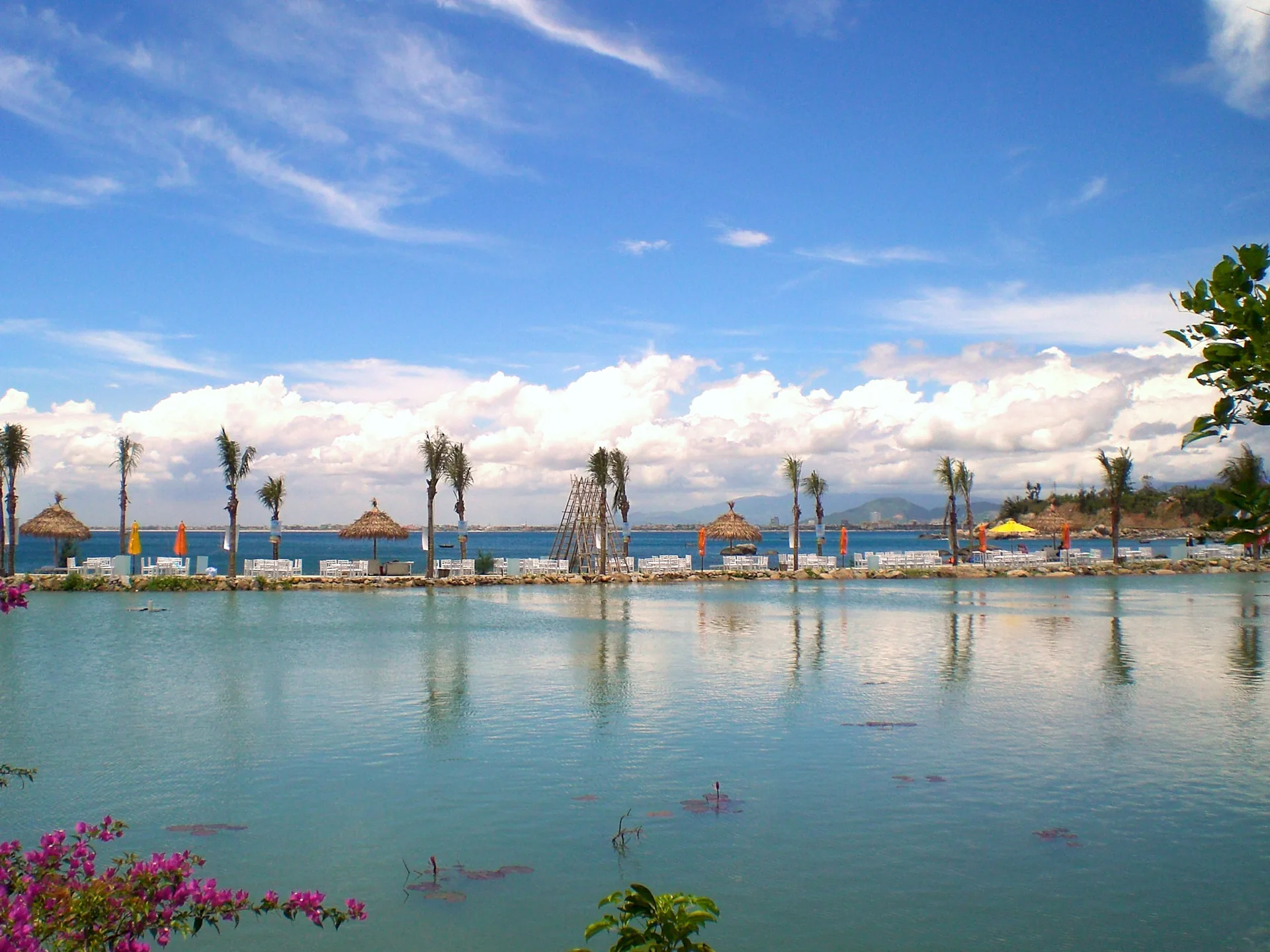
Mỹ Khê Beach, Đà Nẵng — Forbes-listed among Asia's most beautiful beaches; the 30km stretch is uncrowded in the early morning and ideal for swimming November through July
Travel Tips
- Roads: Da Nang has well-organized roads and traffic flows more smoothly than Hanoi or Ho Chi Minh City. Motorbike rental ($7–10/day) is an efficient way to cover the city.
- Beach safety: Flags indicate sea conditions — red means no swimming. Take them seriously; rip currents are real on exposed sections of the coast.
- Sunburn: The central Vietnam sun at beach latitude is intense. SPF 50 applied before beach arrival is not excessive.
- Scooter tours: Local operators offer half-day city scooter tours that cover key sights efficiently for around $25–35 per person.
- Currency: ATMs are widely available; major hotels and restaurants accept Visa and Mastercard.
Frequently Asked Questions
Is Da Nang better than Nha Trang for beaches? Different experiences: Da Nang's My Khe is more organized, cleaner, and has better surrounding infrastructure; Nha Trang's island offshore adds snorkeling variety but the city is more chaotic. Most travelers prefer Da Nang for overall experience.
How far is Da Nang from Hoi An? 30 km, approximately 35–45 minutes by car or Grab taxi. Costs around 200,000–250,000 VND one way.
Can I do the Hai Van Pass on a motorbike? Yes, and it is highly recommended for experienced riders. The road is well-maintained; the views are exceptional. Avoid in heavy rain.
Is Da Nang good for families? Excellent — the beaches are supervised, the food is varied, and the Ba Na Hills cable car is genuinely enjoyed by children.
Final Thoughts
Da Nang punches above its weight as a destination. Travelers who dismiss it as merely a transport hub for Hoi An and Hue miss a genuinely enjoyable city with good beaches, excellent food, and a compact cultural offer that can be absorbed in a few days. As a base for central Vietnam, it is simply the most practical option available.
Keywords: Da Nang travel guide, things to do in Da Nang, best time to visit Da Nang, how to get to Da Nang, where to stay in Da Nang, My Khe Beach, Ba Na Hills, Marble Mountains