Ho Chi Minh City Food Scene
Published on May 28, 2026
Why Saigon's Food Scene Stands Apart
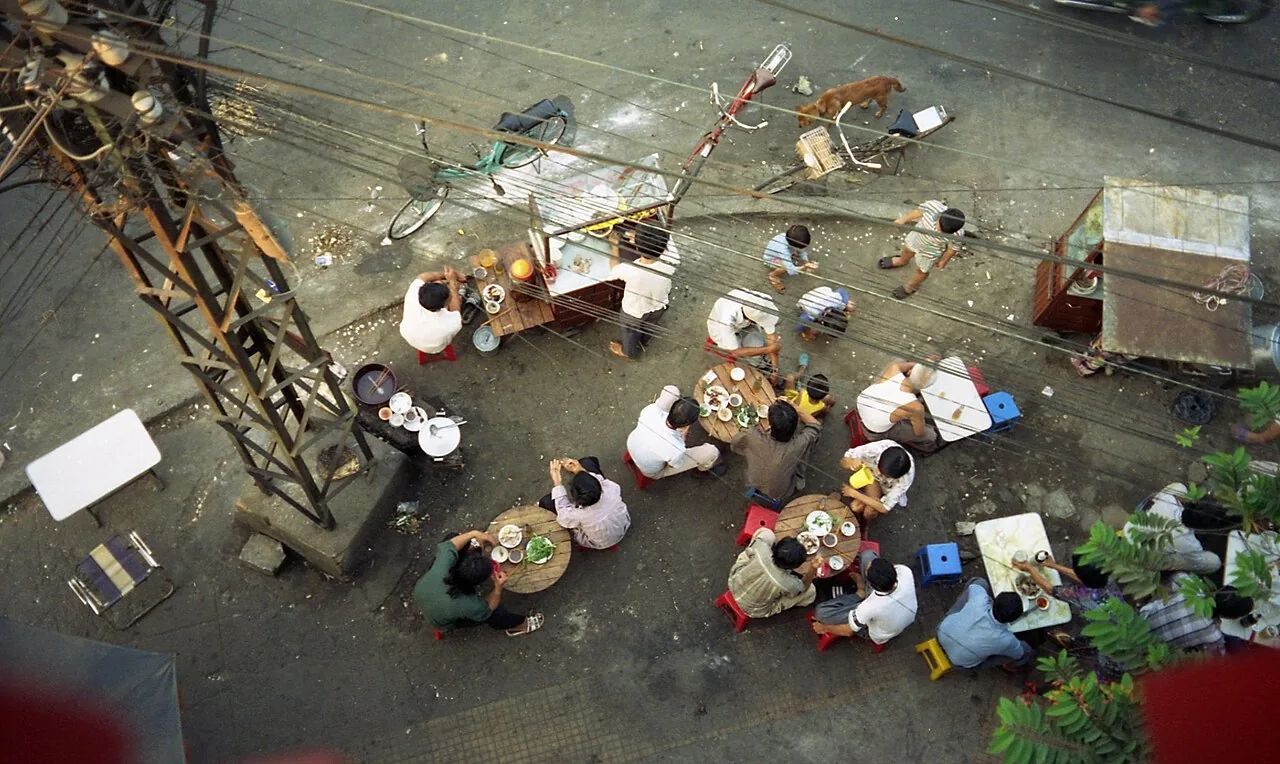
Ho Chi Minh City eats differently from the rest of Vietnam. The south's cuisine is richer, sweeter, and more eclectic than the north's — reflecting centuries of influence from the Cham, Khmer, and Chinese communities who shaped the region before Vietnamese settlement, and a century of French colonial presence that added baguettes, pâté, and café culture. Post-1975 migration brought food traditions from every province in Vietnam, and the city's prosperity has funded a restaurant scene that now spans street plastic stools to Michelin-starred dining rooms.
The city's food runs around the clock: the morning markets are active by 5am, the lunch rush peaks between 11am and 1pm at street stalls and office-block restaurants, and the evening street food scene continues well past midnight in districts like Bui Vien, Tan Binh, and District 4. For a committed eater, Ho Chi Minh City is among the finest food cities in Southeast Asia.
The Essential Dishes
Bánh Mì Saigon
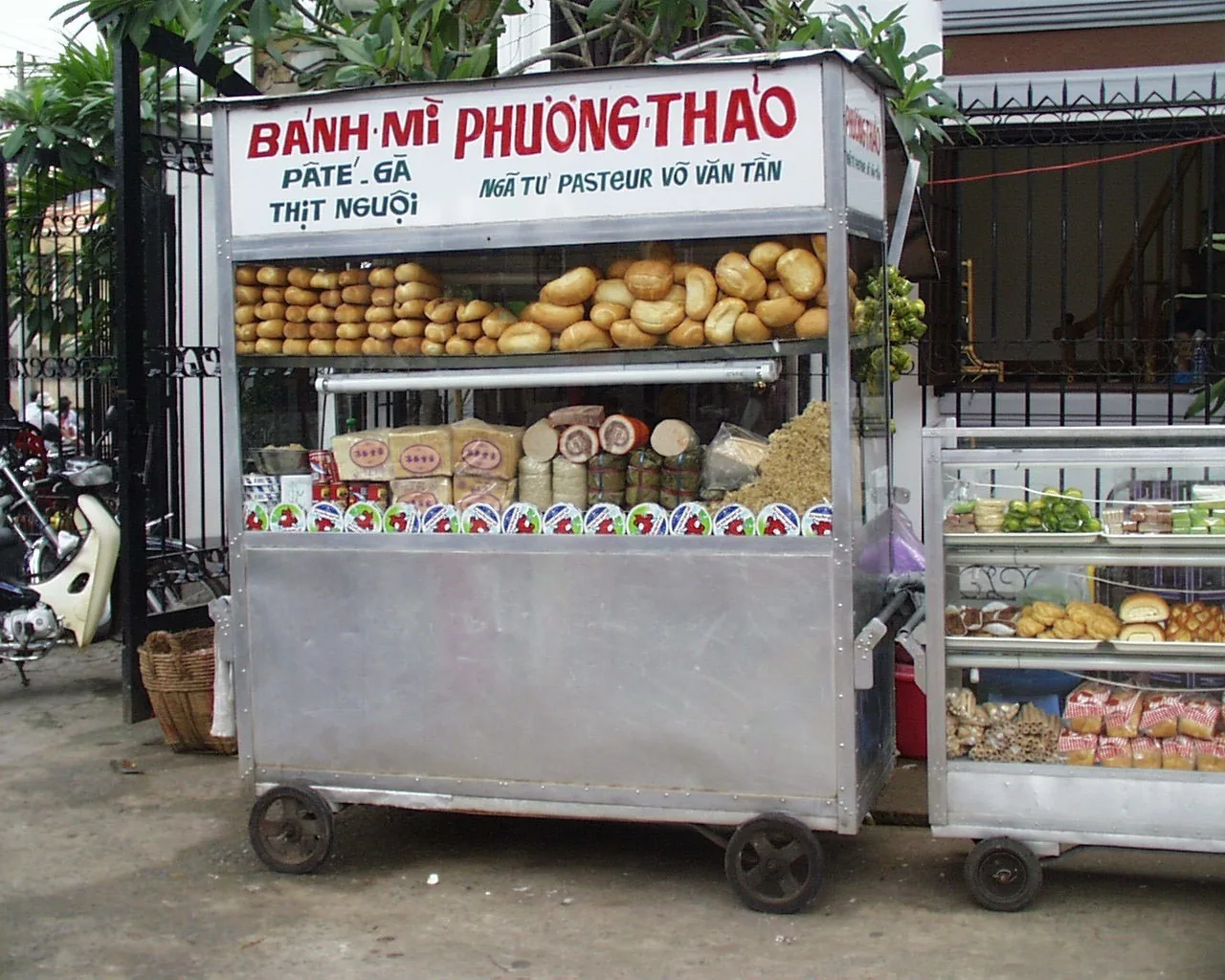
Saigon's bánh mì is the definitive version of the form — a crispy, airy baguette that evolved from the French pain de baguette, lighter and crustier than its European ancestor, filled with cold cuts (thịt nguội), pâté, pickled daikon and carrot, cucumber, coriander, and chili sauce. The balance of textures — crispy bread, soft pâté, crunchy pickles, fresh herbs — is the key. The Saigon version is more generously loaded than Hanoi's.
Where to eat: Bánh Mì Huynh Hoa (26 Le Thi Rieng, District 1) — the most famous address in the city, perpetual queue, extraordinary. Also Bánh Mì Phượng-style shops throughout Ben Thanh Market area. Budget 25,000–50,000 VND.
Hủ Tiếu (Southern Noodle Soup)
Saigon's own noodle soup — and its most beloved. Hủ tiếu uses pork bone or seafood broth (cleaner and lighter than phở) with translucent rice noodles, minced pork, liver, prawn, quail egg, and fried shallots. It appears in two primary forms: hủ tiếu Nam Vang (with Cambodian Phnom Penh influences — thicker broth, more pork) and hủ tiếu Mỹ Tho (from the Mekong Delta — lighter, seafood-forward). Often served khô (dry, with broth on the side).
Where to eat: Morning stalls throughout Districts 5, 6, and Cholon (the city's Chinatown); Hủ Tiếu Nam Vang at the Binh Tay Market area. Budget 35,000–60,000 VND.
Cơm Tấm (Broken Rice)
Saigon's definitive everyday meal — a dish built on tấm (the broken rice grains left over from the milling process, originally a poor man's ingredient that developed its own culinary identity). Served with grilled pork chop (sườn nướng), steamed pork and egg cake (bì chả), shredded pork skin, a fried egg, cucumber slices, and tangy fish sauce (nước mắm). Found on virtually every street in the city and eaten morning, noon, and evening.

Cơm tấm — broken rice with grilled pork chop, eaten morning, noon, and night across Saigon
Where to eat: Cơm Tấm Thuận Kiều (consistent neighborhood staple near Ben Thanh); the concentration of stalls on Vo Van Tan Street in District 3 is excellent. Budget 40,000–80,000 VND.
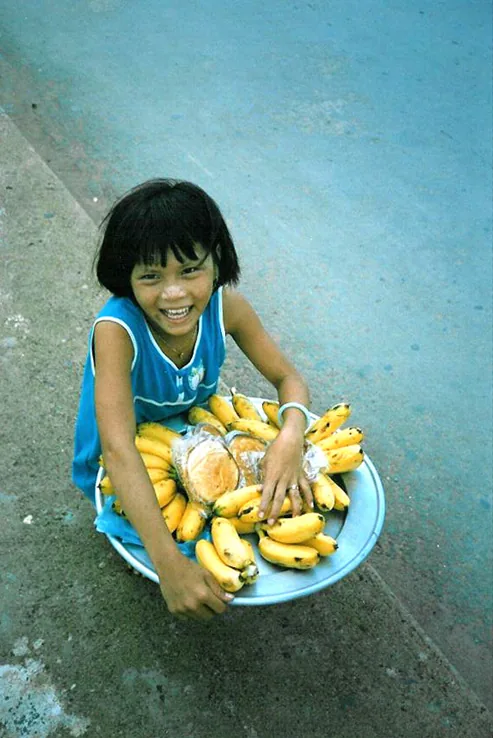
Vibrant street food scene in Ho Chi Minh City
Bánh Xèo (Saigon Sizzling Crepe)
A large, crispy turmeric-yellow rice flour crepe — the xèo (sizzle) of the title refers to the sound of batter hitting a hot wok — filled with shrimp, pork belly, bean sprouts, and spring onion. Eaten by wrapping pieces of the crepe in lettuce and fresh herbs and dipping in a sweet-sour fish sauce. The Saigon version is larger and crispier than the Hue variation.
Where to eat: Banh Xeo 46A (46A Dinh Cong Trang, District 3) — long-established, excellent. Also street stalls throughout District 4 and Binh Thanh. Budget 60,000–100,000 VND.
Bún Thịt Nướng (Cold Noodle Bowl with Grilled Pork)
A cold dish: rice vermicelli at the base, topped with grilled lemongrass pork, fresh herbs, fried spring rolls, crushed roasted peanuts, and shredded carrot and daikon pickles, with a bowl of fish sauce dressing on the side. Bright, fresh, and filling — a popular lunch option year-round.
Where to eat: Throughout the city; Bun Thit Nuong Co Giang (36 Co Giang Street, District 1) is a well-regarded address. Budget 35,000–60,000 VND.
Bánh Canh Cua (Crab and Udon Noodle Soup)
Thick, chewy tapioca noodles in a rich crab-and-pork broth, topped with whole crab claws, fried tofu, pork balls, and spring onion. The broth is thick and slightly gelatinous from the crab protein. A Saigon specialty rarely found outside the south.
Where to eat: Stalls along Vinh Khanh Street in District 4 (the city's seafood street); also morning stalls in Tan Binh District. Budget 60,000–120,000 VND.
Gỏi Cuốn (Fresh Spring Rolls)
Not a Saigon exclusive, but perfected here — translucent rice paper rolls filled with shrimp, pork, rice vermicelli, mint, and lettuce, eaten fresh (not fried) with a thick peanut-hoisin sauce. The quality difference between excellent and mediocre gỏi cuốn is entirely in the freshness of the ingredients and the balance of the peanut sauce.
Where to eat: Most restaurants in District 1; also street carts throughout the Ben Thanh area. Budget 20,000–40,000 VND per roll.
Best Food Streets and Districts

Vinh Khanh Street in District 4 — Saigon's best outdoor seafood grilling strip, alive from 6pm
Vinh Khanh Street (District 4): Known as the city's seafood street — blocks of outdoor restaurants grilling prawns, squid, clams, and crab over charcoal on the pavement. Busy from 6pm to midnight. Lively, loud, and excellent value.
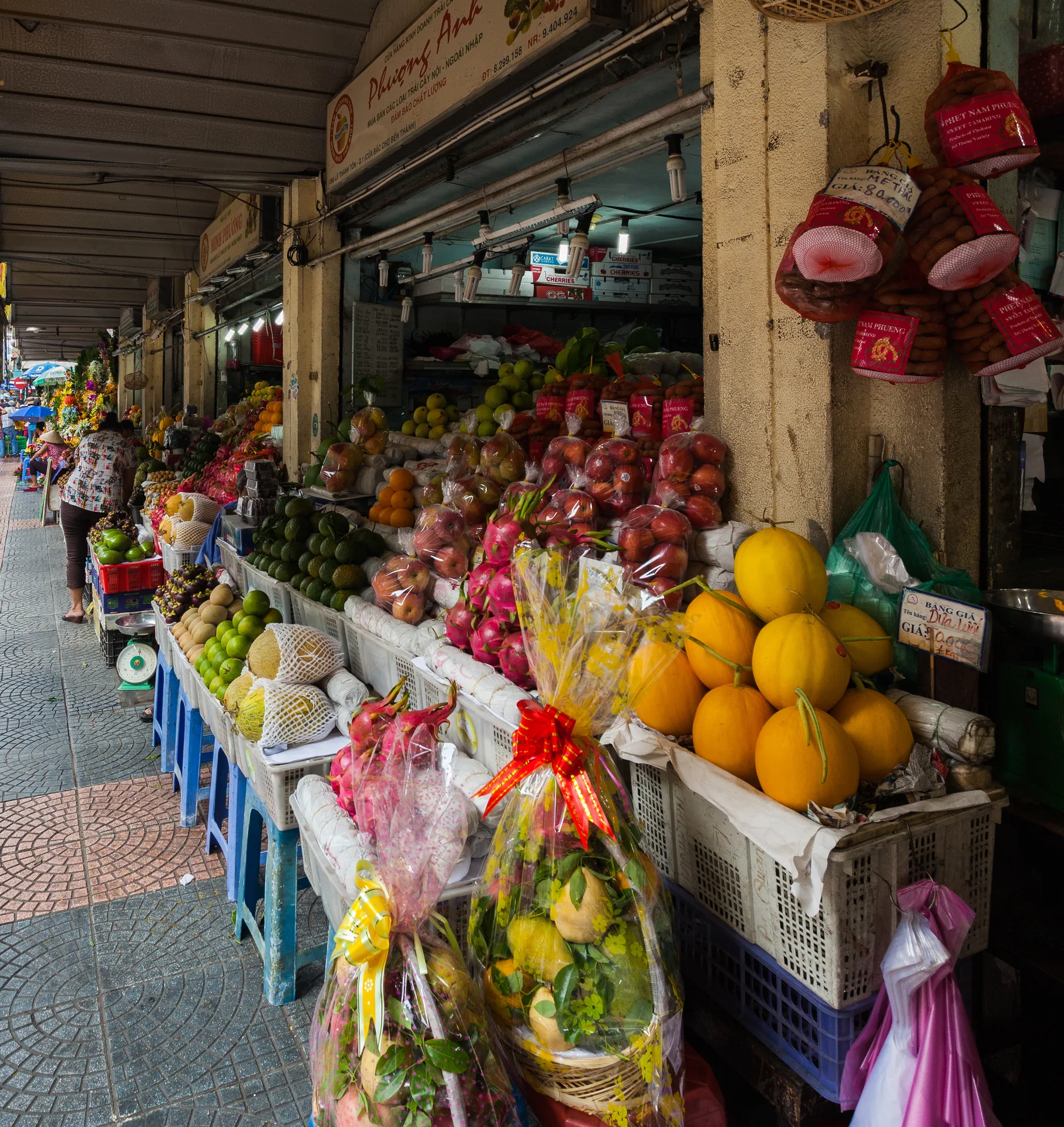
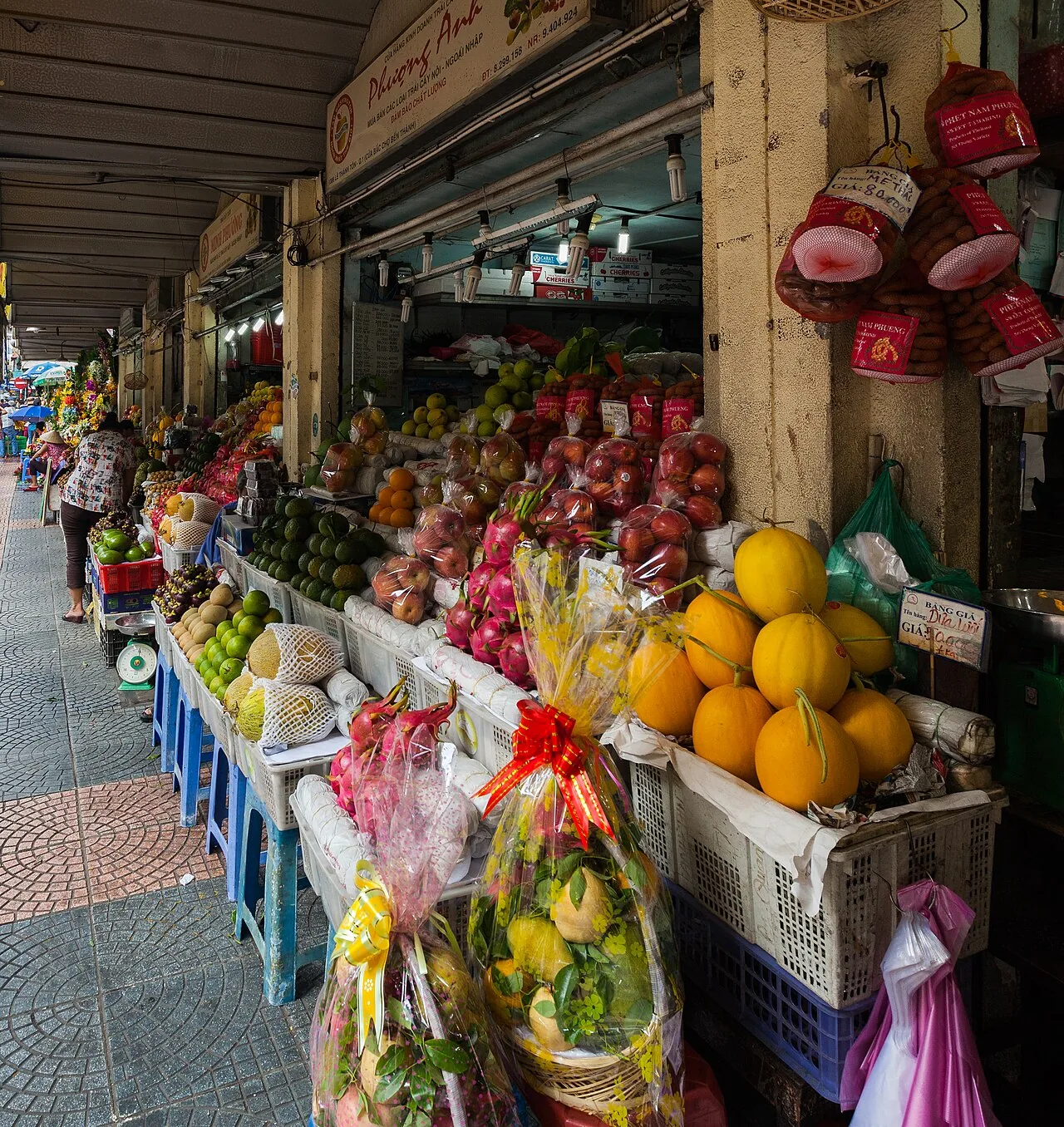
Ben Thanh Market, a hub for food and culture in Saigon
Bui Vien Street (District 1): The backpacker street has evolved into a major street food strip — grilled skewers, bánh tráng nướng (grilled rice paper), and dozens of other snacks available from 5pm. Touristy but fun.
Nguyen Thuong Hien Street (District 3): A street of small, authentic Vietnamese restaurants popular with locals — broken rice, bún thịt nướng, and chè (sweet soups).
Cholon (District 5–6, Chinatown): The city's historic Cantonese and Teochew Chinese neighborhood, with dim sum teahouses, Cantonese roast duck shops, and Chinese pastry bakeries that have operated for generations.
Tan Dinh Market Area (District 1–3 border): A quieter food district with excellent cơm tấm, hủ tiếu, and Southern Vietnamese specialties popular with office workers.
Coffee Culture
Ho Chi Minh City's café scene is extraordinary — the city has tens of thousands of cafes, ranging from ground-floor tube houses with plastic furniture to elaborate multi-story concept cafes in District 2 and Thao Dien.
Cà phê sữa đá: Vietnamese iced coffee — robusta drip filter over ice and condensed milk. Strong, sweet, and the city's most consumed beverage. Budget 15,000–35,000 VND at street stalls.
Cà phê vợt (Sock Coffee): A Saigon institution — coffee brewed through a flannel sock filter in old-school local cafes. Softer, less bitter than the drip method. Find it at Cheo Leo Café (109 Nguyen Thien Thuat) — open since 1950.
Specialty Coffee: A thriving third-wave specialty coffee scene has emerged in District 2, District 3, and Thao Dien — Nguyen Coffee Supply, Shin Coffee, and Workshop Coffee are the best-known roasters.
Street Food by Time of Day
5–9am (Breakfast): Bánh mì carts; hủ tiếu stalls; cháo (rice porridge) vendors; xôi (sticky rice) near markets.
11am–2pm (Lunch): Cơm tấm everywhere; bún thịt nướng; bánh xèo stalls.
3–6pm (Afternoon): Bánh tráng trộn (rice paper salad) from street carts near high schools; chè (sweet soups); fresh coconut.
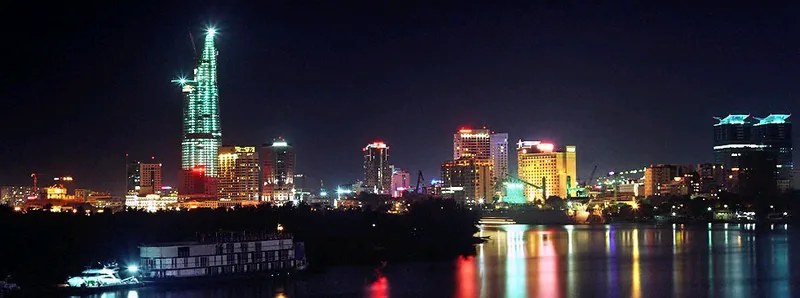
Ho Chi Minh City skyline glowing at night
6pm–midnight (Evening): Vinh Khanh seafood; Bui Vien street food; rooftop restaurants in District 1 for the city skyline.
After midnight: Cháo frog at late-night stalls near Bui Vien; bún bò Huế at 24-hour noodle shops.
Practical Information
Budget: Street food meals cost 30,000–100,000 VND ($1.25–4). Mid-range restaurants run 150,000–400,000 VND per person. High-end dining from 600,000 VND upwards.
Neighborhoods to base yourself: District 1 puts you walking distance of the Ben Thanh Market food scene and many street food addresses. District 3 is quieter and more local. Thao Dien (District 2) offers the best café scene.
Apps: Grab Food delivers from most restaurants; Foody (now Shopee Food) has Vietnamese-language restaurant reviews that are more current than international platforms.
Final Thoughts
Ho Chi Minh City's food scene rewards exploration rather than destination-following. The best eating is often in unmarked stalls in residential lanes, in markets that shut by 9am, and in tiny restaurants whose menus haven't changed since the 1980s. Come hungry, come early, and follow the queues.