Hue Royal Cuisine
Published on May 28, 2026
Why Hue's Cuisine Is Exceptional
Hue's food is widely considered the most refined and complex in Vietnam — a reputation earned over four centuries as the imperial capital of the Nguyen dynasty (1802–1945). Two parallel culinary traditions developed here simultaneously: the elaborate royal banquet food served within the Forbidden Purple City, designed to impress visiting dignitaries and honor the emperor, and an extraordinarily sophisticated street food culture developed in the surrounding city, where vendors competed to feed the imperial court's large entourage of officials, soldiers, and craftsmen.
The result is a cuisine of unusual range — dishes that are simultaneously aristocratic and popular, visually meticulous and intensely flavored, smaller in portion size than northern or southern Vietnamese food, and defined by a level of chili heat unusual in the north. Hue cooks use more shrimp paste, more fermented ingredients, and more red chili than anywhere else in Vietnam.
The Royal Table: Imperial Cuisine
Hue's imperial cuisine (ẩm thực cung đình) was designed to present the emperor with dozens of small, beautifully presented dishes at each meal — never repeating a dish across a week, with strict attention to seasonal ingredients, color balance, and symbolic meaning.
Today, several Hue restaurants reconstruct the imperial banquet experience with 8–12 courses of small dishes. While these are approximations of the original court meals, they offer the closest available encounter with Hue's royal culinary heritage.
Where to experience it: Tịnh Gia Viên (Tinh Gia Vien Restaurant, 7 Le Thanh Ton) and Hue Mandarin Café (24 Tran Cao Van) are the most respected operators of imperial-style dining. Expect 250,000–600,000 VND per person for a full course meal.
The Essential Street Dishes
Bún Bò Huế (Spicy Beef and Pork Noodle Soup)
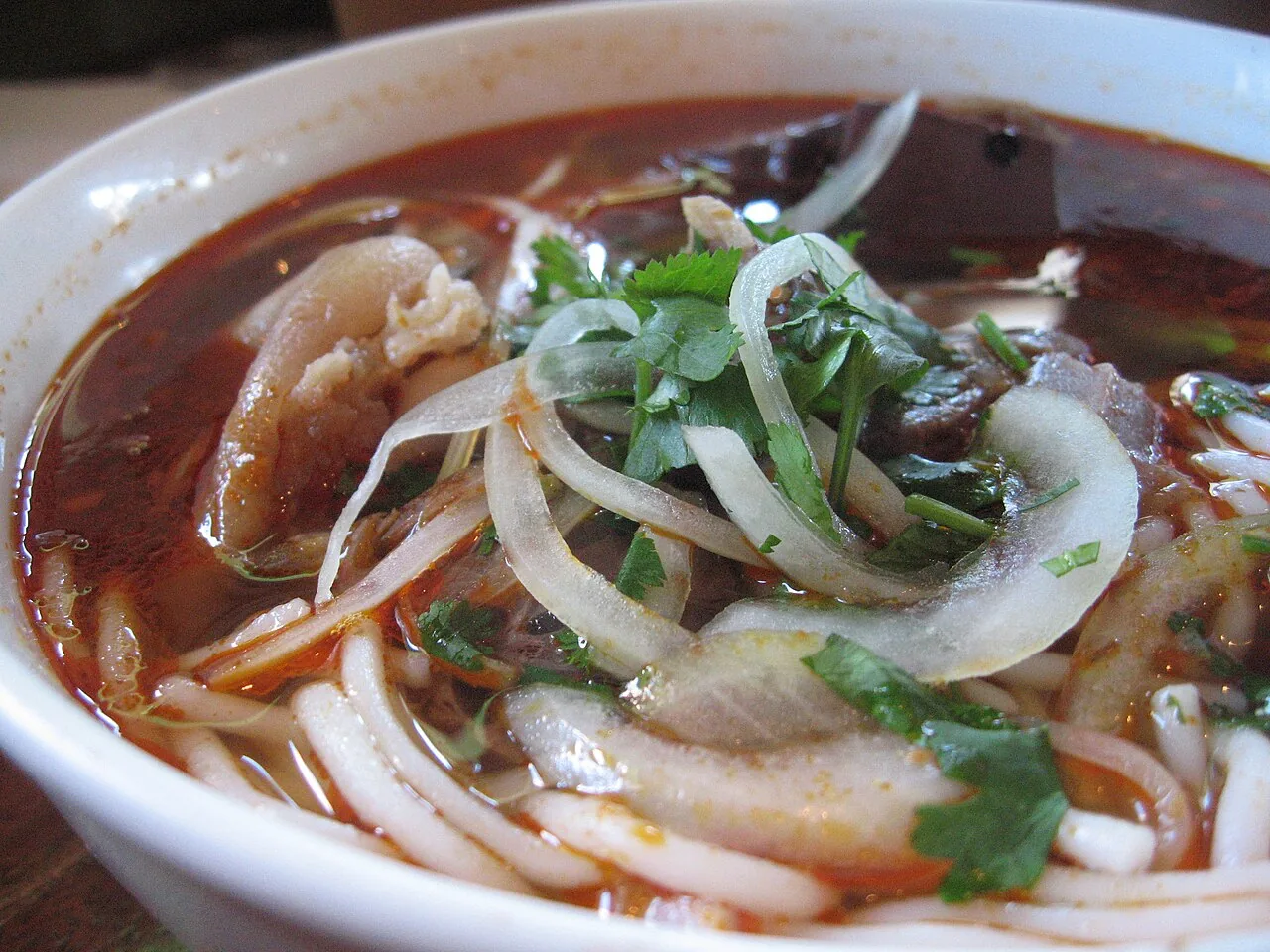
Hue's greatest contribution to Vietnamese cuisine — a soup so good it has spread to every city in Vietnam while remaining most authentically itself in Hue. The broth is built on pork and beef bones simmered for hours with lemongrass, shrimp paste (mắm ruốc), and dried chili — complex, opaque, deeply savory, and genuinely spicy in a way that Vietnamese broths rarely are. Served with thick round rice noodles (different from phở's flat noodles), sliced beef shank, pork hock, Vietnamese coriander, and a squeeze of lime.

Bún bò Huế — Hue's greatest culinary contribution, best eaten before 11am when the pot empties
Where to eat: Bún Bò Huế Mụ Rơi (No. 15, Ly Thuong Kiet — the most beloved local address); stalls along Nguyen Cong Tru Street from 6–10am. Note: The best bún bò Huế in Hue is served only in the morning — kitchens close when the pot empties, typically by 11am.
Bánh Khoái (Hue Sizzling Crepe)
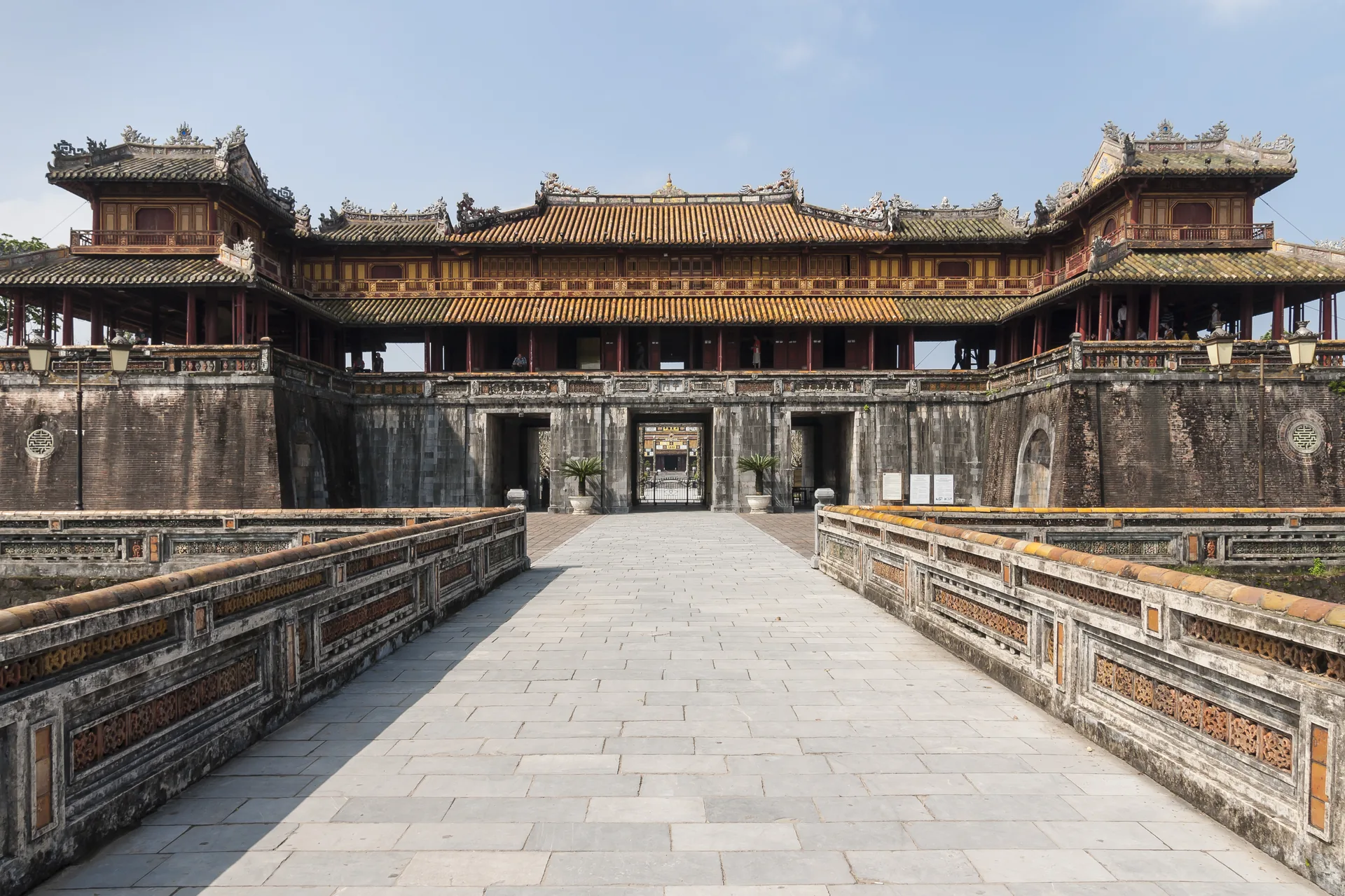
The historic Imperial Citadel in Hue, heart of royal Vietnam
Hue's variation of the southern bánh xèo — a smaller, crispier rice flour crepe with shrimp, pork, bean sprouts, and green onion, served with a thick, peanut-enriched fermented soybean dipping sauce (tương) rather than the fish sauce used elsewhere. The sauce is the defining element — complex, slightly sweet, and completely distinctive.
Where to eat: The bánh khoái vendors along Truong Dinh Street opposite the Dong Ba Market are the traditional address. Expect 40,000–60,000 VND per crepe.
Bánh Bèo (Steamed Water Fern Cakes)
Tiny steamed rice flour discs in ceramic cups, topped with dried shrimp powder, crispy pork crackling (tóp mỡ), and spring onion oil, served with sweet-savory dipping sauce. Hue's most delicate street dish — the cakes themselves are almost translucent, their flavor entirely derived from the toppings. Eaten in sets of 8–12 cakes.
Where to eat: Com Sen Restaurant (49 Nguyen Binh Khiem) and Quan Banh Beo Chi Hoa (42 Dang Tran Con) are the most cited local addresses. Also street stalls in the residential lanes of Kim Long village.
Cơm Hến (Clam Rice)
A cold breakfast dish — cold cooked rice topped with tiny freshwater clams from the Perfume River, fried pork crackling, peanuts, sesame seeds, shredded banana blossom, fermented shrimp paste, chili, and fresh herbs. Every topping is served separately and mixed at the table. It is simultaneously humble and complex — the interplay of textures and temperatures is unlike anything else in Vietnamese cuisine.
Where to eat: Stalls on Truong Dinh Street near Cau Den (the Black Bridge) from 6–10am; also street vendors on Dao Tan Street in the Vy Da district, where the river clams are sourced.
Bánh Nậm and Bánh Lọc
Two steamed rice cake variations unique to Hue:
Bánh Lọc: Translucent tapioca dumpling filled with shrimp and pork fat — the translucency of the wrapper showing the pink shrimp inside is a hallmark of quality. Served with a sweet fish sauce dip.
Bánh Nậm: Flat rice flour cake steamed in a banana leaf, filled with minced pork and mushroom, with a texture somewhere between a dumpling and a rice cake. The banana leaf steaming imparts a subtle fragrance.

Bánh bèo, bánh lọc, and bánh nậm — Hue's most distinctive and delicate street dishes
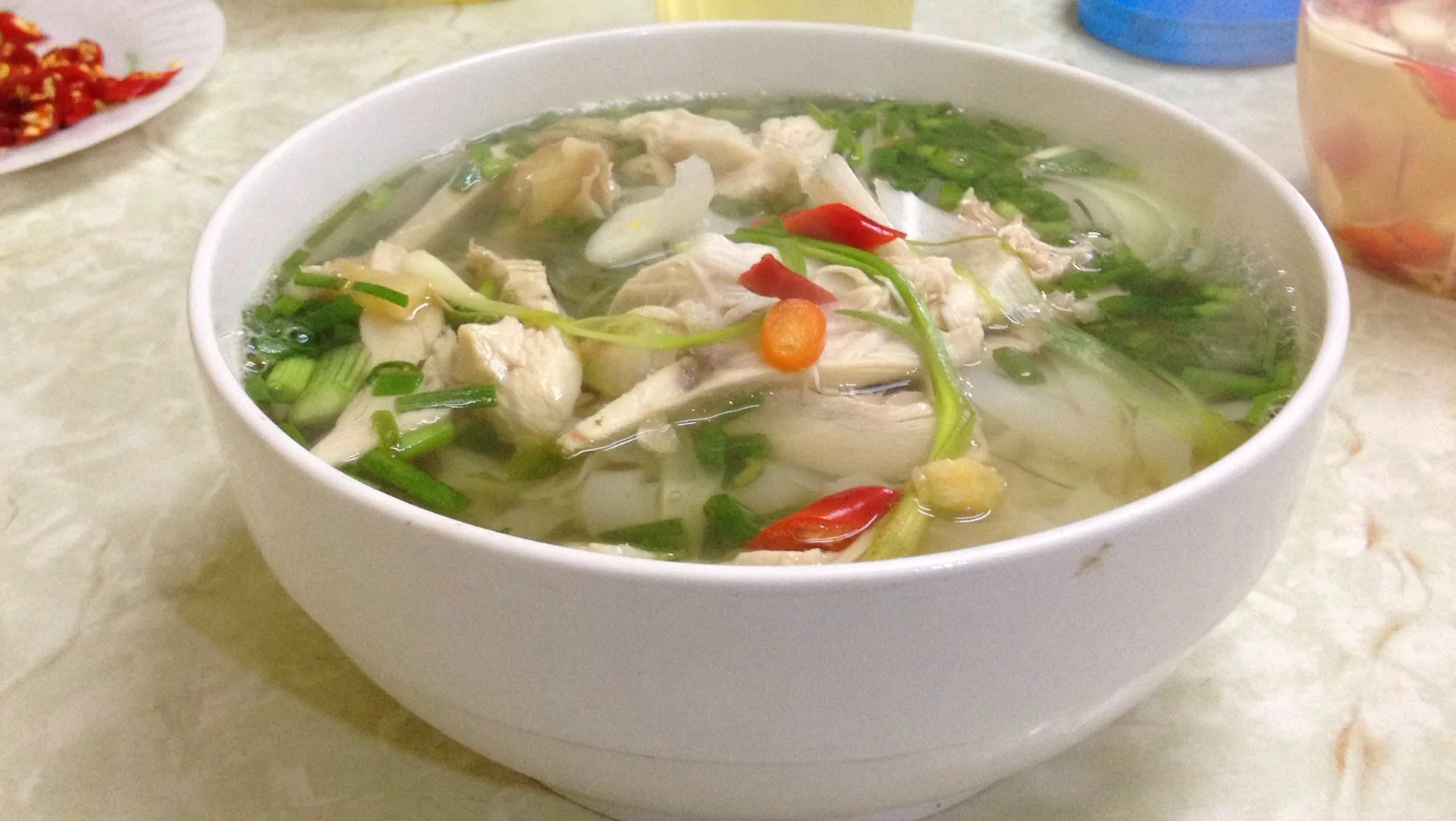
Bun bo Hue - the spicy beef noodle soup from Hue
Where to eat: Bánh Bèo Bà Đào (formerly at 8 Nguyen Binh Khiem) serves all three — bánh bèo, bánh lọc, and bánh nậm — as a set.
Chè Huế (Hue Sweet Soups)
Hue's chè (sweet dessert soups) are more elaborate than in other Vietnamese cities. The royal court developed dozens of varieties for ceremonial occasions, and many survive today: chè bắp (corn pudding), chè đậu ván (flat bean soup with jasmine water), chè hạt sen (lotus seed pudding in syrup). Served warm or cold, in small clay bowls.
Where to eat: The chè stalls on Hung Vuong Street between 6pm and 10pm are a Hue evening ritual. Also stalls around Dong Ba Market.
Imperial Cakes and Pastries
Hue's royal court developed an elaborate tradition of ornamental rice cakes — bánh (cake) formed into flowers, fruits, and animals for ceremonial presentation. Today these appear primarily at festivals and in a few specialist shops:
Bánh Sen Tứ Quý (Four-Season Lotus Cake): A rice cake shaped to resemble a lotus flower, served at the Hue Festival every two years.
Mứt Gừng (Crystallized Ginger): A Hue court sweetmeat — thin slices of ginger candied in sugar syrup — sold in Old Quarter shops as gifts.
Eating in Hue: Practical Notes
Hours: Hue's best street food is strongly morning-biased. Bún bò Huế is gone by 11am at most stalls. Cơm hến is a breakfast dish, rarely available after 10am.
Price: Street dishes cost 30,000–70,000 VND. Imperial dining runs 250,000–600,000 VND per person.
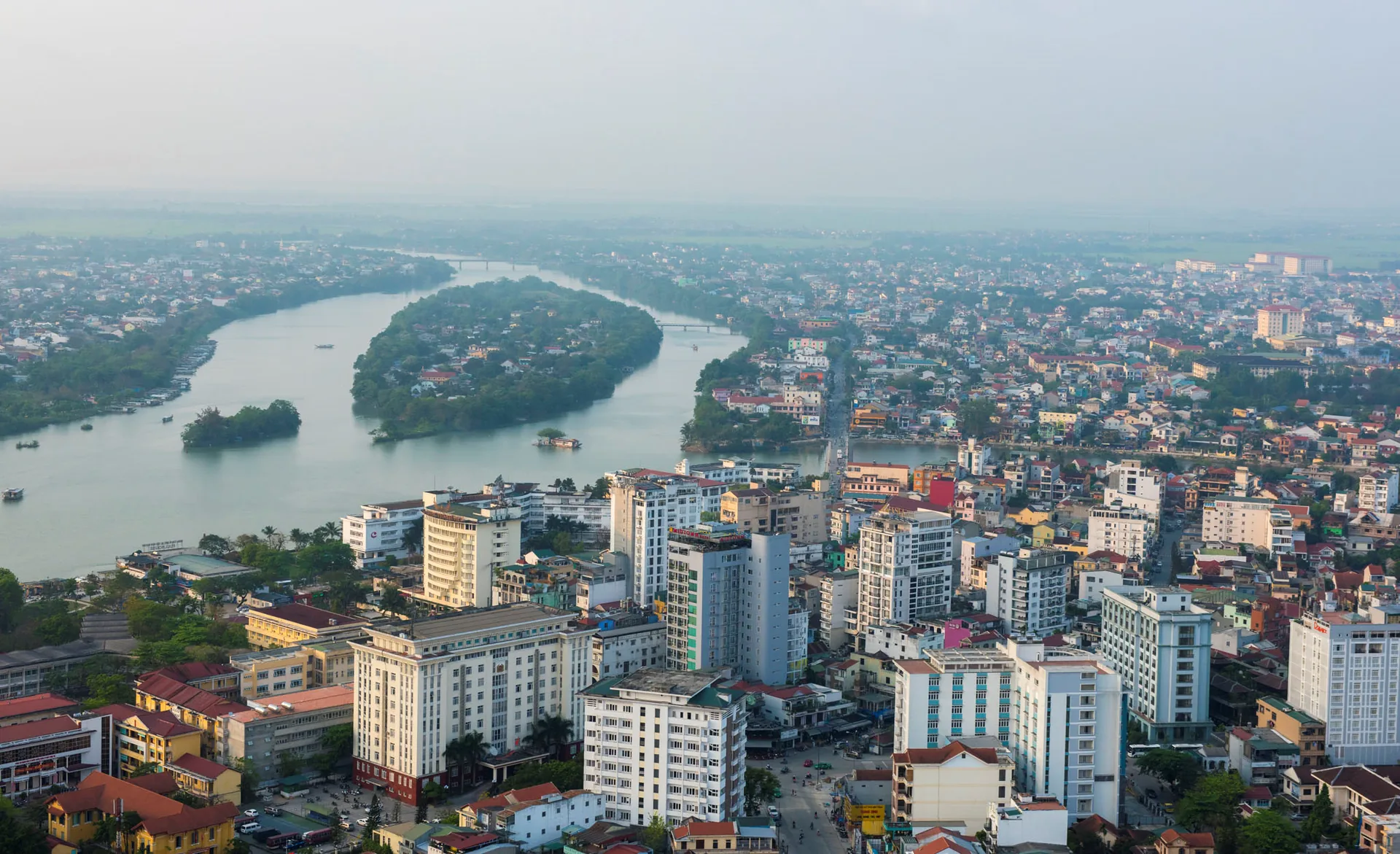
Location: The south bank of the Perfume River (the modern city) has the highest concentration of street food addresses. The north bank (imperial city side) has fewer stalls but several historic restaurant addresses in Kim Long village.

A dragon boat on the serene Perfume River in Hue
Vegetarian options: Hue has a strong Buddhist vegetarian tradition — the 1st and 15th of each lunar month, many stalls serve vegetarian versions of standard dishes. Designated vegetarian restaurants around the Thien Mu Pagoda area operate daily.
Recommended Food Itinerary
Morning
- 7am: Bún bò Huế at a local stall on Ly Thuong Kiet
- 9am: Bánh khoái at Truong Dinh Street
- 10am: Cơm hến near Cau Den Bridge
Lunch
- Imperial cuisine set lunch at Tinh Gia Vien (book ahead)
Afternoon
- Explore Dong Ba Market for ingredients, dried shrimp paste, and Hue spices
Evening
- Bánh bèo, bánh lọc, bánh nậm set dinner at a specialty restaurant
- Chè (sweet soup) from a Hung Vuong Street stall
Final Thoughts
Hue's food culture is inseparable from its history. Every dish carries traces of the imperial court — the fastidious presentation, the layered flavors, the attention to color and texture — even in its humblest street form. A morning of eating through the markets and stalls of Hue is as illuminating as a morning at the Forbidden City itself.