Kon Tum Highland Town
Published on May 28, 2026
Why Visit Kon Tum
Kon Tum sits at the northern edge of Vietnam's Central Highlands, on a bend in the Dak Bla River, 550 km from Ho Chi Minh City and a world away from the coastal tourist trail. It is the least-visited provincial capital in the highlands — which is precisely its appeal. There are no cable cars, no resort hotels, and almost no English menus. What there is: a remarkable 1918 Bahnar-style wooden church, a cluster of authentic ethnic minority villages within cycling distance of town, and a river that still moves at the pace of dugout canoes.
Kon Tum is home to significant populations of the Bahnar and Jarai peoples — two of Vietnam's Montagnard (highland) ethnic groups — who maintain longhouse villages, rong communal houses, and cultural traditions that have survived decades of change largely intact. For travelers willing to engage slowly, it offers the most genuine Central Highlands cultural encounter in Vietnam.
Quick Facts
- Location: Kon Tum Province, northern Central Highlands, 220 km from Da Nang, 550 km from HCMC
- Altitude: ~525 m
- Best time to visit: November to April (dry season)
- Recommended stay: 2–3 days
- Daily budget: Budget $20–35 | Mid-range $45–70 | Luxury limited
Top Things to Do
1. Kon Tum Wooden Church (Nha Tho Go)
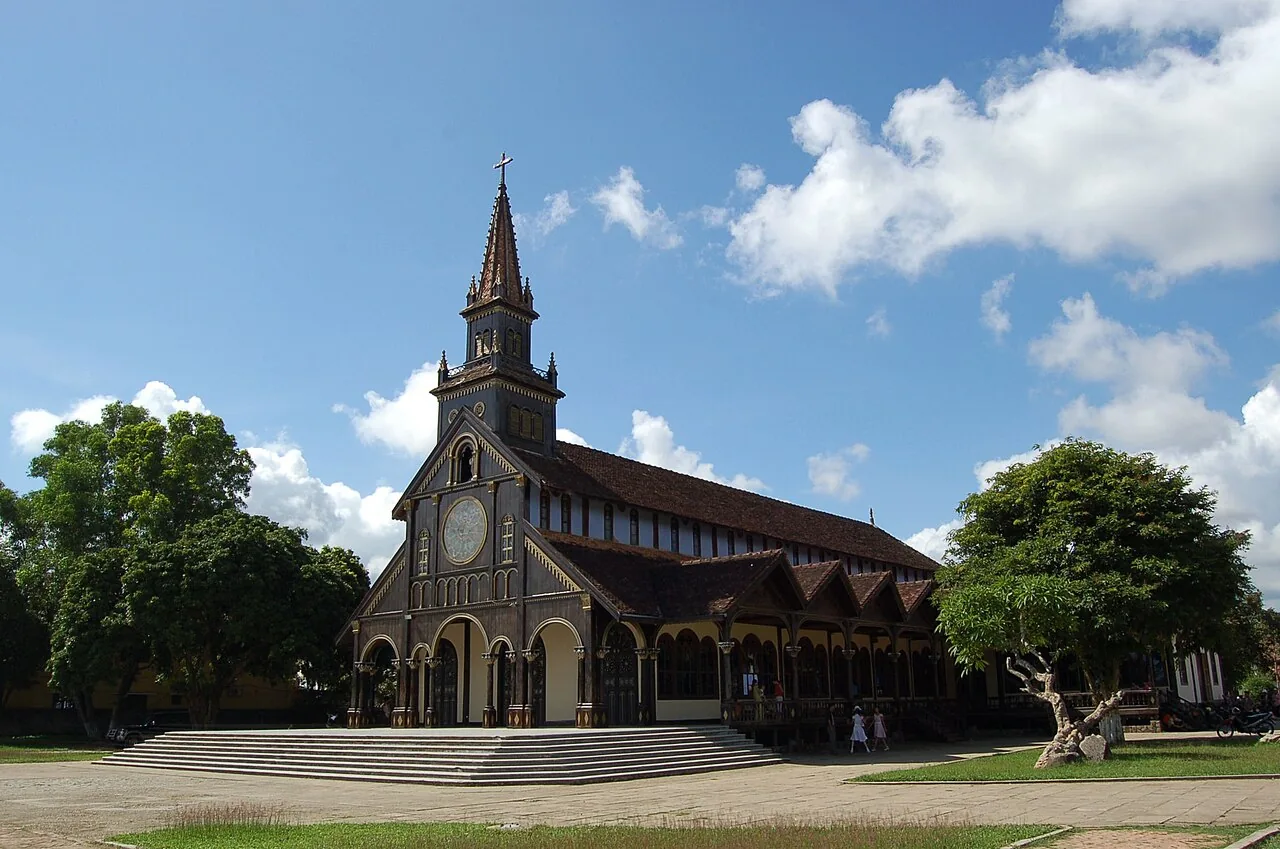
Built in 1918 by French missionaries in collaboration with Bahnar craftsmen, this extraordinary wooden church blends Gothic ecclesiastical structure with traditional Bahnar longhouse aesthetics — carved wooden pillars, a steeply pitched roof, and a bell tower that rises above the surrounding trees. The interior is dim and cool, decorated with Bahnar iconography. Mass is held in the Bahnar language. One of the most architecturally distinctive religious buildings in Vietnam.
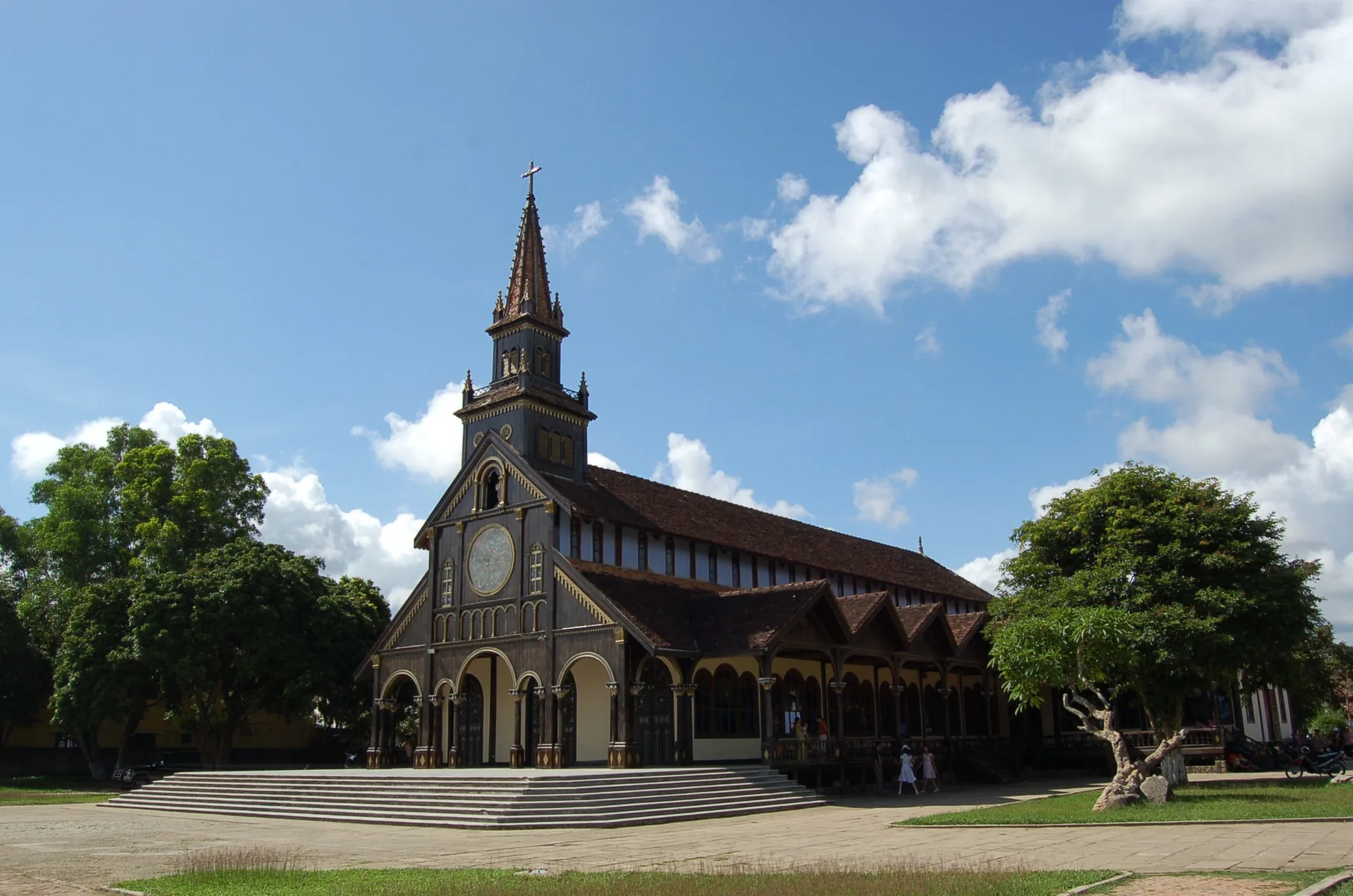
The 1918 Kon Tum Wooden Church — a landmark built in the Bahnar longhouse tradition
Duration: 30 minutes. Tip: Visit in the late afternoon when the light catches the carved wooden facade. The attached orphanage welcomes visitors.
2. Bahnar Village of Kon Ko Tu
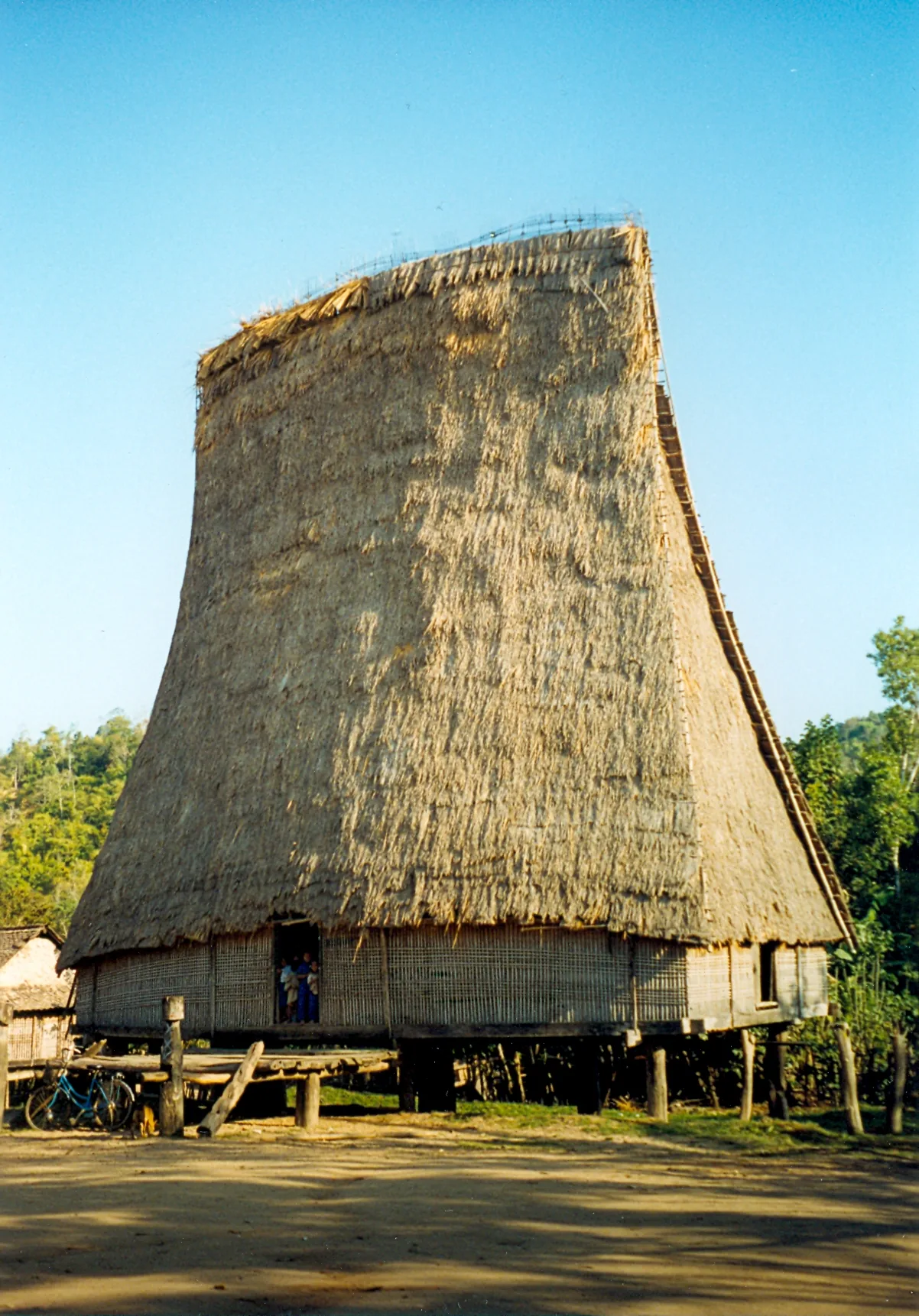
The closest authentic Bahnar village to the city center — a 10-minute ride by motorbike across the Dak Bla River. The village's central rong (communal house) is a soaring bamboo and wood structure reaching 15+ meters, built without nails, where community decisions are made and festivals held. Traditional stilt houses surround it.

Traditional Bahnar longhouse architecture in a village near Kon Tum
Duration: 1–2 hours. Tip: Arrive early morning when the village is active; bring a small gift of fruit or rice wine — Bahnar hospitality protocol expects reciprocation.
3. Kon Ro Bang Village
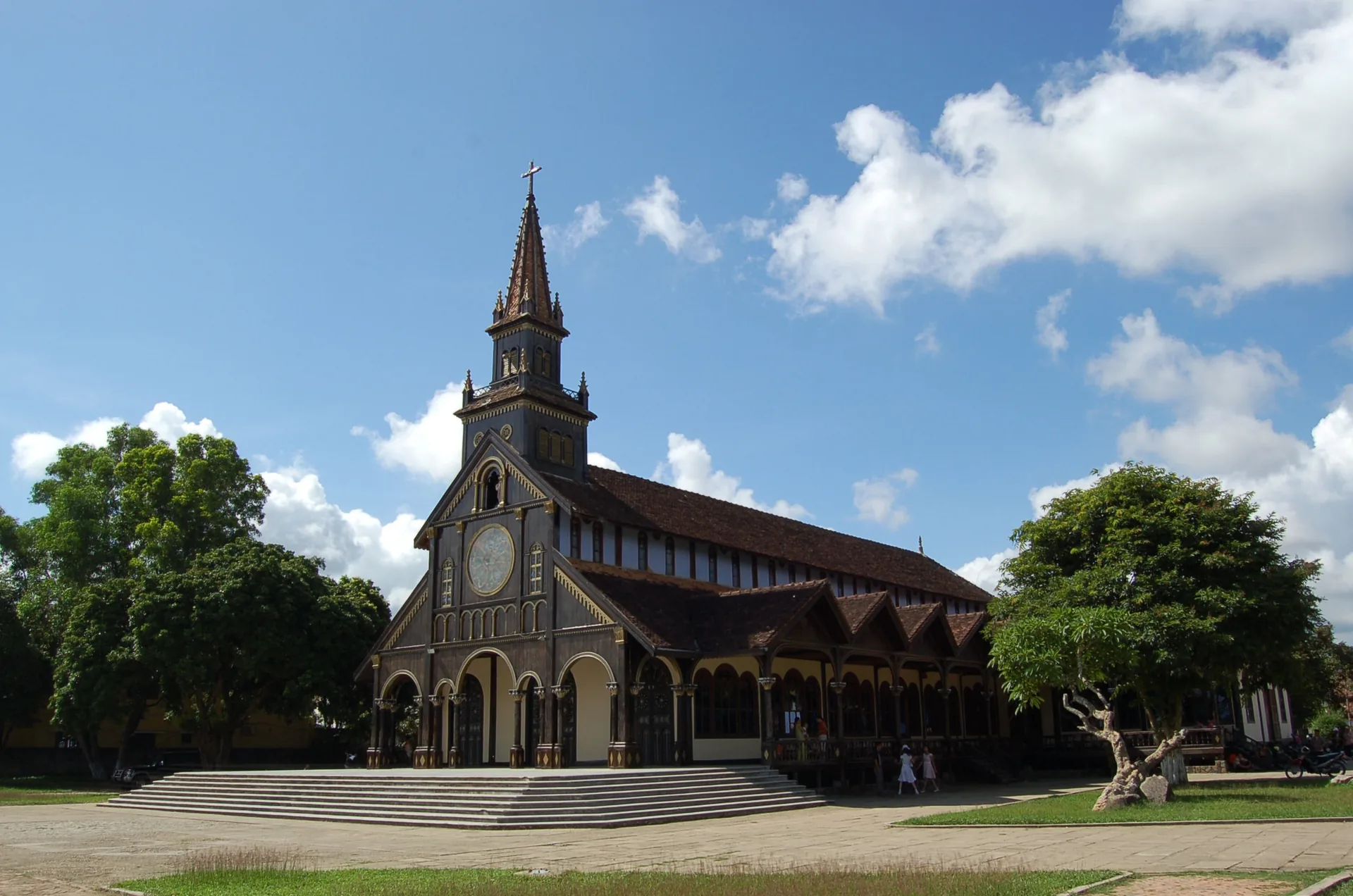
The ornate wooden church in Kon Tum city center
A second Bahnar settlement across the river with a particularly well-preserved rong and active weaving traditions. Bahnar women weave cotton fabric with geometric patterns using backstrap looms; finished cloth is sold from homes. Duration: 1–2 hours. Tip: The walk between Kon Ko Tu and Kon Ro Bang (30 minutes on foot along the river) passes through riverside farmland and is pleasant in the dry season.
4. Dak Bla River
The river that defines Kon Tum — slow, green, and navigated by dugout canoes. Local boat owners run informal trips along the river (negotiate 100,000–200,000 VND for 1–2 hours) through forest stretches and past minority villages. Kayak rentals are available from a few guesthouses. Tip: Sunset on the river from the old suspension bridge is one of Kon Tum's signature views.
5. Kon Tum Museum
A provincial museum with exhibits on the Bahnar, Jarai, Sedang, and Brau ethnic groups — traditional costumes, musical instruments (the gong sets are remarkable), agricultural tools, and wartime history. Small but well-organized. Duration: 1 hour. Entry: Free or nominal fee.
6. Jarai Village of Plei Tong
A Jarai village 5 km south of Kon Tum town, distinguishable from Bahnar settlements by architectural differences and the distinctive Jarai cemetery — grave houses elaborately carved with figures, animals, and objects for the afterlife, believed to supply the dead with necessities. Jarai burial customs are among the most elaborate in Southeast Asia. Duration: 1–2 hours. Tip: Go with a local guide who can explain the symbolism of the grave carvings and facilitate introductions.
7. Chư Mom Ray National Park (Day Trip)
A biodiversity hotspot 45 km northwest of Kon Tum, bordering Cambodia, protecting primary forests with elephants, bears, clouded leopards, and over 1,000 plant species. Trekking with park rangers is possible with advance arrangement. Duration: Full day. Tip: Contact the park office in advance; guides are mandatory and trails are not self-navigable.
Local Food
Cơm Lam (Bamboo Sticky Rice): Glutinous rice cooked inside sealed bamboo tubes over an open fire — a highland staple shared across ethnic groups. Found at market stalls for 10,000–20,000 VND.
Thit Nuong Rung (Grilled Forest Meat): Grilled wild-caught or farm-raised animals over charcoal, eaten with highland herbs and sticky rice. Served at simple restaurants near the market.
Ruou Can (Straw Wine): Fermented rice or cassava wine in a clay jar, drunk communally through long bamboo straws. Offered at homestays and village visits — part of Bahnar hospitality ritual.
Pho Kho Kon Tum: A dry noodle variation found only in this region — rice noodles served without broth, topped with pork, spring onions, and a thick bone-based dipping sauce on the side.
Best Time to Visit
November to April (dry season): The optimal window. Roads to villages are passable, the river is navigable, and temperatures are pleasant at 20–28°C. January and February are the coolest and driest.
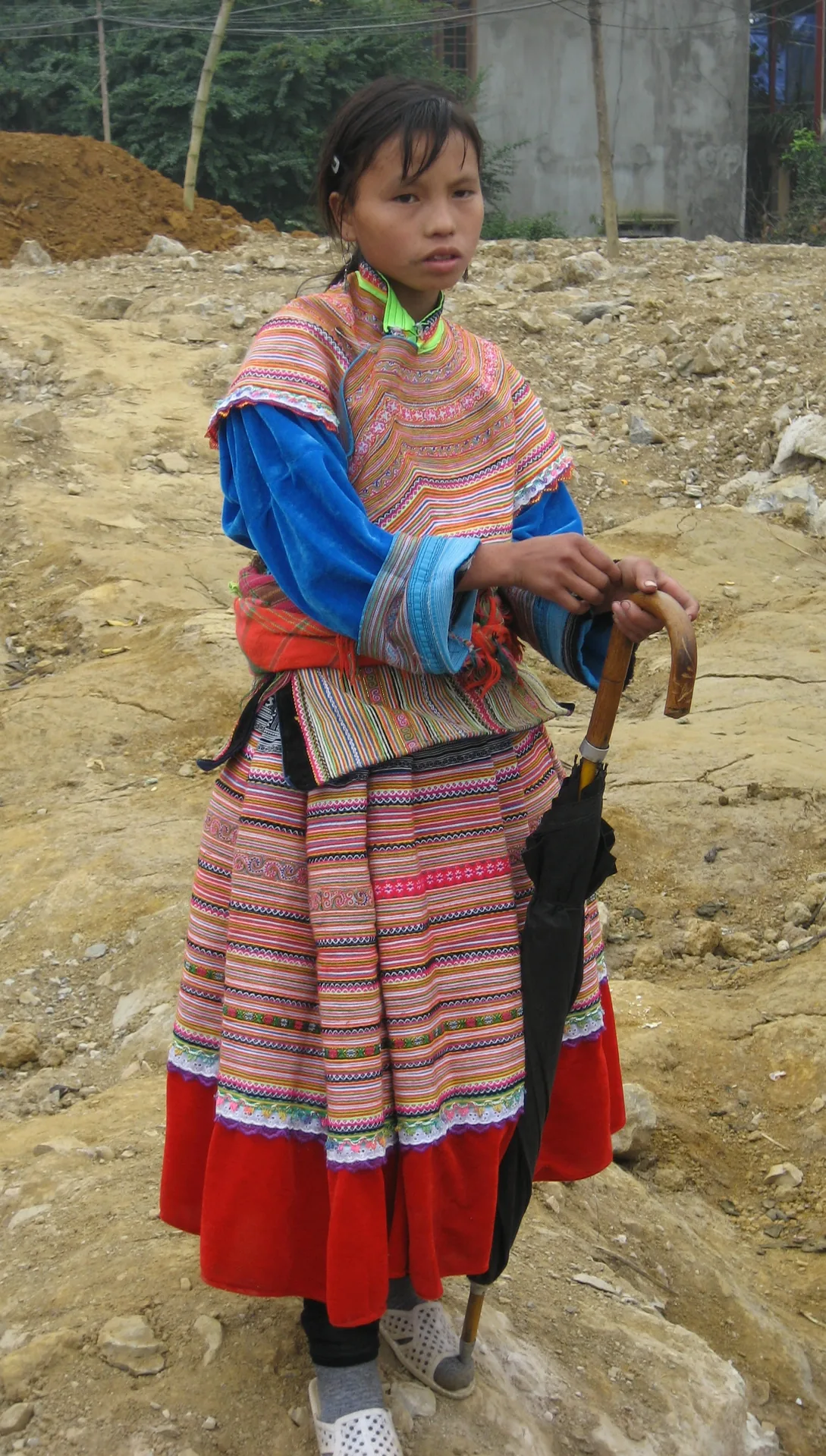
The ethnic minority communities of Kon Tum province
May to October (wet season): Heavy rains make dirt roads to remote villages difficult. The river can flood. Not recommended for first visits, though the landscapes turn a vivid green.
Where to Stay
Budget: Indochine Hotel and several guesthouses on Nguyen Hue Street offer clean, basic rooms from $12–25/night. Staff often speak enough English to assist with village trips.
Mid-range ($35–70): Kon Tum Hotel and Dakbla Hotel are the most comfortable options in town, both near the river.
Homestay: Informal homestays in Bahnar villages can be arranged through guesthouses; expect basic facilities and a genuinely memorable experience. Budget $10–20 per person including dinner.
How to Get There
By bus from Pleiku: 50 km north (1 hour); frequent buses and minivans from Pleiku's bus station.
By bus from Ho Chi Minh City: 12–14 hours overnight by express bus; several operators daily.
By bus from Da Nang: 8–9 hours via Quang Ngai and Quang Nam; change at Pleiku.
By motorbike: Kon Tum is a natural stop on the Central Highlands motorbike loop (Pleiku → Kon Tum → Quy Nhon or Hoi An via the Mang Yang Pass).
Suggested Itineraries
1 Day
Morning: Kon Tum Wooden Church, Kon Ko Tu village across the river. Afternoon: Dak Bla River boat trip, Kon Tum Museum. Evening: Pho Kho dinner at the market.
Colorful ethnic minority market in the central highlands
2 Days
Day 1 as above. Day 2: Motorbike to Kon Ro Bang and Plei Tong Jarai village; afternoon coffee plantation visit east of town.
3 Days
Days 1–2 as above. Day 3: Day trip to Chư Mom Ray National Park (arrange guide the night before).
Travel Tips
- A motorbike is essential for reaching villages independently; rent from guesthouses for $8–12/day.
- A local guide (arrange through your guesthouse, $20–40/day) makes village visits dramatically more meaningful — communication with Bahnar and Jarai elders is nearly impossible without Vietnamese or local language facilitation.
- Respect village protocols: ask before photographing people, remove shoes before entering communal houses, accept offered food and drink if possible.
- The Kon Tum market (open from 5am) is the best place to observe daily life and try highland breakfast dishes.
Final Thoughts
Kon Tum rewards patient travelers. It has none of the infrastructure of Sapa or Da Lat, but that's precisely its value — the Bahnar and Jarai village cultures here are among the most intact in the Central Highlands, and the town's slow pace and genuine character make it one of Vietnam's most underrated destinations.