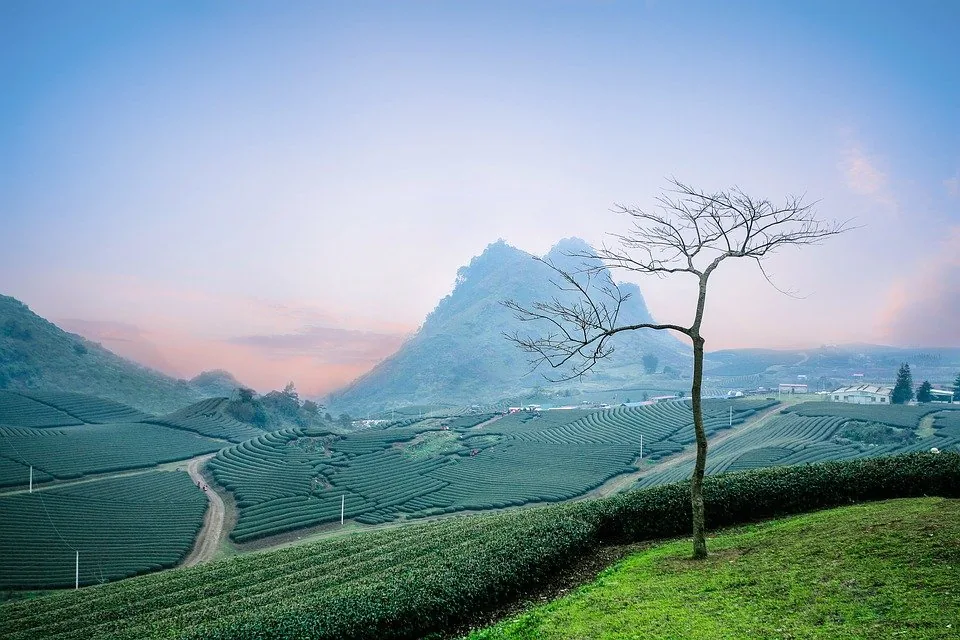
Moc Chau Plateau: Tea Hills and Flower Season in Son La
Published on August 15, 2026
Why Visit Moc Chau
Moc Chau is a high plateau in Son La province, about 200 km west of Hanoi, where rolling tea plantations, dairy farms, and terraced fields sit at over 1,000 metres elevation — cool enough for a genuinely different climate from the lowlands. It's one of the most accessible highland escapes from Hanoi and a rotating showcase of Vietnam's flower seasons throughout the year.
Tea Hills and Dairy Farms
Moc Chau's tea plantations, planted in neat contour rows across the hillsides, are the plateau's signature image — most striking in the soft light of early morning or late afternoon. The area is also Vietnam's main dairy region, home to the country's largest fresh milk producers, and several working dairy farms welcome visitors for milk tastings and yogurt-making demonstrations.
Flower Seasons
Moc Chau's calendar is built around blooms. Plum and peach blossoms carpet the hillsides white and pink from late December into February, drawing crowds around Tet; wild sunflowers bloom bright yellow across the valleys from late November through December; and in between, seasonal flower farms plant everything from lavender to cosmos for visitors chasing a particular colour palette.
Ethnic Minority Villages
The plateau is home to Thai, Hmong, and Dao communities, and villages like Pa Phach and Ban Ang offer a look at stilt-house architecture, traditional weaving, and — around Hmong New Year (typically December) — colourful festival dress. Some villages have set up simple homestays for overnight visits.
Pha Luong Peak and Dai Waterfall
For those wanting a longer hike, Pha Luong Peak (near the Laos border) offers a demanding day trek with panoramic views over both countries on a clear day. Dai (Thac Dai) Waterfall, easier to reach, makes for a straightforward half-day outing with swimming pools at its base.
Getting There
Moc Chau is roughly a 3.5–4 hour drive from Hanoi via Highway 6, doable as a long day trip but better as an overnight or weekend visit given the drive time. Regular sleeper and seated buses run from Hanoi's My Dinh station.
Practical Notes
- Time your visit to the flower season you want to see — the plateau looks dramatically different in December (sunflowers) versus January–February (plum blossom) versus the green tea-hill views of the rest of the year.
- Pack a jacket — nights can be genuinely cold, especially December–February.
- Rent a motorbike locally if you want to explore the tea hills and villages at your own pace; distances between sights are significant.
- Book accommodation ahead for Tet and December weekends, when domestic tourism peaks.
A Flower Calendar Worth Planning Around
Moc Chau's reputation as a flower destination isn't a single-season gimmick — different flowers dominate the plateau at different times, and serious photographers plan trips around specific blooms rather than just "spring." Plum blossoms (hoa mo) and peach blossoms (hoa dao) typically peak around late December to early February, coinciding with the cold, misty weeks before Tet, when whole hillsides near Pa Phach and Ang village turn white and pink. Wild sunflower fields (hoa cai) bloom in a shorter window around late November to December, planted deliberately by some farms specifically for the tourist season. Because bloom timing shifts a little year to year depending on weather, it's worth checking recent local reports or asking your homestay rather than relying purely on a fixed calendar date.
Tea Hills in Practice
The tea hills that photograph so well from a drone or viewpoint are working plantations, not landscaped parks, and most are owned by local families or small cooperatives rather than the large factories. Visitors are generally free to walk the paths between rows for photos, though it's good practice to stay on established tracks rather than cutting across planted rows, and to ask before photographing workers up close. Several tea houses near the main plantation areas offer tastings and sell locally grown and processed tea directly, which tends to be fresher and cheaper than what's sold in Hanoi souvenir shops.
Frequently Asked Questions
How far is Moc Chau from Hanoi and is it a day trip or overnight destination?
Moc Chau is around 180 km from Hanoi, roughly 3.5–4.5 hours by car or bus. It's technically possible as a very long day trip, but almost everyone treats it as at least an overnight stop — either as a standalone weekend trip or as a stopover on the longer road route toward Son La and the northwest loop.
What's the best time of year to visit if I don't care about a specific flower?
Outside flower season, Moc Chau is pleasant nearly year-round thanks to its elevation, which keeps temperatures noticeably cooler than Hanoi. The dry season (roughly October to April) gives the most reliable weather and clearest views from viewpoints like Pha Luong Peak.
Is Moc Chau suitable for a family trip, or is it better for photographers and couples?
It works well for families too — dairy farms with milk tasting and animal encounters are a genuine draw for kids, waterfalls like Dai Waterfall have shallow, accessible areas, and the pace is generally relaxed compared to more adventure-focused northern destinations like Ha Giang.
Do I need a motorbike, or can I get around without one?
A motorbike or car gives the most flexibility since sights are spread across the plateau, but it's not strictly necessary — homestays and hotels can often arrange transport to specific viewpoints or villages, and some tour operators run day trips covering the main highlights from Hanoi or from Moc Chau town itself.