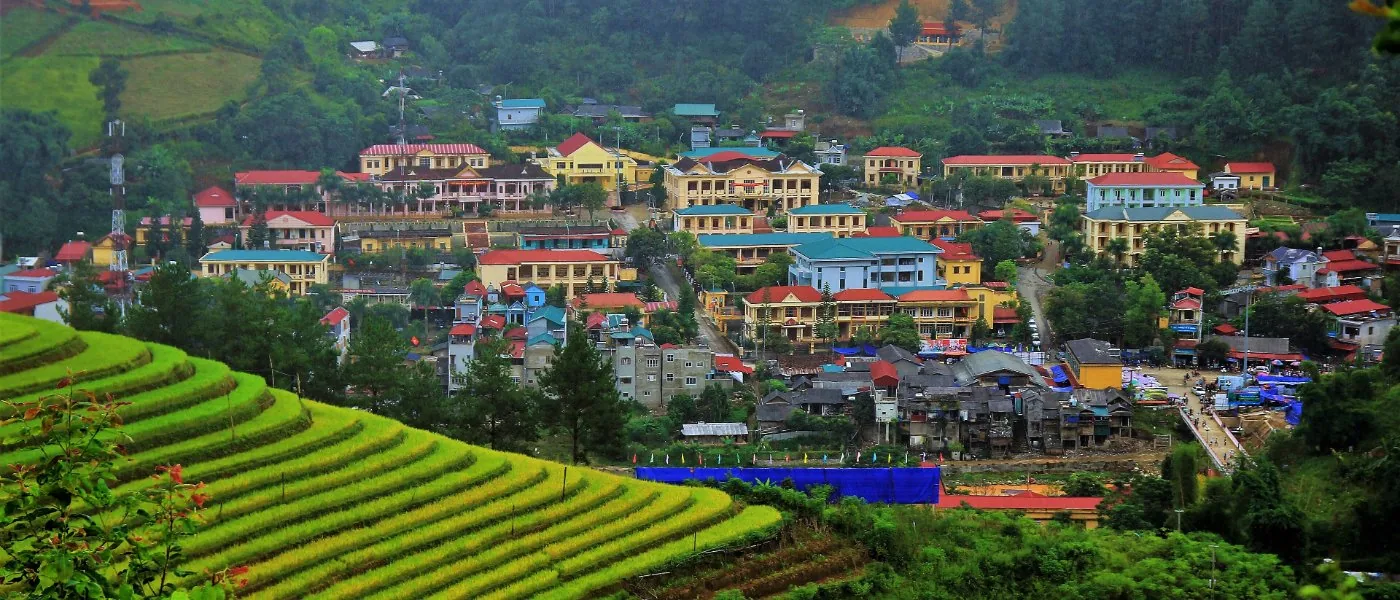
Mu Cang Chai
Mu Cang Chai Travel Guide
Meta description: Vietnam's most iconic terraced rice fields, carved by Hmong farmers into the mountainsides of Yen Bai province and famous for their golden harvest season.
Why Visit Mu Cang Chai
If there's a single image that captures Vietnam's mountainous north better than any other, it's the tiered rice terraces of Mu Cang Chai, cascading down steep valley walls in curves so precise they look almost deliberately designed. This remote district in Yen Bai province, tucked against the border of Lao Cai and Son La, is home to some of the most extensive and dramatic terraced fields in Southeast Asia, carved over centuries by generations of Hmong farmers who transformed near-vertical mountainsides into productive rice paddies.
Unlike the more accessible terraces around Sapa, Mu Cang Chai requires a genuine effort to reach, which has kept it from becoming as commercialized while still drawing a steady and growing stream of photographers, trekkers, and travelers chasing the harvest season's golden light. Three specific communes, La Pan Tan, Che Cu Nha, and Ze Xu Phinh, have been officially recognized as national heritage landscapes, underscoring just how significant these fields are to Vietnam's agricultural and cultural identity.
Quick Facts
- Location: Mu Cang Chai District, Yen Bai Province, northwest Vietnam
- Distance from Hanoi: Roughly 280 km, about 6-7 hours by road
- Best base: Mu Cang Chai town or a homestay in La Pan Tan
- Ideal trip length: 2-3 days
- Known for: Terraced rice fields, Hmong culture, harvest and water seasons
Top Things to Do
Photograph the terraces at La Pan Tan and Che Cu Nha. These two communes offer the most photogenic and accessible viewpoints over the terraces, with designated lookout points that fill up with photographers during the September to early October harvest window, when the fields turn a deep gold.
Trek through the rice paddies. Guided treks lead down into the valleys and through working fields, offering a completely different perspective than the wide shots from the viewpoints above, and a chance to see farmers at work up close during planting or harvest.
Visit Hmong and Thai villages. The terraces exist because of the communities who built and still farm them, and several villages welcome visitors for homestays, offering a genuine window into daily highland life, from weaving and embroidery to home-cooked meals.
Ride the Khau Pha Pass. One of Vietnam's most spectacular mountain roads connects Mu Cang Chai to neighboring Tu Le, winding through cloud-wrapped peaks and offering some of the best roadside terrace views in the region.
See the fields flooded in late spring. Before the rice is planted in late May and June, the terraces are flooded with water, creating a mirror-like effect that reflects the sky, an entirely different but equally striking sight from the golden harvest season.
Local Food
Mu Cang Chai's food reflects its highland Hmong and Thai communities: com lam, sticky rice cooked inside bamboo tubes over an open fire, is a staple here, often eaten alongside grilled meats or fish caught from mountain streams. Thang co, a traditional Hmong stew historically made from horse meat and offal, is a distinctive and hearty local dish, though it's an acquired taste for many visitors. Corn wine, distilled by local Hmong households, is a common offering at homestays and a notable part of the region's food culture, often shared as a gesture of hospitality. Fresh mountain vegetables, foraged bamboo shoots, and grilled river fish round out the simple, ingredient-driven cooking typical of Vietnam's northern highlands.
Best Time to Visit
The two headline seasons bookend the rice cycle: mid-September through early October brings the famous golden harvest, when the terraces turn a deep amber and the light in late afternoon is extraordinary, making this by far the busiest and most sought-after time to visit. Late May through June offers the flooded "water season," when freshly planted fields reflect the sky in a completely different but equally photogenic way. Outside these windows, particularly in winter, the terraces are dry and green rather than dramatic, so travelers with flexible dates should plan around one of the two peak seasons if the terraces themselves are the main draw.
Where to Stay
Homestays run by local Hmong and Thai families are the most immersive and popular option, offering simple rooms, home-cooked meals, and often the chance to join in farming or craft activities during the stay. Mu Cang Chai town has a small but growing number of guesthouses and boutique lodges, some with terrace views built specifically to capitalize on the scenery, offering more comfort for travelers who want it. Booking ahead is essential during the September-October harvest season, when the best-located homestays and lodges fill up weeks in advance.
How to Get There
From Hanoi, Mu Cang Chai is roughly a 6-7 hour drive northwest, most commonly done by private car, motorbike, or overnight sleeper bus along a route that passes through Nghia Lo and over the Khau Pha Pass. The drive itself, especially the pass, is considered part of the experience, with dramatic mountain scenery the entire way. There is no airport or train service to Mu Cang Chai, so road travel is the only option, and travelers short on time often combine the trip with a stop in Sapa or Ha Giang given the region's shared northwest geography.
Final Thoughts
Mu Cang Chai rewards the effort it takes to reach it with scenery that genuinely lives up to the postcards: vast, sculpted rice terraces set against a backdrop of misty highland peaks, farmed by communities whose way of life is inseparable from the landscape itself. Whether you catch the golden harvest, the mirrored water season, or simply the quiet, green terraces of an off-season visit, it's one of the most visually striking corners of northern Vietnam and well worth the long drive from Hanoi.