Ninh Binh & Trang An
Published on May 28, 2026
Ninh Binh Travel Guide
Meta description: Explore Ninh Binh — Vietnam's inland Ha Long Bay with limestone karsts, ancient Hoa Lu capital, and Trang An boat caves. Complete Ninh Binh travel guide 2025.
Why Visit Ninh Binh
Ninh Binh is often called "Ha Long Bay on land" — a nickname that undersells it. Yes, the limestone karst formations that rise from the flooded rice plains share geological origins with Ha Long's sea stacks. But Ninh Binh has something Ha Long lacks: temples cut into cliff faces, a 1,000-year-old imperial capital, ancient pagodas accessible by rowing boat through cave passages, and landscapes that shift between wetland, farmland, mountain, and jungle within a few kilometers.
Two hours south of Hanoi, Ninh Binh province contains three UNESCO-designated or World Heritage–adjacent sites: Trang An Landscape Complex (a UNESCO World Heritage Site since 2014), Cuc Phuong National Park (Vietnam's first national park), and the ancient Hoa Lu Capital. The combination makes it the most historically layered landscape in northern Vietnam and one of the country's most rewarding day trips or short stays.
Quick Facts
- Location: Ninh Binh Province, northern Vietnam, 93 km south of Hanoi
- Best time to visit: October–April (dry season; spring for rice planting, autumn for harvest gold)
- Recommended stay: 1–3 days
- Daily budget: Budget $20–40 | Mid-range $45–80 | Luxury $100+
- Best base: Ninh Binh town or Tam Coc village
Top Things to Do in Ninh Binh
1. Trang An Boat Tour
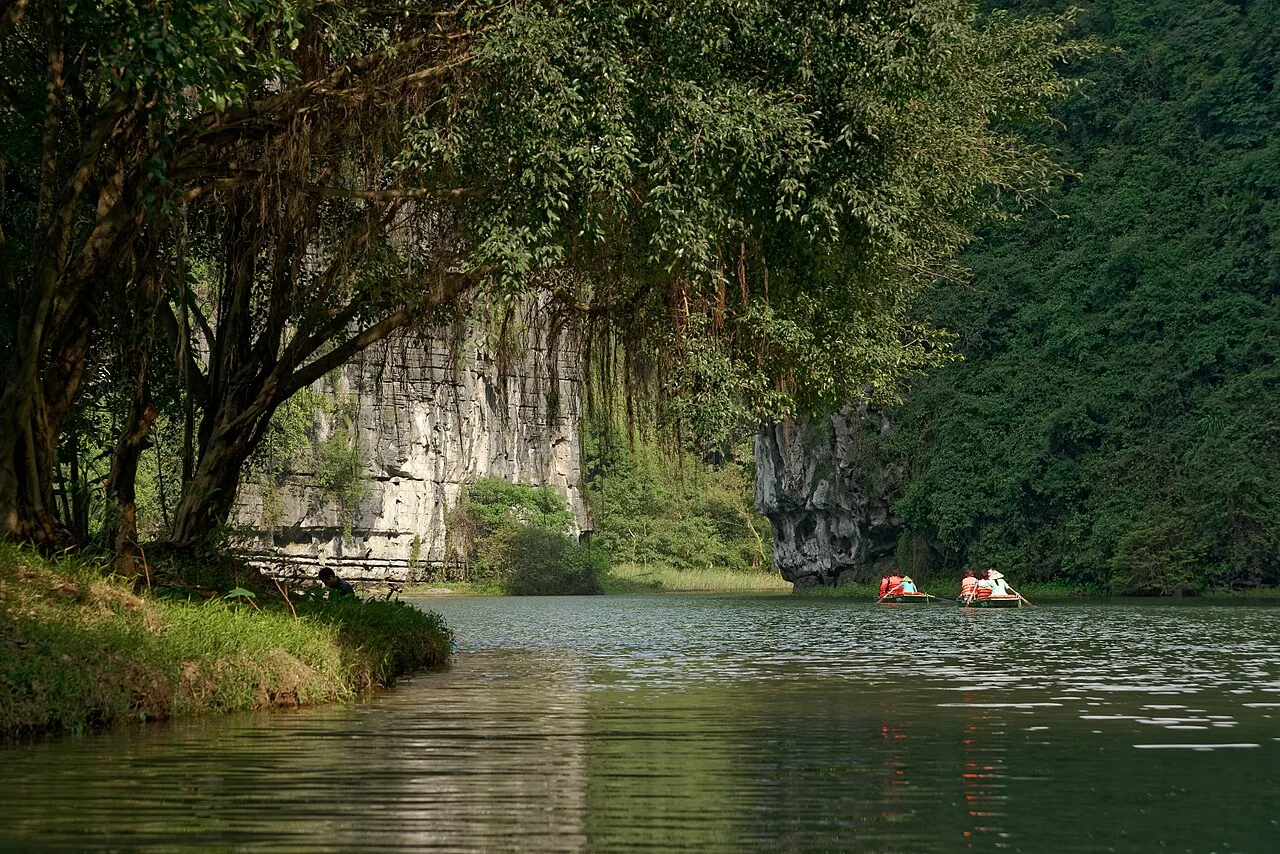
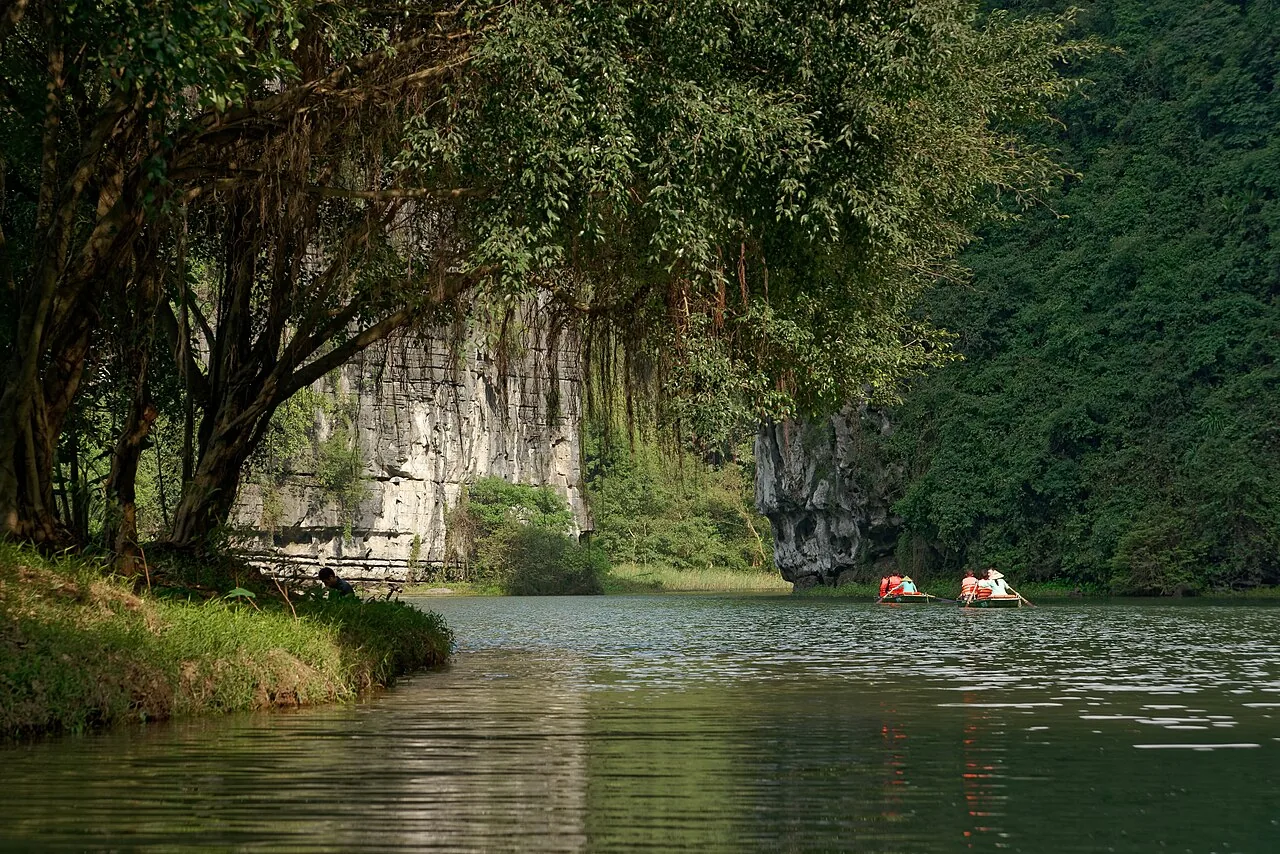
The UNESCO-listed Trang An Scenic Landscape Complex is the region's signature experience — a network of cave passages, lakes, and valleys navigated by wooden rowboat, with limestone cliffs rising 200 meters above the still water. The route passes through nine caves, some requiring passengers to lie flat as the boat slides through low passages. Local boatwomen row with their feet — a technique unique to this region. Duration: 3–4 hours. Tip: Trang An tours cost 200,000–250,000 VND per person; book through the official ticket office at the main entrance rather than guesthouse packages to ensure the fee reaches local boatwomen.
2. Tam Coc Valley and Boat Tour
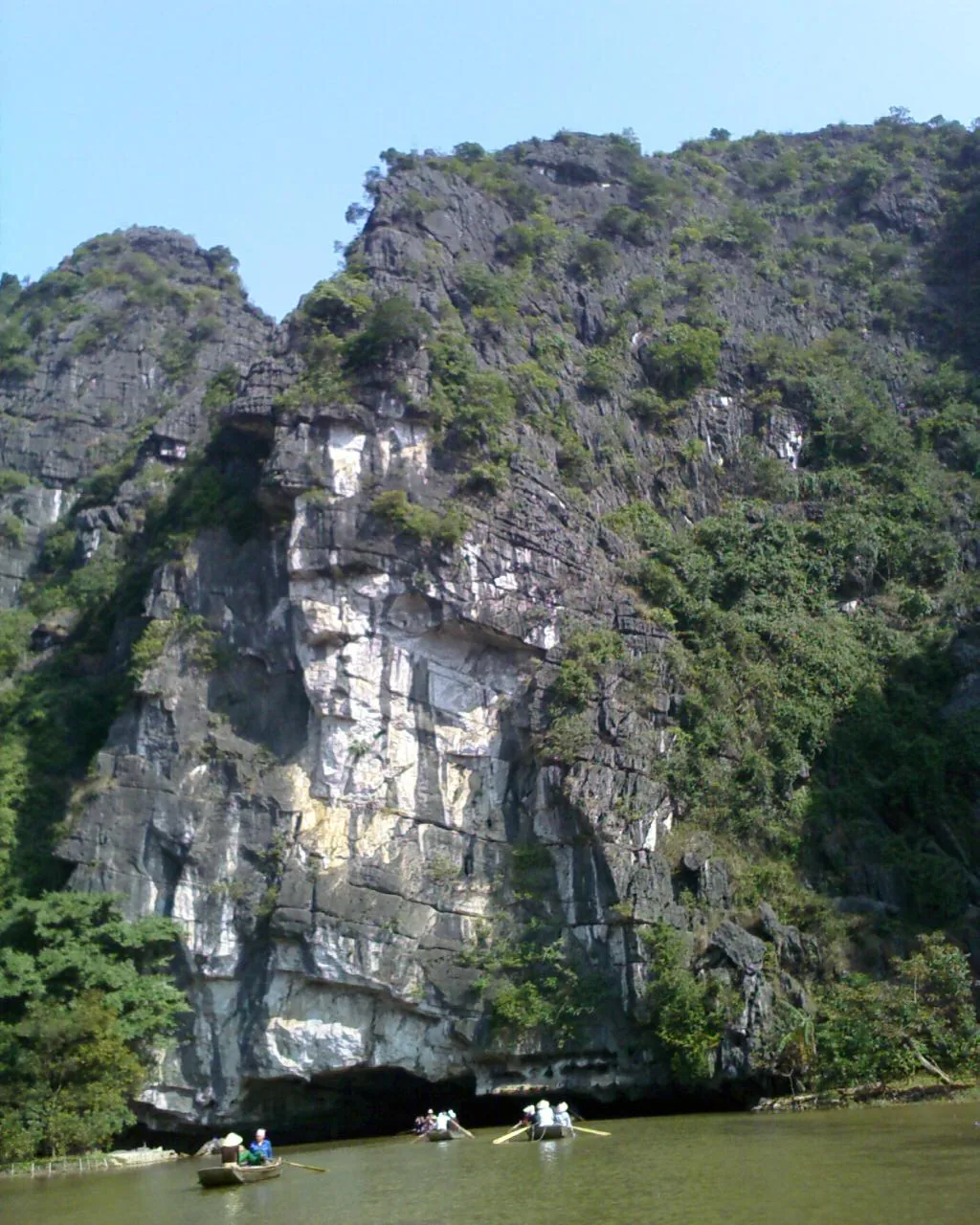
The Tam Coc ("three caves") valley is the older, more intimate version of the Trang An experience — a river winding through rice paddies toward three cave tunnels carved by the Ngo Dong River through limestone hills. The landscape, particularly in May–June and September–October when rice turns gold, is extraordinarily photogenic. Duration: 2 hours on the water. Tip: Boats accommodate two passengers; the 200,000 VND per boat fee is shared. Decline the embroidery sellers who will approach your boat mid-river.
3. Bich Dong Pagoda
Three temple levels cut into the cliff face of a limestone outcrop near Tam Coc — a lower temple at the foot, a middle temple in a cave, and an upper temple at the summit with views over the rice plains. The climb involves steep stone steps and some genuine scrambling at the top. Duration: 1.5 hours. Tip: Free entry; combine with the Tam Coc boat tour on the same half day.
4. Hoa Lu Ancient Capital
Vietnam's capital from 968 to 1010 AD under the Dinh and Le dynasties, Hoa Lu now exists as a complex of restored temple compounds set against the same dramatic limestone backdrop as the rest of the province. Dinh Tien Hoang Temple (dedicated to Emperor Dinh) and Le Dai Hanh Temple are the main structures — built originally in the 10th century and reconstructed multiple times since. Duration: 1.5 hours. Tip: 20,000 VND entry; hire a guide at the entrance for context on the dynasty's significance.
5. Mua Cave (Hang Mua) and Viewpoint
A climb of 500 stone steps up the limestone hillside behind Mua Cave leads to a summit viewpoint considered one of the most spectacular in all of northern Vietnam — a 360-degree panorama of rice paddies, karst peaks, and the Ngo Dong River winding below. The descent passes through a dragon sculpture garden and a small cave. Duration: 1.5–2 hours including climb. Tip: 100,000 VND entry; visit in the early morning (before 8am) or late afternoon (after 4pm) to avoid heat and midday crowds. The sunset view is exceptional.
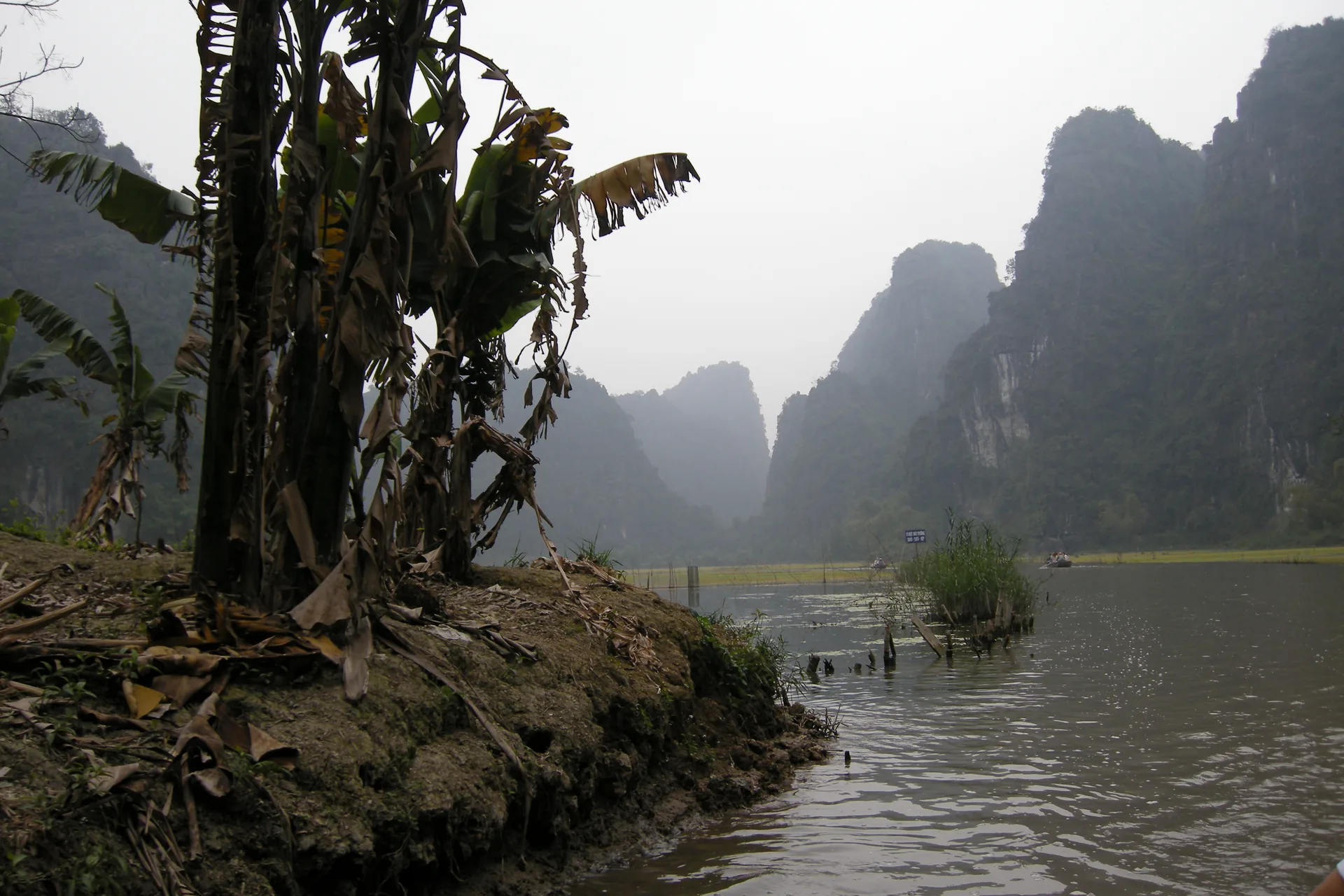
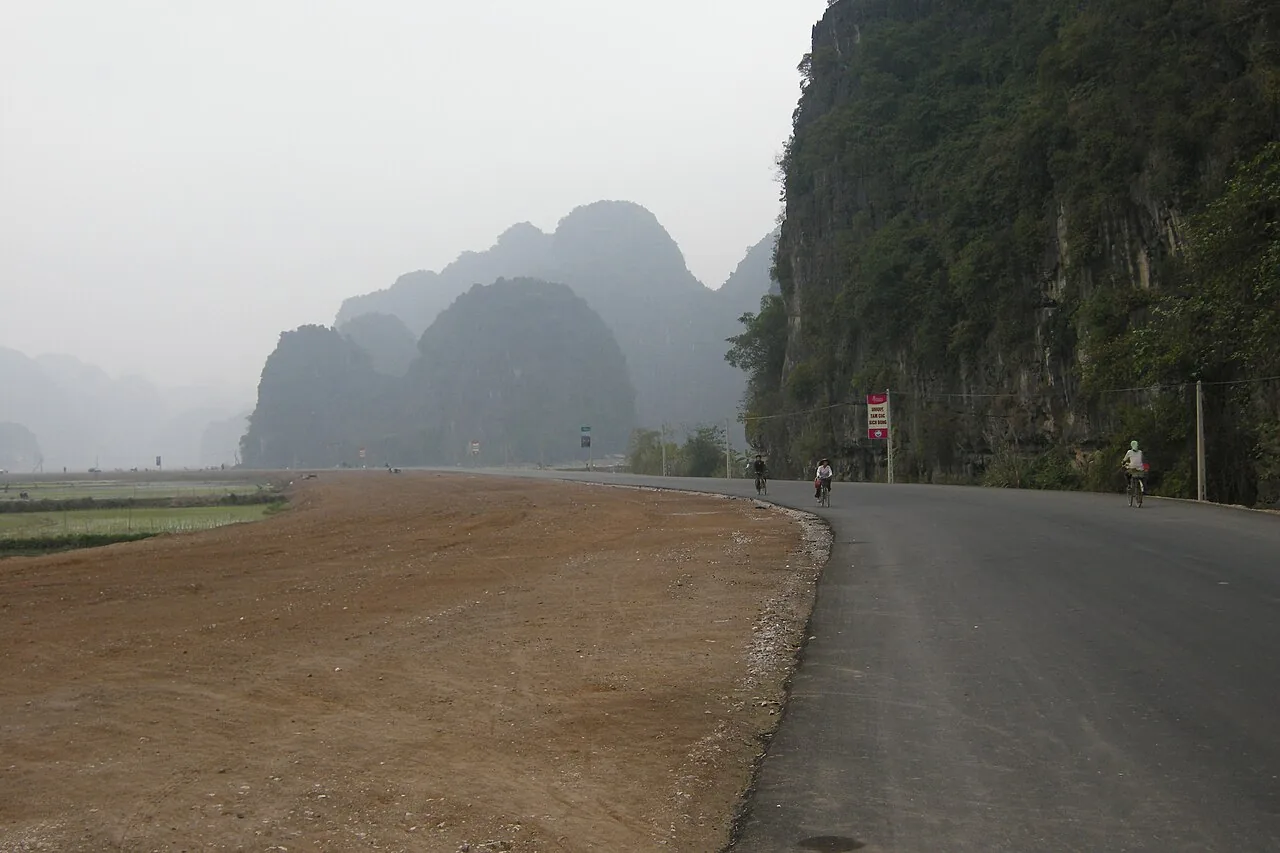
Ninh Binh — often called Ha Long Bay on land; karst towers rise from flooded rice paddies rather than sea water
6. Cycling Through the Rice Paddies
Ninh Binh's flatlands are ideal cycling terrain, and the routes through the Tam Coc valley and Hoa Lu farmland pass through some of the most scenic lowland landscapes in Vietnam. Rental bikes are available at guesthouses for 50,000–80,000 VND/day. A popular route circles from Tam Coc village past Bich Dong, through Hoa Lu, and back — approximately 20 km of flat road. Duration: Half day. Tip: Start early to cycle before heat builds; the route is best appreciated at a slow pace with regular stops.
7. Cuc Phuong National Park
Vietnam's oldest national park, 45 km west of Ninh Binh town, protects 22,000 hectares of primary limestone forest that is home to 64 mammal species including the endangered Delacour's langur. The park hosts a primate rescue and conservation center that visitors can tour. A 1,000-year-old fig tree near the park's center is among the oldest trees in Vietnam. Duration: Full day. Tip: Entry 60,000 VND; arrange a guide ($15–20) for wildlife spotting — the langur conservation program is a genuine highlight.
8. Van Long Nature Reserve
A 3,000-hectare wetland reserve 20 km from Ninh Binh town, Van Long is one of Vietnam's most important bird habitats and home to the world's largest wild population of Delacour's langur. Rowboat tours through the reed-lined channels among the karst formations are quieter and wilder than the Trang An experience. Duration: 2–3 hours. Tip: 90,000 VND per boat; morning visits (6–8am) offer best wildlife sightings and low-light photography.
9. Bai Dinh Pagoda Complex
The largest Buddhist complex in Vietnam — a multi-temple compound on a 700-hectare hillside with a 10-km covered walkway, dozens of bronze Buddhas, and the country's largest bell (36 tonnes). The scale is overwhelming and the crowds can be thick on weekends and Buddhist holidays, but the setting on the limestone hillside is dramatic. Duration: 2–3 hours. Tip: Free entry; an electric cart ($2 round trip) covers the main walkway. Visit on a weekday for a calmer experience.
10. Sunset from Tam Coc Village Rooftop
Several guesthouses around Tam Coc village have rooftop terraces with unobstructed views across the karst valley. An evening spent watching the light fade over the rice fields, with a cold Bia Hanoi and a plate of freshwater snails, is one of the most understated pleasures in Vietnamese travel. Duration: 1–2 hours. Tip: Tam Coc Garden and Tam Coc Rice Fields Resort both have excellent rooftop views.
Local Food and Specialties
Com Chay (Scorched Rice): Ninh Binh's signature local product — the caramelized crust left at the bottom of the rice pot, dried and sold in flat discs. Eaten as a snack with dipping sauces or served topped with meat and vegetables. It has a satisfying crunch and a faintly toasted flavor. Buy it at market stalls wrapped in paper for 30,000–50,000 VND.
De Nui (Mountain Goat): The karst landscape supports a local goat-herding tradition, and mountain goat meat prepared various ways — grilled, in hotpot, steamed with lemon leaves — is the area's most distinctive protein. Available at restaurants in Ninh Binh town and around Tam Coc.
Freshwater Snails (Oc): Ninh Binh's wetland ecosystem produces an abundance of freshwater snails, cooked with lemongrass, chili, and kaffir lime. Sold at streetside stalls for 30,000–50,000 VND a bowl.
Ca Noi (Freshwater Fish): The rivers and wetlands yield various freshwater fish — roach, snakehead, catfish — cooked in clay pots or grilled over charcoal. Available at restaurants in Tam Coc and Van Long villages.
Best Time to Visit Ninh Binh

Trang An — UNESCO World Heritage listed; the 3-hour rowboat circuit passes through nine caves
September–November: The rice harvest turns the valley gold in September and October — the most photographed season. Temperatures moderate (22–28°C), crowds manageable.
March–May: Rice planting season, when farmers work the flooded paddies against the karst backdrop. Warm but not yet hot; good photography light.
October–April: The dry season generally, with the lowest rainfall probability.
June–August: Hot (35°C+) and humid, with occasional heavy rain. The landscapes remain green and lush; boat tours are less crowded but midday heat is intense.
January–February: Cool (14–18°C) and occasionally overcast. Tet holiday brings domestic visitors; the week before and after Tet is extremely busy at major temples.
Where to Stay in Ninh Binh
Budget (under $25/night): Tam Coc Eco Bungalow and Nguyen Shack Ninh Binh offer affordable bungalows with rice-field views in the Tam Coc area.
Mid-range ($40–80/night): Tam Coc Rice Fields Resort and Emeralda Resort Ninh Binh (the former) deliver well-designed rooms in the landscape. Aravinda Resort is a newer option with a strong sense of place.
Luxury ($100+/night): Vedana Resort, a boutique property on a private lagoon near Van Long, is the finest accommodation in the province — quiet, intimate, and architecturally distinctive.
Recommended areas: Tam Coc village for the most direct access to the valley and cycling routes; Ninh Binh town for budget options and transport links.
How to Get to Ninh Binh
By train from Hanoi: The most convenient option — regular trains from Hanoi to Ninh Binh take 1.5–2.5 hours (from 60,000 VND). The station is central and taxis to Tam Coc take 15 minutes.
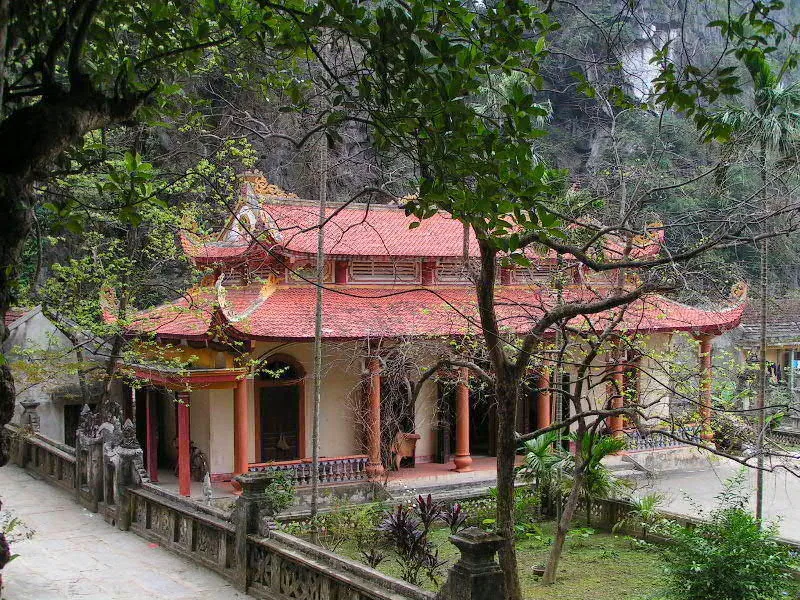
Bich Dong Pagoda — a three-tiered cave pagoda built into a limestone cliff; one of Vietnam most atmospheric religious sites
By bus from Hanoi: Frequent buses from Hanoi's My Dinh station take 2–2.5 hours. Open-tour buses also run this route.
By car from Hanoi: 2 hours via the expressway. Hired cars with driver cost 800,000–1,200,000 VND for a day trip.
From Ho Chi Minh City: Fly to Hanoi (2 hours) then train or bus to Ninh Binh.
Suggested Itineraries
1 Day
Morning: Trang An or Tam Coc boat tour. Lunch: Com chay and de nui at a Tam Coc restaurant. Afternoon: Mua Cave viewpoint climb, Bich Dong Pagoda. Evening: Rooftop sunset at guesthouse.
2 Days
Day 1 as above. Day 2: Hoa Lu Ancient Capital, Bai Dinh Pagoda, cycling through rice paddies, sunset from Tam Coc.
3 Days
Days 1–2 as above. Day 3: Cuc Phuong National Park (primate conservation center and ancient trees) or Van Long Nature Reserve boat tour.
Local Culture and History
Ninh Binh's historical importance rests on its decade as Vietnam's first imperial capital. After a millennium of Chinese rule, Vietnam gained independence in 938 under Ngo Quyen. Emperor Dinh Tien Hoang unified the country in 968 and chose Hoa Lu — protected on all sides by the same karst formations that draw tourists today — as his capital. His successor, Le Dai Hanh, held it against a Chinese invasion in 981 in one of Vietnam's most celebrated military defenses.
In 1010, Emperor Ly Thai To moved the capital north to Thang Long (modern Hanoi), and Hoa Lu's strategic importance faded. The temples and compounds that remain are echoes of a decade that shaped Vietnamese nationhood.
The Buddhist presence in the region is deep — Cuc Phuong's ancient trees grew alongside meditation retreats; Bai Dinh's hillside has been sacred ground for centuries; and the region's pagodas and shrines represent a continuous devotional tradition from the Ly dynasty to the present.
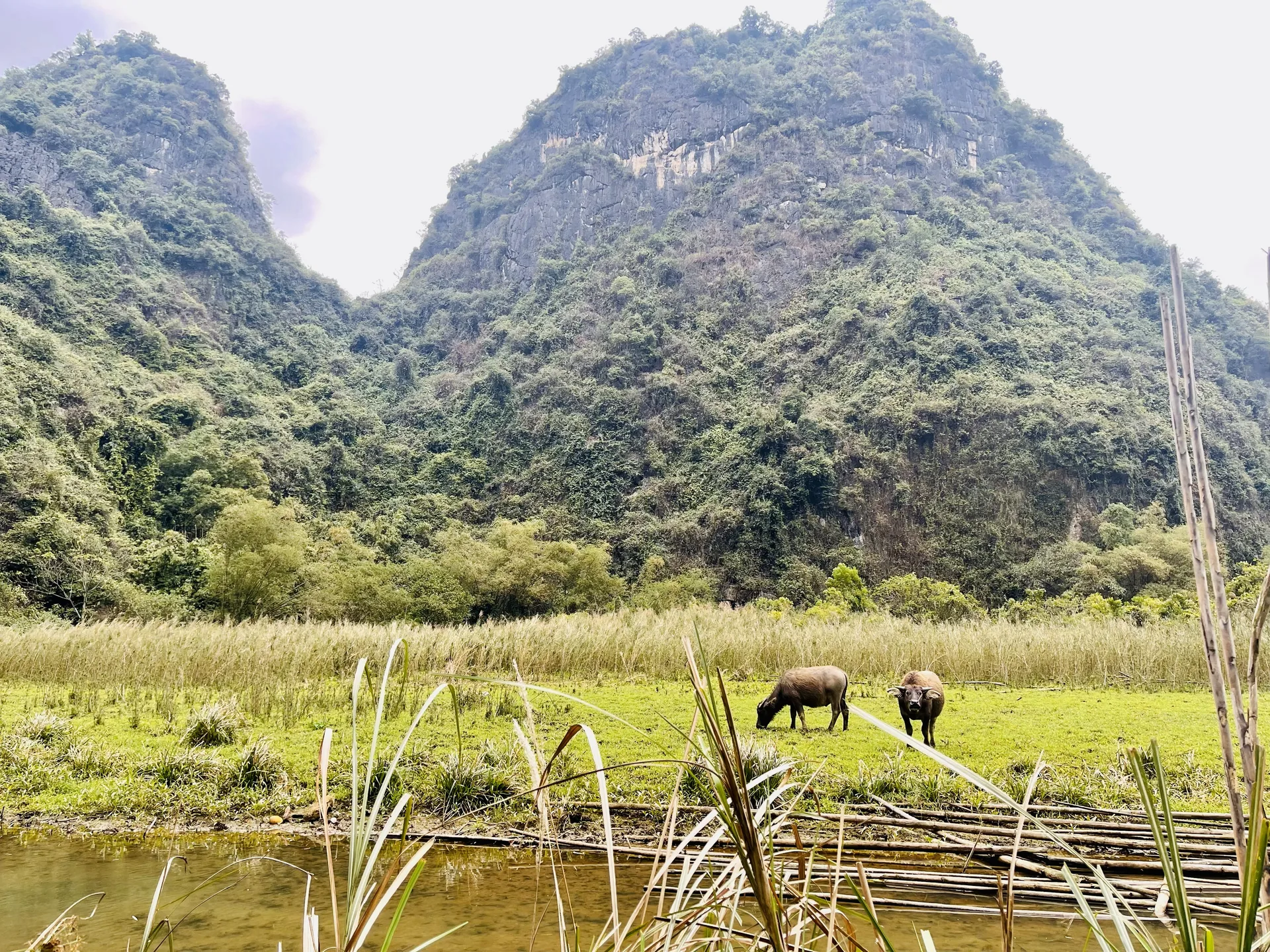
Tam Coc — the original Ninh Binh boat tour through cave tunnels in the flood-season rice fields
Travel Tips
- Boat tours: Arrive at Trang An or Tam Coc before 8am to join the first departures; afternoon queues can extend to 1–2 hours in peak season.
- Cycling: The valley roads have minimal traffic; however, the main Highway 1 section near Ninh Binh town is busy — avoid cycling on it.
- Photography: Mua Cave at golden hour (5–6pm) and Tam Coc from the river at dawn produce the most remarkable images of the province.
- Embroidery pressure: Vendors paddle alongside boats at Tam Coc attempting to sell embroidered goods. Politely decline early; sustained pressure is common.
Frequently Asked Questions
Is Ninh Binh better as a day trip from Hanoi or an overnight stay? An overnight stay — ideally two nights — allows for both the boat tours and the cycling and hiking experiences. A day trip covers one or two activities but feels rushed.
What is the difference between Trang An and Tam Coc? Trang An is larger, UNESCO-listed, passes through more caves, and is better organized. Tam Coc is smaller, more intimate, and offers better surrounding cycling terrain. Both are worth visiting if you stay overnight.
Is Ninh Binh good for children? Yes — the boat tours are gentle and the cycling is easy. Children love the cave passages and the goat-watching.
Final Thoughts
Ninh Binh is what Ha Long Bay would be if you could cycle through it, eat in it, and stay overnight in a rice field guesthouse. The geological drama is equivalent; the human scale is more accessible; and the depth of history — imperial capitals, ancient pagodas, endangered langurs — adds a dimension that the sea cannot. It is among Vietnam's most essential destinations.
Keywords: Ninh Binh travel guide, things to do in Ninh Binh, Trang An boat tour, Tam Coc Ninh Binh, best time to visit Ninh Binh, Hoa Lu ancient capital, Mua Cave Ninh Binh