Tra Vinh Khmer Culture
Published on May 28, 2026
Why Visit Tra Vinh
Tra Vinh is the most Khmer of Vietnam's Mekong Delta provinces — a river-laced landscape of coconut palms, silver-grey canals, and stilted wooden houses where roughly 30% of the population is ethnic Khmer, the descendants of the Khmer Empire that once controlled the entire lower Mekong before Vietnamese settlement moved south in the 17th and 18th centuries. This history is visible everywhere: in the 140+ Khmer Buddhist pagodas (the highest concentration in any Vietnamese province), in the Pali script on temple walls, in the saffron robes of Theravada monks on morning alms rounds, and in the food, festivals, and village life of communities that have maintained their culture through centuries of political change.
Tra Vinh sits off the main tourist circuit — most Mekong visitors stop at Can Tho and miss it entirely — which means the province's pagodas, villages, and waterways remain oriented toward local life rather than tourism. For travelers willing to navigate without English menus or tour infrastructure, it offers the most authentic encounter with Khmer Delta culture available in Vietnam.
Quick Facts
- Location: Tra Vinh Province, Mekong Delta, 130 km from HCMC, 65 km from Can Tho
- Best time to visit: November to April (dry season); or October for the Ok Om Bok festival
- Recommended stay: 2–3 days
- Daily budget: Budget $20–35 | Mid-range $40–65
Top Things to Do
1. Ang Pagoda (Chùa Âng / Wat Angkorajaborei)
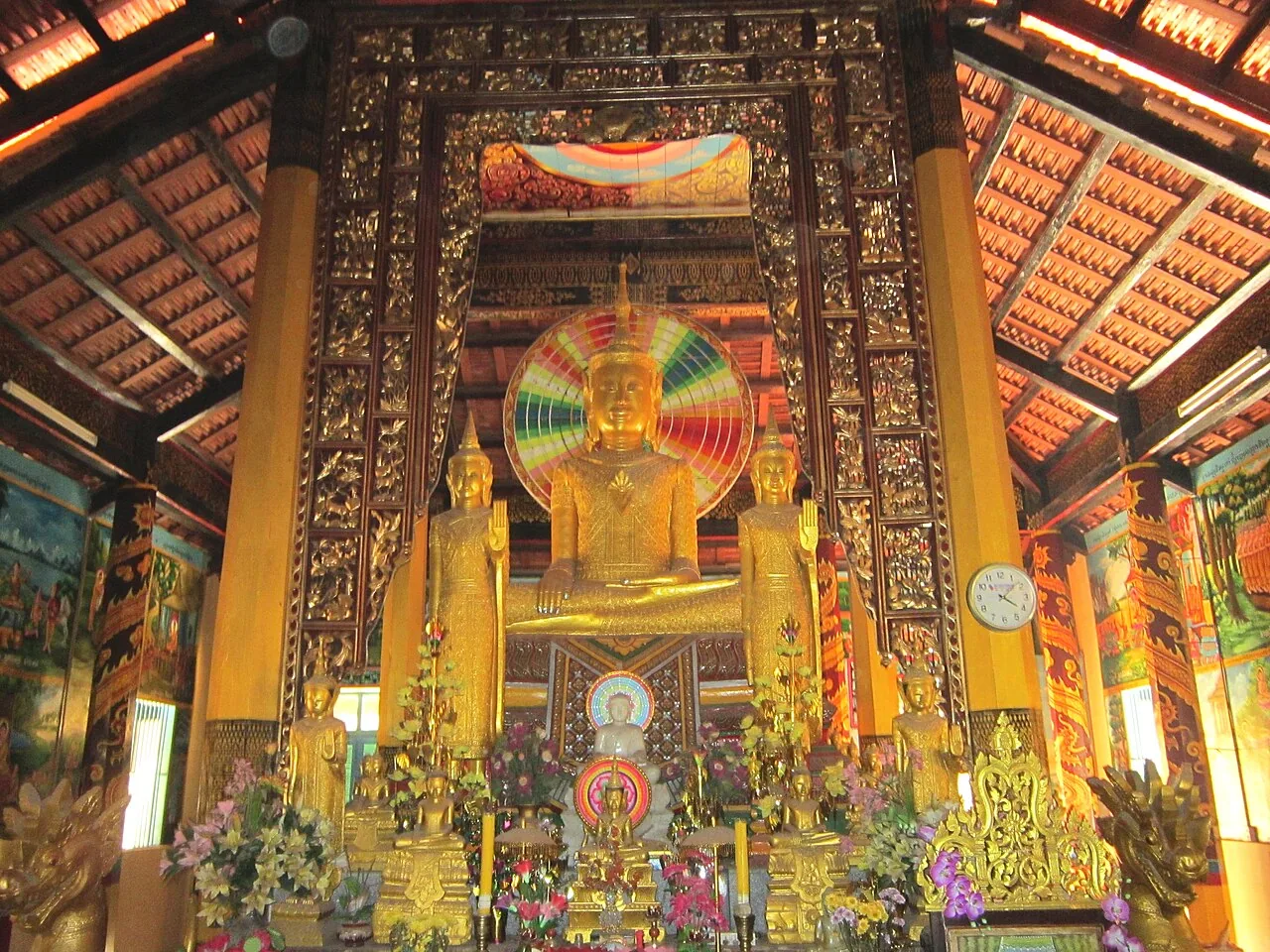
The most significant Khmer Buddhist temple in Tra Vinh — a complex of ornate buildings and stupas set within a shaded forest of ancient trees, housing a community of Theravada monks. The main sanctuary's exterior is decorated with elaborate painted murals of the Ramayana and Jataka tales; the interior holds a large gilded Buddha and rows of smaller images brought as offerings over centuries. Unlike Vietnamese Mahayana temples (common throughout Vietnam), Ang Pagoda follows the Theravada tradition of Cambodian and Thai Buddhism — the monks' practices, chanting, and daily schedule reflect this entirely different lineage.

Ang Pagoda — a Theravada Buddhist temple still active with monks, morning chanting, and centuries of Khmer heritage
Duration: 1–1.5 hours. Entry: Free; remove shoes at temple entrance. Tip: Visit at 5:30am to observe the monks' dawn chanting, or at 6am to see them on alms rounds through the adjacent village.
2. Hang Pagoda (Chùa Hang / Ao Ba Om)
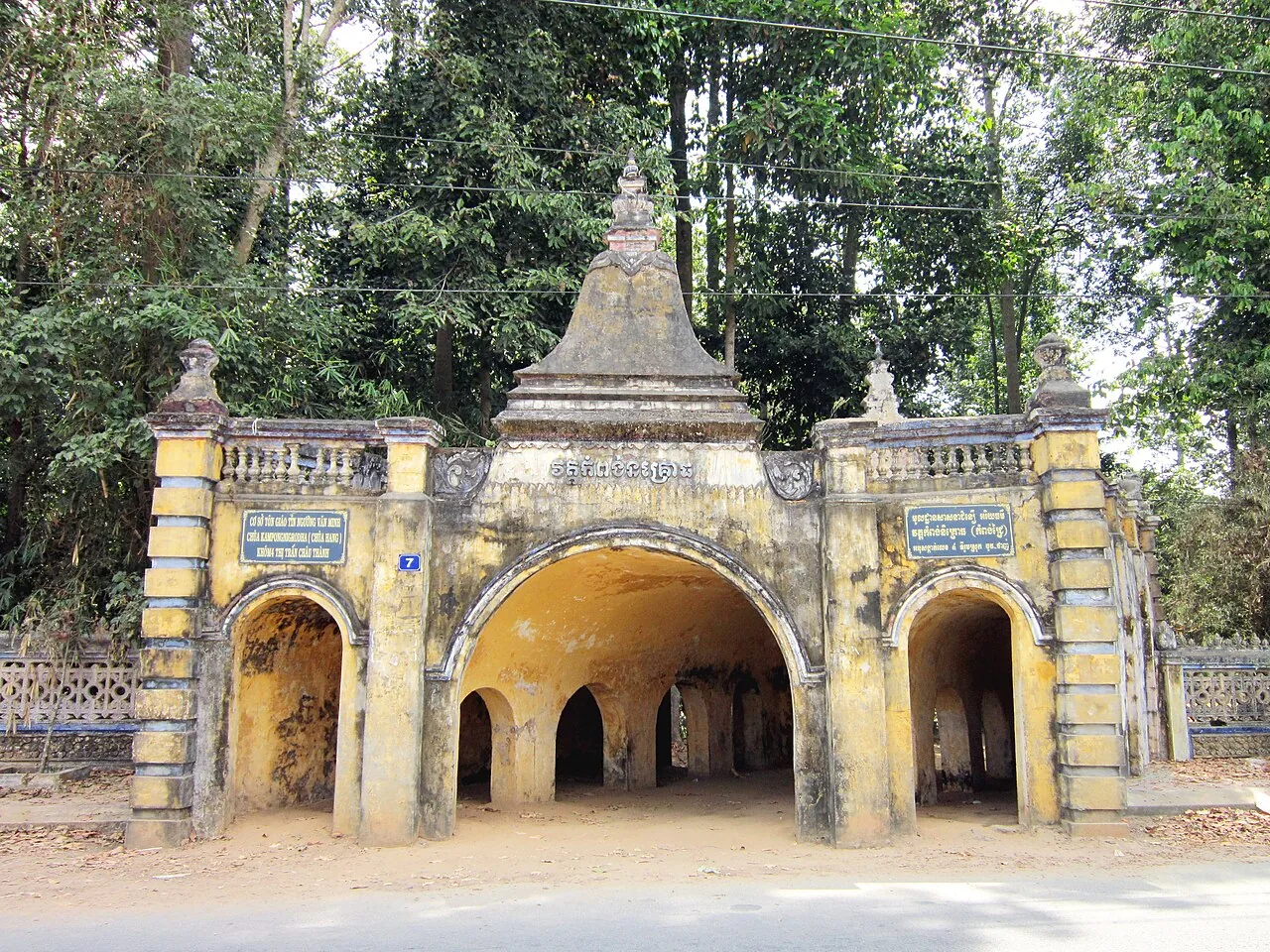
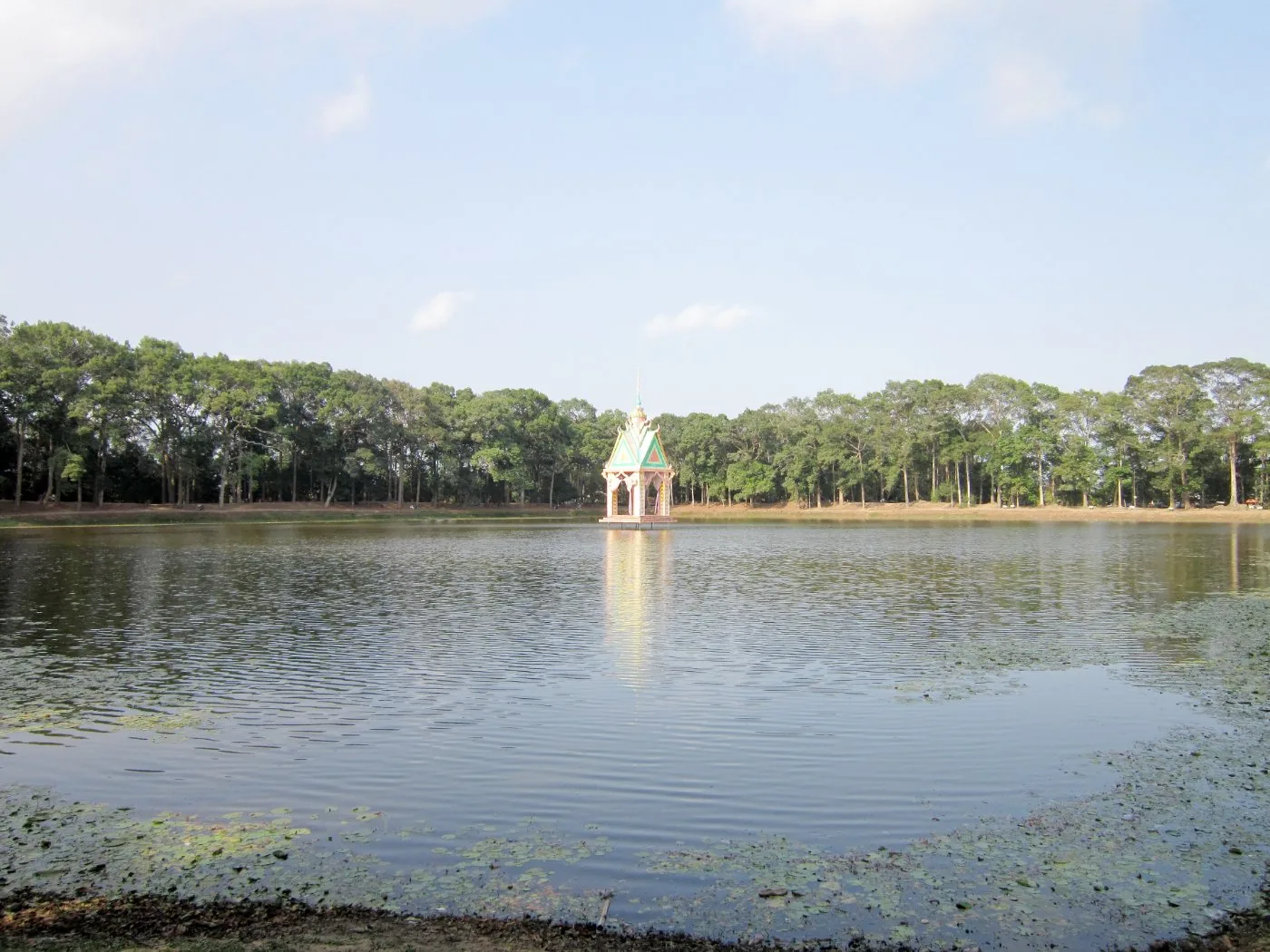
A Khmer temple complex surrounding a large square pond (Ao Ba Om) — one of the most sacred sites in the province, associated with a founding legend of the local Khmer community. The pond is the site of the Ok Om Bok festival (held on the 15th day of the 10th lunar month — typically October) when the Khmer community gathers to worship the moon, launch colorful longboats, and send offerings into the water on small floating banana-leaf boats. Outside festival season, the site is peaceful and atmospheric.
Duration: 1 hour. Tip: If timing allows, plan your visit to coincide with Ok Om Bok — one of the most visually spectacular festivals in the Mekong Delta.
3. Ba Om Pond and Khmer Culture Museum
Adjacent to Hang Pagoda, the provincial museum of Khmer culture occupies a colonial-era building and documents the history, traditional crafts, and ceremonial life of Tra Vinh's Khmer community: wedding costumes, musical instruments (the roneat xylophones and chapei stringed instruments are particularly striking), agricultural tools, and festival objects. Small but genuinely informative.
Duration: 1 hour. Entry: 20,000 VND.
4. Khmer Village Cycling
The flat terrain of Tra Vinh Province makes it ideal for cycling through Khmer village communities — stilted wooden houses on canal banks, children swimming in slow channels, monks in saffron walking between pagodas, and the quiet of a rural landscape largely unchanged for decades. Several guesthouses in Tra Vinh city rent bicycles or can arrange guided village cycle tours.
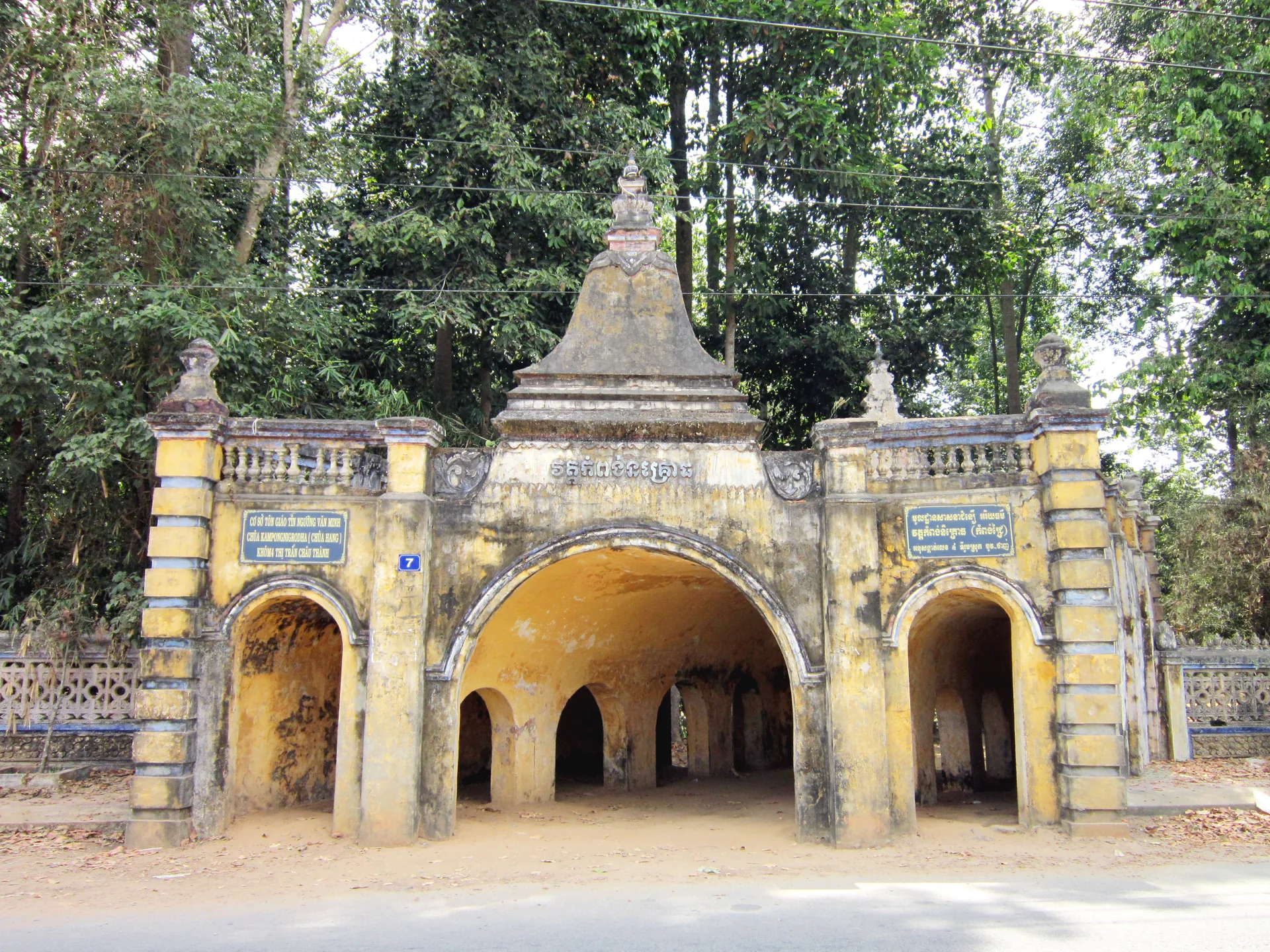
An ornate Khmer-style pagoda in Tra Vinh province

Khmer village canals near Tra Vinh — a landscape of coconut palms, stilted houses, and slow waterways
Key villages: My Long, Tan My, and the communities surrounding Ang Pagoda within 5–15 km of the city center.
Duration: Half day to full day. Tip: Early morning (6–8am) is best — the light is good, the air is cool, and village activity is at its peak.
5. Con Chim Bird Sanctuary (Đảo Cò)
A small river island 45 km from Tra Vinh city, home to one of the largest bird colonies in the Mekong Delta: over 40,000 storks and herons nest in the trees from approximately November to April, creating a spectacle of extraordinary density — the canopy literally white with nesting birds. Boat trips from the river bank to the island take 15 minutes.
Duration: Half day including transport. Best months: December–March when nesting is at peak. Cost: Boat hire approximately 100,000–150,000 VND.
6. Son Islet (Cù Lao Tân Quy)
A river island in the Co Chien tributary, accessible by short ferry, with a peaceful interior of coconut palms, fruit orchards, small canals, and traditional wooden houses. Hammock guesthouses and family homestays offer an unhurried night in an authentic Mekong island environment.
Duration: Overnight or full day. How to reach: Motorcycle ferry from the Cau Quan riverbank (5,000 VND per person + bike).
7. Khmer New Year (Chol Chnam Thmay)
The Khmer New Year (usually April 13–15, coinciding with Buddhist New Year across Southeast Asia) transforms Tra Vinh. Pagodas throughout the province host three days of ceremonies, offerings, communal bathing of Buddha images, and traditional Khmer music and dance performances. Guesthouses fill early — book accommodation well in advance if visiting during this period.
Local Food
Bún Nước Lèo: Tra Vinh's most famous dish and a distinctly Khmer contribution to Vietnamese cuisine. A thick, opaque rice noodle soup built on a broth of fermented fish paste (prahok), lemongrass, and coconut milk, topped with fresh shrimp, pork, bean sprouts, and a bundle of fresh herbs. Strongly flavored and unlike anything found outside the Mekong Delta. Available at breakfast stalls throughout the city.
Bánh Tét Lá Cẩm (Purple Leaf Sticky Rice Cake): Sticky rice dyed purple with lá cẩm (a local plant), filled with mung bean and fatty pork, and wrapped in banana leaves. The purple color makes it visually striking; the flavor is rich and slightly sweet.
Cháo Cá Lóc (Snakehead Fish Porridge): Slow-cooked rice porridge with freshwater snakehead fish, ginger, and fresh herbs. A Delta breakfast staple, particularly good in Tra Vinh where the river fish quality is high.
Bánh Ống (Bamboo Tube Rice Cakes): A Khmer specialty — sweet rice pressed and steamed inside a bamboo tube, served warm as a street snack. Found at Khmer village markets and pagoda festivals.
Best Time to Visit
November to April (dry season): Optimal. Cycling is possible on all village roads, the bird sanctuary is active, and the weather is pleasant (26–34°C).
October: Con Chim birds begin arriving; the Ok Om Bok festival (moon worship) takes place at Hang Pagoda — a rare spectacle worth timing a visit around.
May to September (wet season): Flooding can make rural roads difficult. The province's canal network becomes more active for boat travel.
Where to Stay
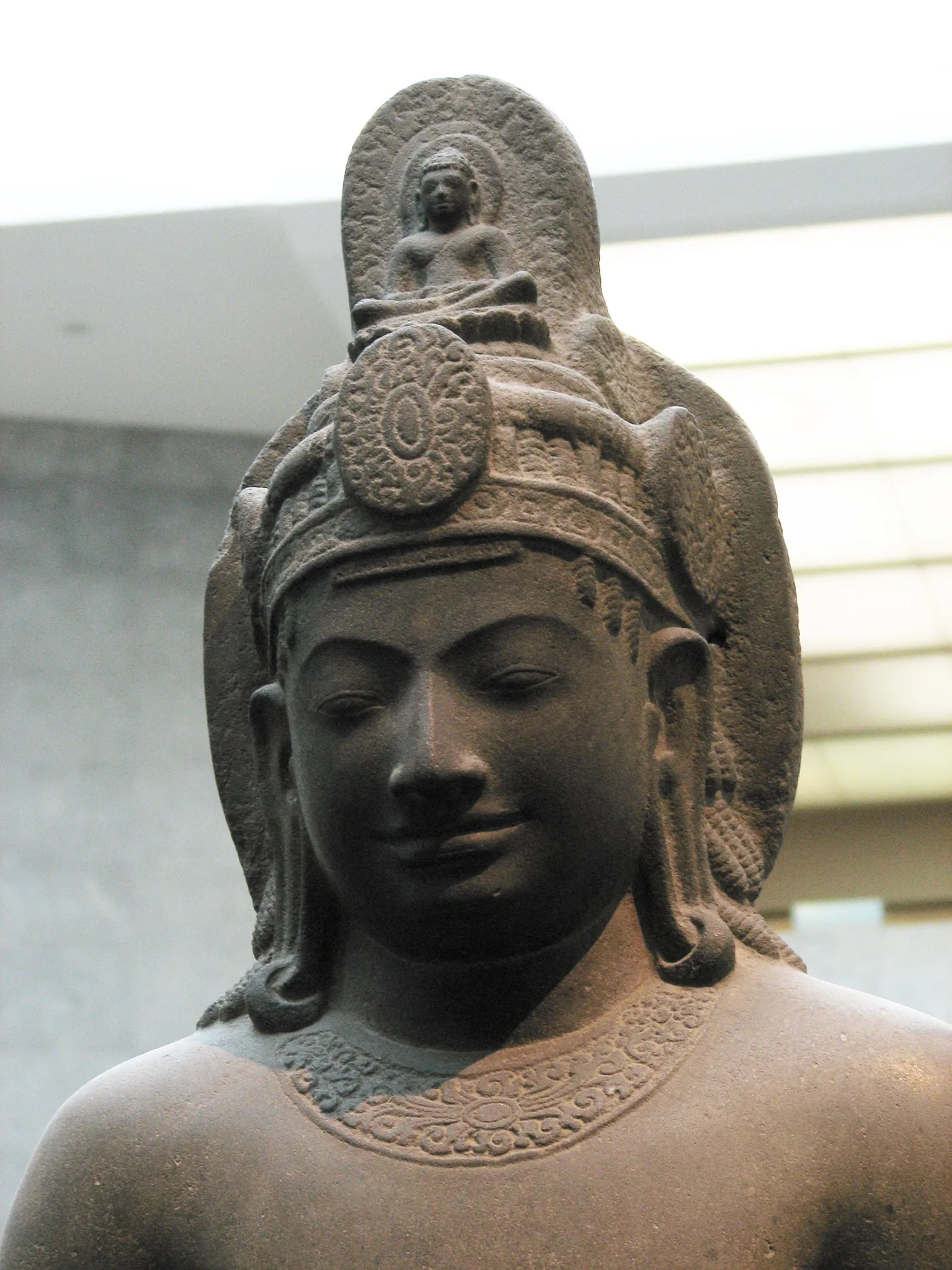
A Khmer Buddhist statue reflecting the cultural heritage of Tra Vinh
In Tra Vinh city: Cuu Long Hotel (the most established option in the city center), Thanh Tra Hotel, and a growing number of guesthouses near the market area. Budget accommodation from $15–30/night.
Homestay: Family homestays on Son Islet and in villages near Ang Pagoda offer a more immersive experience; guesthouses in the city can arrange introductions.
How to Get There
By bus from HCMC: 3.5–4 hours; Phuong Trang (FUTA) and Mien Tay buses from Ben Xe Mien Tay (Western Bus Station) run multiple departures daily. Cost: 120,000–180,000 VND.
By bus from Can Tho: 65 km; 1.5–2 hours by express minibus.
By motorbike from Can Tho: A pleasant 65 km ride through flat Delta roads and small ferry crossings. Approximately 2 hours.
Suggested Itinerary
1 Day
Morning: Ang Pagoda at dawn (monks' chanting at 5:30am); bicycle ride to surrounding Khmer villages. Afternoon: Khmer Culture Museum and Ba Om Pond. Evening: Bún nước lèo dinner at the night market.
2 Days
Day 1 as above. Day 2: Half-day boat trip to Con Chim Bird Sanctuary (November–March only); afternoon Son Islet via motorcycle ferry; overnight homestay on the island.
3 Days
Days 1–2 as above. Day 3: Cycling to more remote pagodas; afternoon return to HCMC or onward to Can Tho.
Travel Tips
- A bicycle is the ideal transport in Tra Vinh — the terrain is completely flat and the distances between sites are manageable. Rent from guesthouses ($3–5/day).
- Most pagoda monks speak Khmer and Vietnamese but not English — a Vietnamese-speaking local guide opens conversations that would otherwise remain closed.
- Dress modestly at pagodas: shoulders covered, no shorts. Remove shoes before entering temple buildings.
- Photographing monks requires permission — a smile and a gesture are usually sufficient and usually welcomed.
Final Thoughts
Tra Vinh offers something rare in the Mekong Delta: a living encounter with Khmer Buddhist culture that hasn't been packaged for tourism. The pagodas are active places of worship, the villages are genuine communities, and the food is a direct line to a culinary tradition that predates Vietnam's presence in the Delta. It is one of the Mekong's most rewarding destinations for travelers willing to engage with it on its own terms.