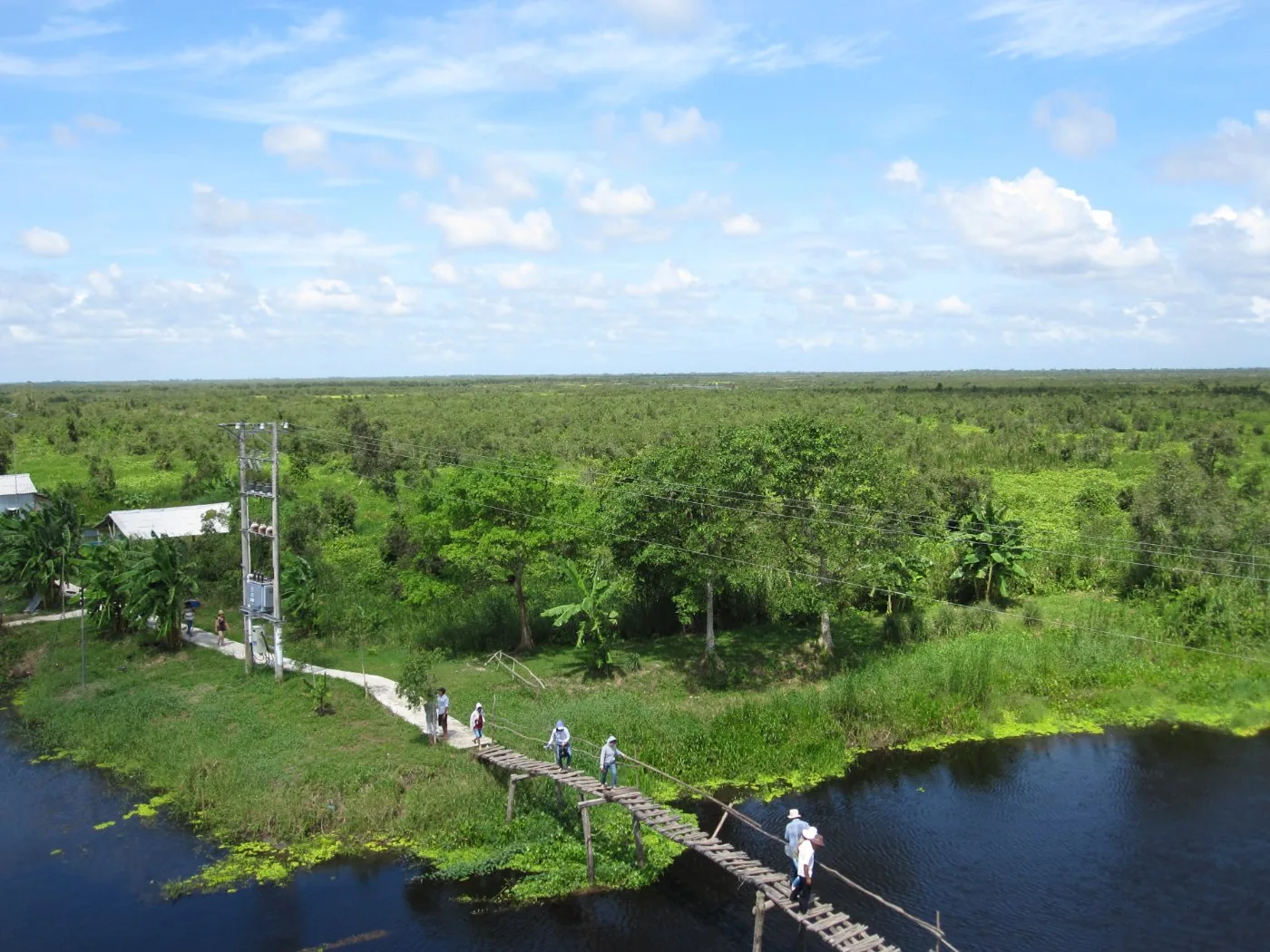
U Minh Forest
U Minh Forest Travel Guide
Meta description: A vast melaleuca wetland forest in the far southern Mekong Delta, home to a unique flooded ecosystem and a slower, more remote side of the delta.
Why Visit U Minh Forest
Spanning parts of Ca Mau and Kien Giang provinces at the far southern edge of the Mekong Delta, U Minh Forest is one of Vietnam's largest remaining wetland forests, a dense expanse of melaleuca (cajuput) trees rising straight out of flooded, peaty ground. It's an ecosystem found almost nowhere else in the country, historically far more extensive before decades of logging, agricultural conversion, and wartime defoliation reduced its coverage, though the protected core areas that remain, now managed as U Minh Thuong and U Minh Ha national parks, still support significant biodiversity and offer visitors a genuinely different Mekong Delta experience.
Unlike the delta's more famous floating markets and orchard-lined canals further upriver, U Minh feels wilder and more remote, a quiet, water-logged forest crisscrossed by narrow channels where the main way to get around is by small boat, gliding beneath a canopy of melaleuca trees. For travelers who have already experienced the delta's classic river and market circuit and want to see a more untouched, ecologically distinct corner of the region, U Minh offers exactly that.
Quick Facts
- Location: U Minh Thuong (Kien Giang) and U Minh Ha (Ca Mau) national parks, far southern Mekong Delta
- Ideal trip length: Full day or overnight visit
- Getting around: Small boat travel is essential within the forest
- Known for: Melaleuca wetland forest, birdlife, traditional wild honey harvesting
Top Things to Do
Take a boat trip through the flooded forest. The primary way to experience U Minh is by narrow boat, weaving through channels beneath dense melaleuca canopy, offering a completely different atmosphere from the open waterways found elsewhere in the Mekong Delta.
Go birdwatching. The wetland supports a significant population of resident and migratory birds, including storks and other wading species that nest in the forest's protected core areas, making it a rewarding stop for birdwatchers exploring southern Vietnam.
Learn about traditional wild honey harvesting. Local communities around U Minh have practiced wild honey collection from the melaleuca forest for generations, and some tours offer the chance to see this traditional, skillful practice firsthand, along with a taste of the distinctively flavored forest honey.
Visit U Minh Thuong's core conservation zone. This more strictly protected section of the wetland offers the best chance to see the forest's ecosystem in a relatively undisturbed state, with guided boat routes available through the park's management office.
Experience a floating or stilt-house homestay. A small number of local operators offer overnight stays in homes built on stilts above the flooded forest floor, providing a genuinely immersive way to experience the rhythm of life in this unusual wetland environment.
Local Food
U Minh's cuisine reflects its wetland environment, built around freshwater fish, wild honey, and forest-foraged ingredients unique to the region. Ca loc nuong trui, grilled snakehead fish cooked whole over an open flame, often wrapped in rice paper with fresh herbs, is a specialty closely associated with this part of the delta. Wild honey harvested directly from the melaleuca forest is both a food product and a point of local pride, often sold by the same families who have collected it for generations, and it makes a distinctive, flavorful souvenir. Locally raised freshwater shrimp and fish, prepared simply and often eaten alongside forest vegetables, round out a food culture deeply tied to the wetland itself.
Best Time to Visit
The dry season from December through April is generally the most practical time to visit, with lower water levels making some areas more accessible and reducing the risk of forest fires that can occasionally affect access during extreme dry spells. The wet season from May through November brings higher water levels that can actually make certain boat routes more scenic and navigable, though heavier rain can disrupt travel plans. Checking current conditions with a local operator before visiting is advisable given the forest's sensitive, water-dependent ecosystem.
Where to Stay
Options directly within U Minh Forest are limited to a small number of stilt-house homestays and basic park guesthouses, offering a genuinely immersive but simple overnight experience. Most visitors base themselves instead in Ca Mau City or Rach Gia, both a couple of hours' drive away, which offer a fuller range of hotels and easier onward travel connections. Given the forest's remote and specialized nature, arranging a visit through a local tour operator familiar with the park's boat routes and permit requirements is strongly recommended.
How to Get There
U Minh Forest's two main protected areas are reached from either Ca Mau City or Rach Gia, both roughly 1.5 to 2.5 hours away by road depending on the specific entry point, followed by a transfer to boat transport within the forest itself. Ca Mau City and Rach Gia are both accessible by domestic flight from Ho Chi Minh City, making the overall journey manageable for travelers willing to combine a short flight with some overland and boat travel.
Final Thoughts
U Minh Forest offers a rare glimpse into one of Vietnam's most distinctive and least-visited wetland ecosystems, a flooded melaleuca forest that feels worlds away from the delta's better-known canals and markets. For travelers drawn to birdlife, traditional honey harvesting, and a genuinely remote corner of the Mekong Delta, a boat trip through U Minh's quiet, water-logged channels is an unforgettable addition to a deeper exploration of southern Vietnam.