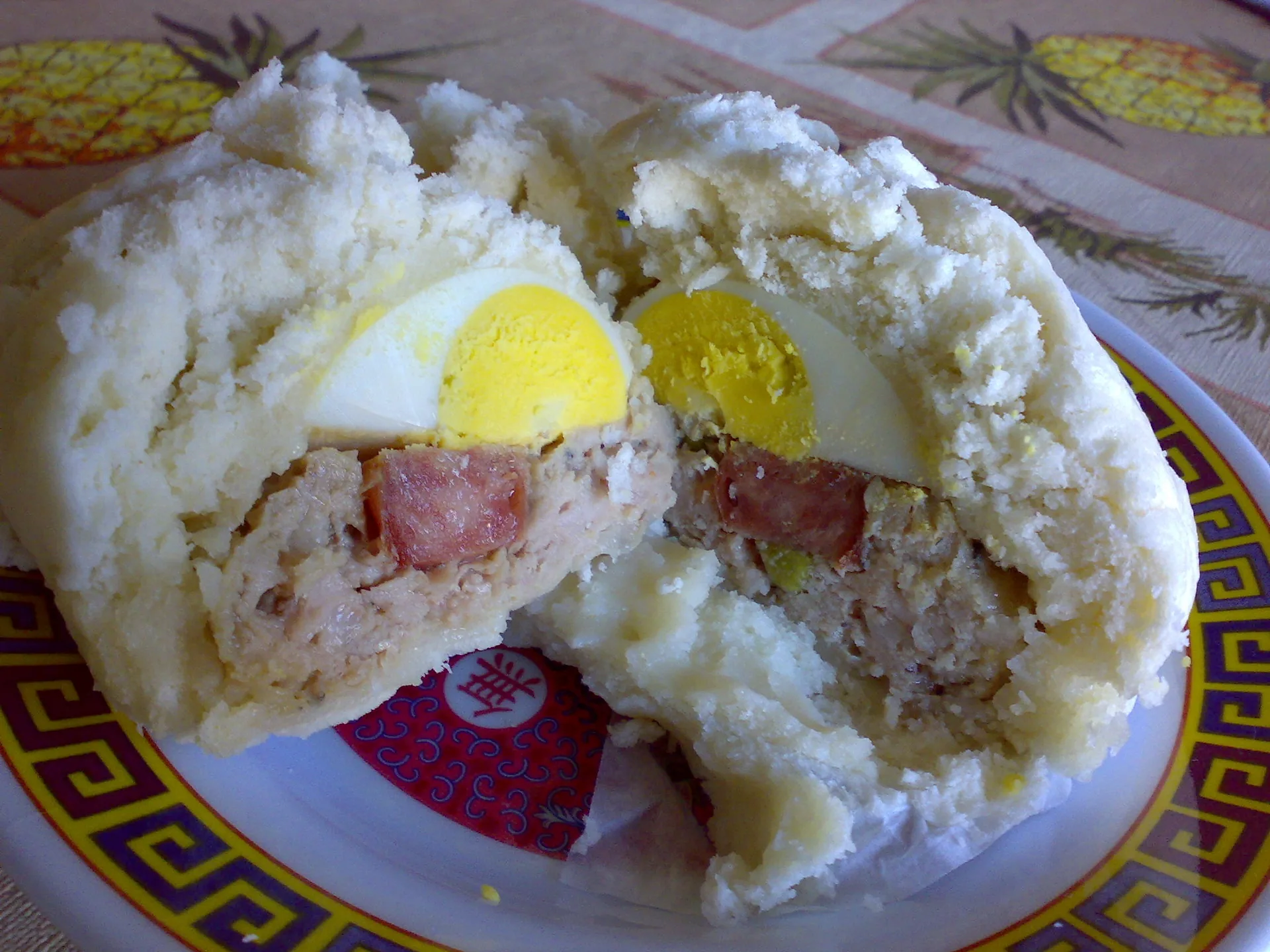
Banh Bao
What Is Banh Bao?
Banh bao is Vietnam's take on the steamed filled bun found across much of Asia, a pillowy, slightly sweet dough wrapped around a savory filling of seasoned ground pork, hard-boiled quail egg, wood ear mushroom, and often a slice of Chinese sausage. Steamed until the outer dough turns soft, white, and faintly glossy, it's a self-contained, satisfying package that works equally well as a grab-and-go breakfast, a midday snack, or a late-night bite picked up from a cart parked outside an office building or train station.
Sold from steaming baskets by street vendors, at bakeries, and increasingly from convenience store hot cases across Vietnam, banh bao has the kind of broad, cross-generational appeal that few other snacks can claim: equally popular with schoolchildren, office workers, and travelers looking for something filling and easy to eat one-handed while walking.
Origin and Cultural Significance
Banh bao's roots trace to Chinese steamed bun traditions, brought to Vietnam generations ago and adapted over time with distinctly Vietnamese seasoning and fillings, including the now-classic combination of pork, quail egg, and mushroom that sets the Vietnamese version apart from its Chinese cousins. The dish became especially associated with southern Vietnam, and Ho Chi Minh City in particular developed a reputation for excellent banh bao, sold from carts and small bakeries throughout the city.
Over the decades, banh bao settled into its current role as a reliable, everyday food rather than something tied to a specific festival or ceremony, valued for its convenience and heartiness above all else. It has also proven remarkably adaptable to modern retail formats, with packaged, frozen, and reheat-at-home versions now widely available in Vietnamese supermarkets, a sign of just how embedded the dish has become in daily life.
What It Tastes Like
The dough is the first thing most people notice: soft, slightly sweet, and airy, similar to a fluffy white bread but with the distinct, faintly yeasty aroma that comes from steaming rather than baking. It has just enough structure to hold the filling without falling apart, and a good banh bao should have dough that stays light and doesn't turn gummy or dense.
Inside, the filling delivers a savory, well-seasoned punch: garlicky ground pork seasoned with fish sauce and pepper, the earthy crunch of wood ear mushroom, and the surprise of a whole hard-boiled quail egg tucked at the center, which most eaters consider one of the best parts of the bun. Some versions add a slice of pink Chinese sausage for extra richness and a touch of sweetness that plays well against the savory pork and mushroom.
Where to Find the Best Version
Banh bao is available virtually everywhere in Vietnam, from dedicated bakeries and street carts to supermarket hot cases and even airport kiosks, making it one of the most accessible snacks in the country. Ho Chi Minh City is particularly well regarded for its banh bao, with several long-established bakeries and vendors known for consistently soft dough and generously filled buns.
Freshness matters more than location when it comes to quality: a banh bao kept properly warm in a steamer, rather than one that has sat out and gone cold and dense, will always taste noticeably better. Vendors with a steady stream of customers and a visibly full, actively steaming basket are generally a safer bet than those with buns that have clearly been sitting for a while.
How to Eat It
Banh bao is designed to be eaten by hand, straight out of its steamer or the small paper or plastic wrap it's often sold in, with no utensils needed. Simply peel back the wrapping, and eat it warm, taking care with the first bite since the filling retains heat well after steaming.
There is no elaborate ritual around eating banh bao: it's a self-contained meal or snack, sometimes paired with a simple chili sauce for dipping if the vendor offers one, though many eaters enjoy it plain, letting the savory filling and soft dough speak for themselves. It travels well too, making it a popular choice for a quick breakfast eaten on a motorbike commute or train journey.
A Dish Worth Seeking Out
Banh bao represents Vietnamese street food at its most practical and comforting: filling, portable, and universally appealing across ages and backgrounds. For travelers looking for an easy, satisfying snack that requires no special ordering knowledge or adventurous palate, a warm banh bao straight from a steaming basket is one of the most reliably delicious and convenient bites Vietnam has to offer.
Information notice: Prices, opening hours, and travel conditions can change. Content on EnViet is reviewed periodically but may not reflect the most current situation. Please verify important details with official or local sources before travelling or booking. Costs are estimates and may vary by season, exchange rate, and travel style.
EnViet Editorial Team
The EnViet Editorial Team creates practical Vietnam travel and food guides using local knowledge, public sources, and manual editorial review. Content is reviewed before publication and updated periodically.