


Bánh Cuốn — Hanoi's Silky Steamed Rice Rolls
What Is Bánh Cuốn?
Bánh cuốn is one of northern Vietnam's most delicate and technically demanding street foods — paper-thin sheets of steamed rice batter, rolled around a filling of seasoned minced pork and wood ear mushrooms, served with crispy fried shallots, sliced Vietnamese pork roll (chả lụa), bean sprouts, fresh herbs, and a bowl of light fish sauce dipping broth. Watching a skilled bánh cuốn maker work is one of the great pleasures of a Hanoi morning: a ladle of batter spread across a stretched cloth drum over boiling water, a brief wait, a single fluid motion of a bamboo stick peeling the translucent sheet free and rolling it in seconds.
The dish is subtle by Vietnamese standards — no bold spicing, no fierce heat — but its appeal is in that subtlety. The silky texture of the fresh rice sheet against the earthy, savoury filling, brightened by crispy shallots and a clean fish sauce dip, is a combination of quiet refinement.
Origins and Regional Character
Bánh cuốn is primarily a northern Vietnamese dish, most closely associated with Hanoi and the surrounding Red River Delta. The dish has roots in the Thanh Trì district on the outskirts of Hanoi, which is considered the birthplace of bánh cuốn Thanh Trì — a specific variant that is thinner and more delicate than the standard version, served without filling (plain steamed rice sheets) and eaten exclusively as a breakfast dish.
The Thanh Trì version is considered the purist's bánh cuốn: paper-thin, almost transparent, folded rather than rolled, and eaten dipped in a very light nước chấm. It requires extraordinary skill to make, as the sheets must be even thinner than usual while remaining intact.
Beyond Hanoi, bánh cuốn is popular throughout northern and central Vietnam, with variations in filling and accompaniment. In the south, a similar dish called bánh ướt is found, though it is typically plainer and served differently.
How It's Made
The production of bánh cuốn is mesmerising to watch. A thin, finely woven cloth is stretched tightly over a pot of boiling water, forming a drum-like steaming surface. The batter — made from a mixture of rice flour and tapioca starch diluted to a near-liquid consistency — is ladled onto this cloth in a thin layer and covered briefly with a lid. Within 20–30 seconds, the steam sets the batter into a translucent, silky sheet. The maker then uses a long, thin bamboo stick to peel the sheet free in one smooth motion, spreads a small amount of filling along the centre, and rolls it loosely into a cylinder.
The speed and precision required are considerable. A good bánh cuốn maker can produce several rolls per minute without tearing a single sheet.
The Filling
The classic filling combines:
- Thịt lợn băm (minced pork) — seasoned with fish sauce, shallots, and black pepper, stir-fried until just cooked through.
- Mộc nhĩ (wood ear mushrooms) — dried mushrooms rehydrated and finely chopped, adding a slightly crunchy texture and earthy depth.
The filling is deliberately understated — too much filling overpowers the delicate rice sheet. The goal is a subtle savoury note that complements rather than dominates.
The Essential Garnishes
What transforms bánh cuốn from good to extraordinary is its garnishes:
- Hành phi (crispy fried shallots) — scattered over the rolls just before serving, adding crunch and a sweet, caramelised flavour.
- Chả lụa (steamed pork roll) — thin slices arranged alongside the rolls, providing a contrasting smooth, firm texture.
- Giá (bean sprouts) — raw, adding freshness and crunch.
- Rau thơm (fresh herbs) — typically mint and Vietnamese perilla.
- Dưa leo (cucumber) — sliced thin.
- Nước chấm — a light, slightly sweet fish sauce dipping broth, more diluted than the version used with spring rolls.
Bánh Cuốn vs. Bánh Ướt
Bánh ướt is a closely related dish found primarily in central and southern Vietnam. Where bánh cuốn uses a slightly firmer batter with tapioca starch and is typically filled, bánh ướt uses a thinner, wetter batter and is often served plain or with only a light garnish. The two dishes are sometimes used interchangeably in the south, but purists consider them distinct preparations.
How to Eat Bánh Cuốn
Place a roll (or portion of a plain sheet) in the small bowl of nước chấm, or spoon some broth over the plate. Pick up a roll with chopsticks — gently, as the sheets are fragile — and ensure each bite contains some crispy shallot and fresh herb. The interplay of the soft, yielding rice sheet, the savoury pork filling, and the crunch of the fried shallots should be experienced in every mouthful.
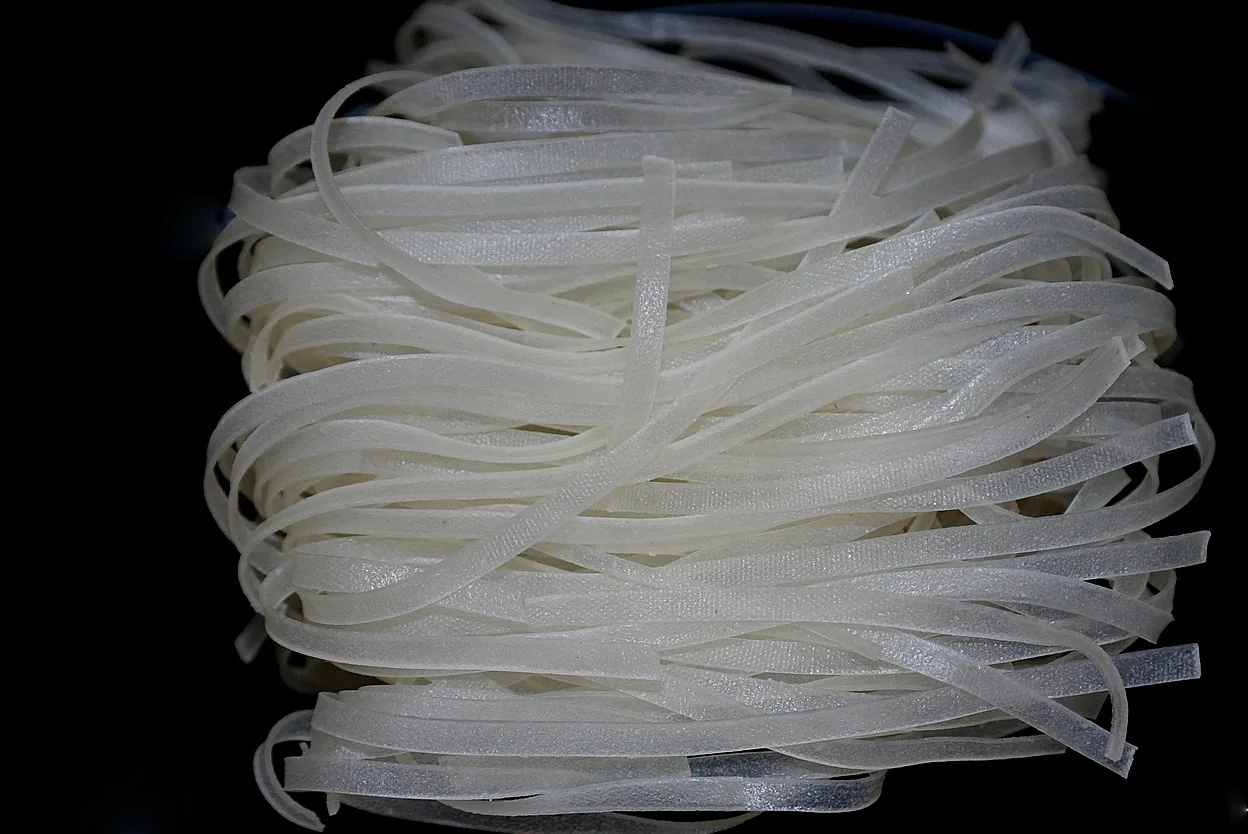
Vietnamese street food served fresh at a Hanoi stall
Do not rush. Bánh cuốn rewards a slow, deliberate approach.

Where to Find the Best Bánh Cuốn
- Hanoi: Bánh Cuốn Bà Hoành (66 Tô Hiến Thành Street) has been operating for over 40 years and is widely considered one of the city's finest. Bánh Cuốn Thanh Vân (14 Hàng Gà) is popular for the Thanh Trì style.
- Thanh Trì district: The original source of Hanoi's finest bánh cuốn. Local stalls near Thanh Trì village remain the reference standard.
- Morning only: Bánh cuốn is a breakfast and morning snack dish — most shops close by noon.
Price Guide
| Setting | Typical Price |
|---|---|
| Street stall / morning market | 30,000–50,000 VND (USD 1.30–2.20) |
| Local restaurant | 50,000–80,000 VND (USD 2.20–3.50) |
| Tourist restaurant | 70,000–130,000 VND (USD 3.00–5.50) |
Practical Tips
- Go early. Bánh cuốn is strictly a morning dish — most good shops close by 11 a.m.
- Watch it being made. The production is fascinating and seeing it made fresh guarantees you're eating it at its best.
- Don't skip the shallots. Crispy fried shallots are the unsung hero of bánh cuốn — make sure each bite has some.
- Try the Thanh Trì style. The plain, unfilled version is counter-intuitively more complex in its simplicity.
Information notice: Prices, opening hours, and travel conditions can change. Content on EnViet is reviewed periodically but may not reflect the most current situation. Please verify important details with official or local sources before travelling or booking. Costs are estimates and may vary by season, exchange rate, and travel style.
EnViet Editorial Team
The EnViet Editorial Team creates practical Vietnam travel and food guides using local knowledge, public sources, and manual editorial review. Content is reviewed before publication and updated periodically.