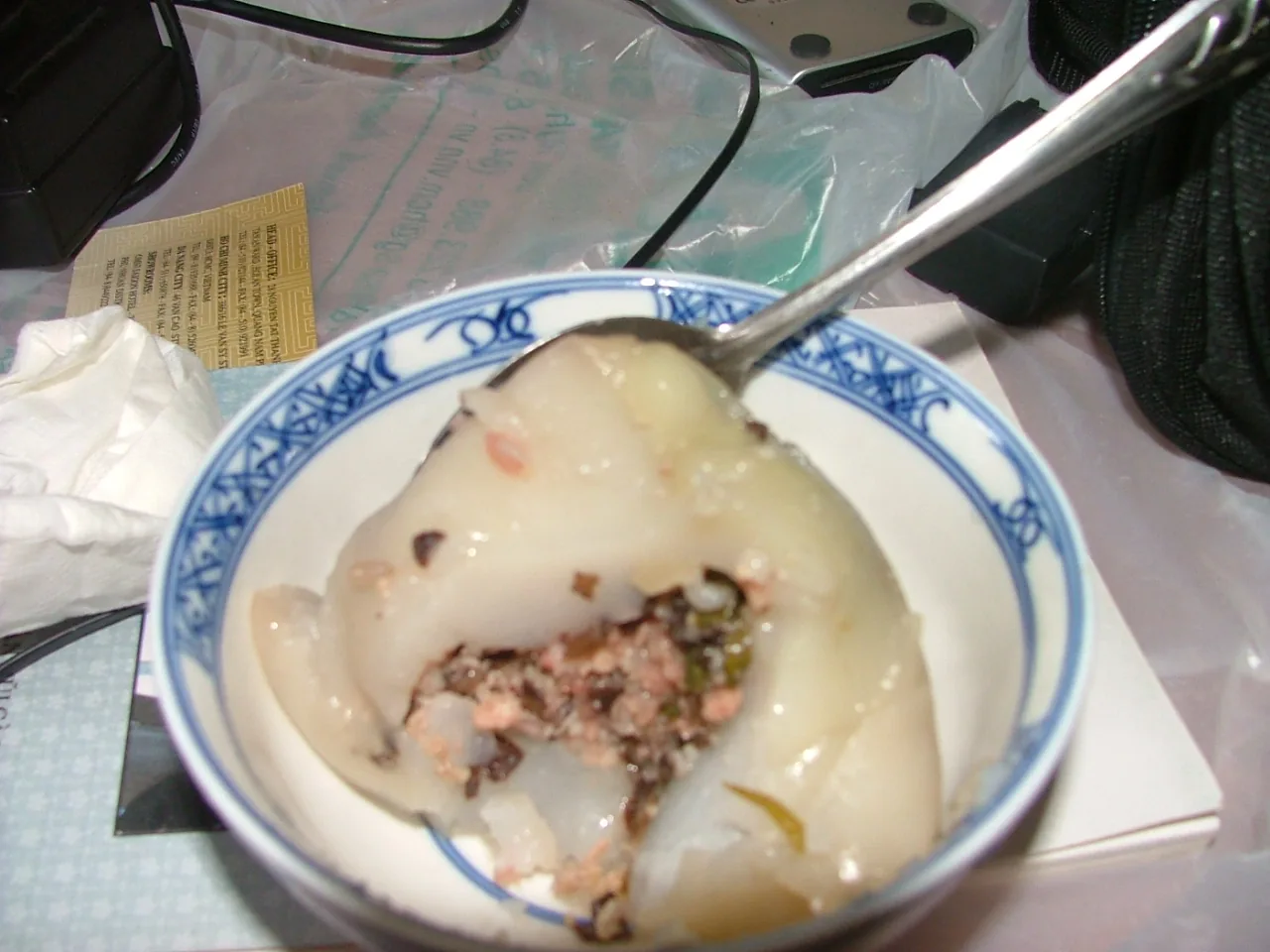
Banh Gio
What Is Banh Gio?
Banh gio is one of Vietnam's most recognizable snack foods, instantly identifiable by its distinctive pyramid shape and the banana leaf wrapping that gives it a faint, earthy fragrance. Inside that soft, translucent layer of rice flour dough sits a savory filling of ground pork, wood ear mushrooms, and shallots, all seasoned with black pepper and fish sauce and cooked until the outer dough turns smooth and slightly gelatinous. It occupies a comforting middle ground between a dumpling and a savory pudding, soft enough to eat with a spoon straight out of its leaf wrapper, and filling enough to serve as a full snack or a light meal.
You'll find banh gio sold everywhere from dedicated street stalls to school gates and office building lobbies across northern Vietnam, usually kept warm in a steamer basket and sold individually, wrapped and ready to unfold. It's a food that spans generations and incomes, eaten just as happily by schoolchildren grabbing an after-class snack as by office workers picking up a quick, satisfying bite on their way home.
Origin and Cultural Significance
Banh gio's roots trace back through Vietnam's long tradition of rice-based steamed dishes, a category that includes many regional variations built around rice flour, water, and a savory or sweet filling wrapped in leaves. The specific combination of pork and wood ear mushroom filling associated with today's banh gio became especially linked to Hanoi and the surrounding Red River Delta region, where it developed into a standardized, widely recognized snack sold from carts, market stalls, and small home kitchens.
The dish carries a certain nostalgic weight for many Vietnamese people, particularly those who grew up in the north, as a taste tied to childhood, school days, and simple family meals rather than to festivals or special occasions. It has stayed remarkably consistent over the decades: unlike some street foods that have been reinvented with modern twists, banh gio is largely still made and eaten the same way it has been for generations, a quiet constant in Vietnam's ever-evolving food scene.
What It Tastes Like
The dough itself is mild and slightly savory, made from rice flour cooked with broth or seasoned water until it thickens into a smooth, jelly-like consistency, similar in texture to a firm, glossy custard rather than anything doughy or chewy. It carries just enough seasoning on its own to be pleasant, but really serves as the vehicle for the filling packed at its center. That filling delivers the real flavor: well-seasoned ground pork studded with the distinct crunch of wood ear mushroom, a savory, peppery combination that contrasts nicely with the soft, almost bland dough surrounding it.
The banana leaf wrapping contributes a subtle vegetal aroma that infuses into the dough during steaming, a fragrance experienced Vietnamese eaters can often identify blind, and part of what makes a fresh, well-made banh gio taste noticeably better than a mass-produced version. Served with a side of Vietnamese fish sauce dip, sometimes livened up with chili or pickled vegetables, the overall effect is comforting, mildly savory, and satisfying without being heavy.
Where to Find the Best Version
Hanoi is generally considered the spiritual home of banh gio, and the city has numerous long-established vendors, some operating out of the same spot for decades, known specifically for their version of the snack. Look for stalls where the dumplings are kept warm in a bamboo steamer rather than sitting out at room temperature, since banh gio is noticeably better enjoyed hot, when the filling is fragrant and the dough is at its softest.
The snack has since spread throughout the country and can be found in cities across Vietnam, though the flavor profile and quality can vary considerably outside its northern heartland. Travelers who want the most authentic version are best served seeking it out in Hanoi itself, ideally from a vendor with a visible line of local regulars rather than one relying on foot traffic from tourists.
How to Eat It
Banh gio is typically sold wrapped tightly in its banana leaf, tied with a thin strip of leaf or string, and unwrapping it is part of the ritual: peel back the leaf carefully to reveal the smooth, pale dumpling inside, taking care since it will still be warm and somewhat soft. Most eaters use a spoon to scoop directly from the leaf, since the texture is closer to a firm custard than something that holds together neatly if picked up by hand.
A small dish of nuoc cham, Vietnam's all-purpose sweet-savory fish sauce dip, usually accompanies the dumpling, along with pickled vegetables or fresh chili for those who want extra heat. It's best eaten fresh and warm shortly after purchase, ideally within the hour, since the texture firms up and the flavor dulls somewhat once it cools completely.
A Dish Worth Seeking Out
Banh gio may not have the international name recognition of pho or banh mi, but for anyone spending real time in Vietnam, it's an essential taste of everyday northern Vietnamese eating: unpretentious, deeply comforting, and largely unchanged by trends or tourism. Grabbing one warm from a street stall, unwrapping the banana leaf, and eating it with a spoon while standing at a curbside stall is as authentic an experience of daily Hanoi life as a visitor is likely to find.
Information notice: Prices, opening hours, and travel conditions can change. Content on EnViet is reviewed periodically but may not reflect the most current situation. Please verify important details with official or local sources before travelling or booking. Costs are estimates and may vary by season, exchange rate, and travel style.
EnViet Editorial Team
The EnViet Editorial Team creates practical Vietnam travel and food guides using local knowledge, public sources, and manual editorial review. Content is reviewed before publication and updated periodically.