
Bánh Mì — Vietnam's Most Iconic Street Sandwich
What Is Bánh Mì?
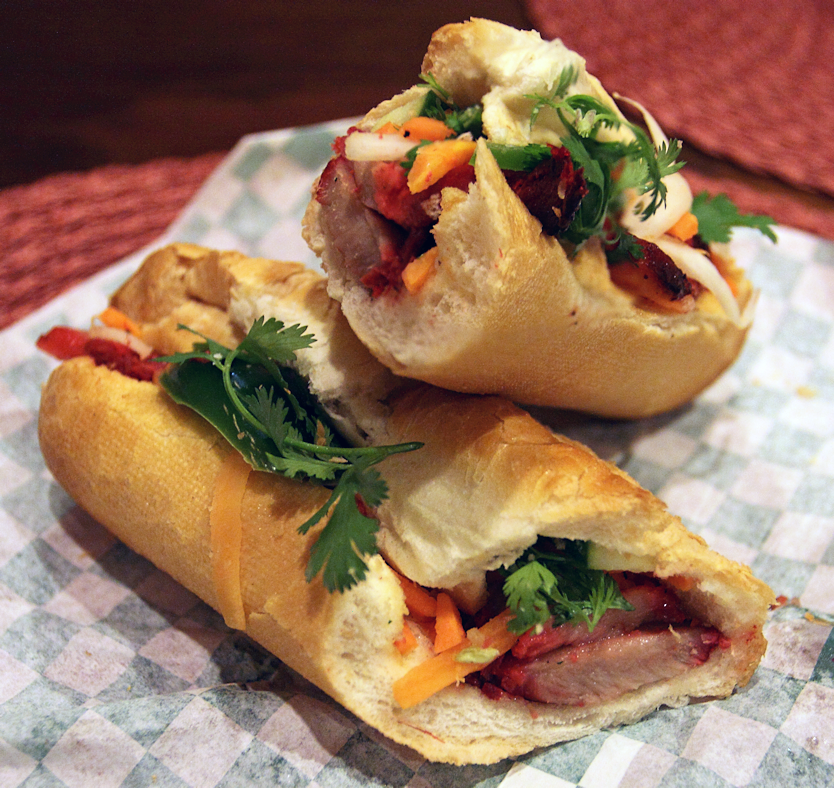
Few street foods in the world pack as much flavour, history, and cultural identity into a single hand-held package as bánh mì. This Vietnamese sandwich begins with a short baguette — lighter and crispier than its French ancestor, thanks to the addition of rice flour — split lengthwise and loaded with savoury fillings, fresh herbs, pickled vegetables, and chilli. The result is a riot of textures and tastes: crunchy bread, creamy pâté, salty cured meats, tangy pickled daikon and carrot, bright coriander, and a hit of chilli heat.
A freshly made bánh mì from a street cart costs between 20,000 and 40,000 VND (under two US dollars) and can be eaten at any hour of the day. It is, quite simply, one of the most satisfying things you can eat anywhere in the world.

A Colonial Legacy, Transformed
The story of bánh mì begins with French colonialism. When France established its presence in Indochina in the mid-19th century, the baguette came with it. By the early 20th century, Vietnamese bakers had adopted the baguette but adapted it using local ingredients — blending wheat flour with rice flour to produce a thinner, airier crust and lighter, slightly flaky crumb, better suited to the tropical climate.
The bánh mì sandwich as we know it today crystallised in Saigon in the 1950s. Street vendors began stuffing these light rolls with a distinctly Vietnamese selection of fillings — pâté, cold cuts, pickled vegetables, fresh herbs — drawing on both French charcuterie traditions and local flavour profiles. After 1975, Vietnamese refugees carried bánh mì to Australia, the United States, France, and Canada, where it became one of the most recognisable Vietnamese exports in the world.

The Anatomy of a Perfect Bánh Mì
Every great bánh mì starts with the bread. A proper Vietnamese baguette should have a shatteringly crispy, very thin crust and an extremely light, almost hollow interior. If the crust is soft or the crumb is dense, the sandwich is already compromised.
The essential classic fillings are:
- Pâté (gan) — smooth savoury liver pâté spread generously on both halves. This is the non-negotiable foundation.
- Mayonnaise — often mixed with a little butter, providing richness and binding the fillings.
- Chả lụa — steamed Vietnamese pork roll with a smooth, slightly bouncy texture.
- Thịt nguội — Vietnamese cold cuts, typically a selection of differently seasoned pork preparations.
- Đồ chua — pickled daikon radish and carrot, julienned and lightly sweetened. These cut through the richness of the meat.
- Dưa leo — thinly sliced fresh cucumber.
- Ngò rí — fresh coriander (cilantro), added generously.
- Ớt — sliced fresh chilli or chilli sauce for heat.
The combination of fat (pâté, mayo), protein (cold cuts), acid (pickled vegetables), and freshness (herbs, cucumber) is what makes bánh mì so compulsively good.

Popular Bánh Mì Variations
Bánh mì thịt nướng — grilled lemongrass-marinated pork. The charred, caramelised meat is extraordinary and arguably the most popular variety today.
Bánh mì trứng — a fried egg bánh mì, made on a small griddle right in front of you. Often served with Maggi seasoning sauce. One of the great breakfast options in Vietnam.
Bánh mì xíu mại — the bread is dipped in a rich tomato and pork meatball gravy before the fillings are added. A Saigon morning tradition.
Bánh mì chả cá — filled with Vietnamese fish cake instead of pork, lighter in flavour and popular in coastal cities.
Bánh mì bơ đường — a sweet version filled with butter and sugar, popular with children.
Bánh mì chay — a vegetarian version with tofu, mushrooms, or other plant-based ingredients, available at Buddhist-oriented shops.
Regional Differences
In Ho Chi Minh City, portions are large, fillings abundant, and the bread slightly sweeter. This Saigon style is what most of the world encounters in overseas Vietnamese restaurants.
In Hội An, a distinct local version has become internationally famous. Bánh Mì Phượng — run by the same family for decades — stuffs its rolls so generously that eating neatly is essentially impossible. CNN named it one of the best street foods in Asia.
In Hanoi and the north, bánh mì is less commonly eaten as a full meal and more often served plain (bánh mì không) as a side, or stuffed simply with pâté and butter.
Where to Find the Best Bánh Mì
- Ho Chi Minh City: Bánh Mì Huynh Hoa on Lê Thị Riêng Street — expect a queue down the street, worth every minute.
- Hội An: Bánh Mì Phượng on Trần Cao Vân Street — world-famous and genuinely excellent.
- Đà Nẵng: Street carts near the Han Market serve outstanding bánh mì at local prices.
- Everywhere: Any cart with a small charcoal grill for toasting the bread will almost certainly be excellent.
Price Guide
| Setting | Typical Price |
|---|---|
| Street cart / market stall | 20,000–40,000 VND (USD 0.80–1.70) |
| Sit-down café or bakery | 40,000–70,000 VND (USD 1.70–3.00) |
| Tourist-area sandwich shop | 60,000–120,000 VND (USD 2.50–5.00) |

Tips for First-Timers
- Eat immediately. Bánh mì is best within a minute of being made — the crispy crust softens quickly.
- Order by pointing. If Vietnamese is limited, pointing at fillings on the cart is completely normal.
- Ask for extra chilli. Say "thêm ớt" (more chilli) if you like heat — vendors will happily oblige.
- Go in the morning. Bánh mì is most widely eaten 6–10 a.m. when the bread is freshest.
Information notice: Prices, opening hours, and travel conditions can change. Content on EnViet is reviewed periodically but may not reflect the most current situation. Please verify important details with official or local sources before travelling or booking. Costs are estimates and may vary by season, exchange rate, and travel style.
EnViet Editorial Team
The EnViet Editorial Team creates practical Vietnam travel and food guides using local knowledge, public sources, and manual editorial review. Content is reviewed before publication and updated periodically.