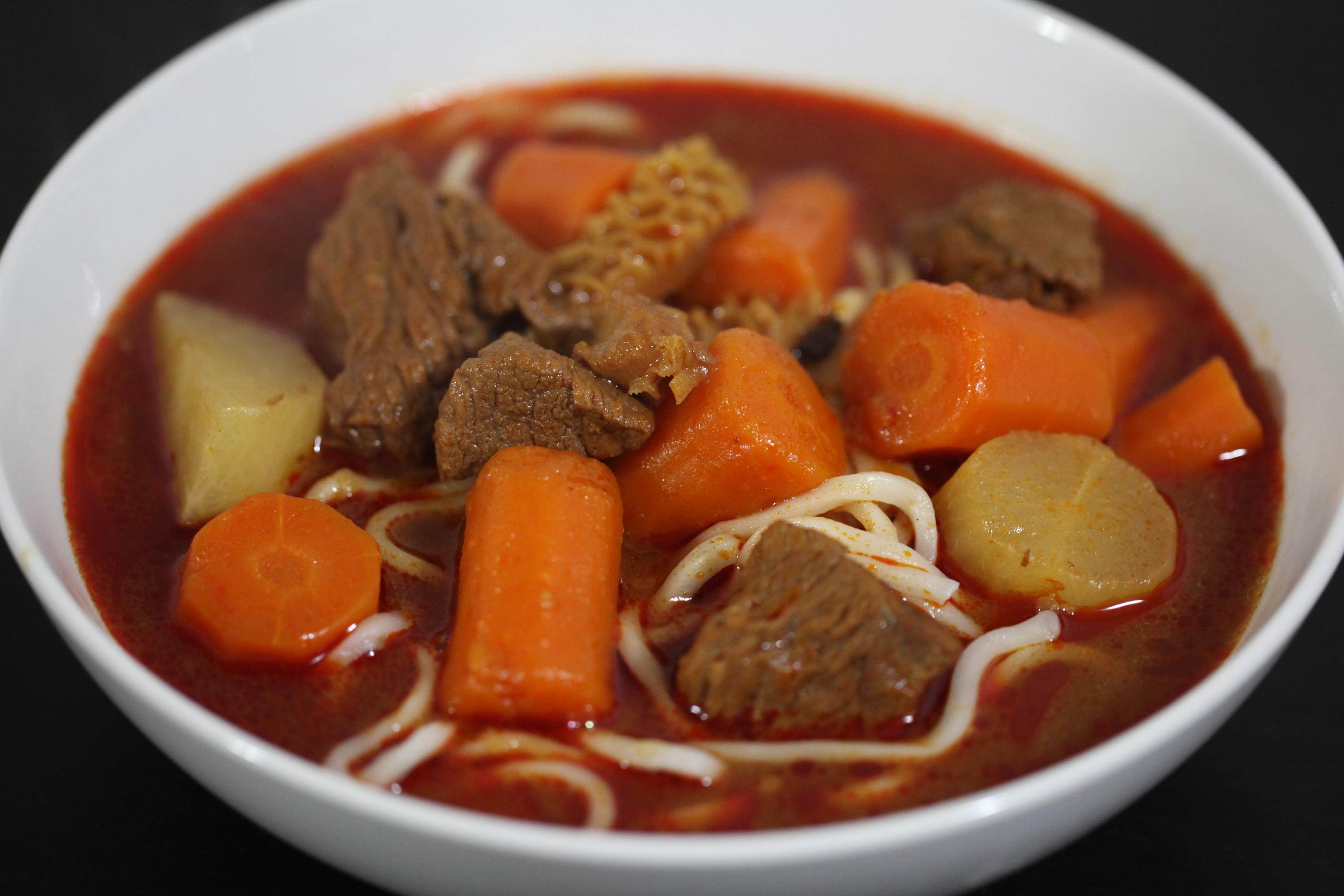


Bò Kho — Vietnam's Spiced Beef Stew
What Is Bò Kho?
Bò kho is Vietnam's spiced beef stew — a rich, orange-red braise of slow-cooked beef brisket or shank with lemongrass, star anise, cinnamon, and annatto, served with either a crusty baguette (bánh mì) for dipping, thick flat rice noodles (bánh phở), or plain rice. The stew is deeply aromatic, slightly spicy from chilli paste, and has a warmth from the spices that is distinctly Vietnamese — neither a European beef stew nor a Chinese red-braised beef, but something entirely its own.
Bò kho is most associated with the south and the Mekong Delta, where it is a popular breakfast and morning dish. The sight of a large pot of bò kho simmering outside a roadside stall, the air fragrant with lemongrass and star anise, is one of the defining morning images of Ho Chi Minh City's less touristy neighbourhoods.
Origins and Character
Bò kho shows the influence of both Chinese and French culinary traditions on Vietnamese cooking. The slow-braising technique and the use of five-spice adjacent spices (star anise, cinnamon, cloves) echo Chinese red-braised beef dishes. The tendency to serve the stew with a baguette for dipping reflects French colonial influence — bread with stew is not a Vietnamese tradition, but it is a deeply established practice today.
The annatto oil (dầu điều) that gives the stew its characteristic orange-red colour is used throughout Vietnamese cuisine as a natural colouring agent, derived from the seeds of the achiote tree. It adds no significant flavour but creates the visual identity of the dish.
The Key Aromatics
What distinguishes bò kho from other global beef stews is its aromatic profile:
- Sả (lemongrass) — bruised stalks are added to the marinade and the braise. Lemongrass is the most important flavour contributor.
- Hồi (star anise) — adds a sweet, anise-like depth.
- Quế (cinnamon) — contributes warmth and sweetness.
- Ớt (chilli) — dried chilli paste or fresh chilli gives gentle heat.
- Dầu điều (annatto oil) — creates the orange-red colour.
- Cà rốt (carrot) — cooked until very tender, absorbs the braising liquid beautifully.
The beef is typically marinated for several hours in lemongrass, garlic, fish sauce, and five-spice powder before being browned and added to the braising liquid.
How It's Served
Bò kho is one of Vietnam's most flexible dishes in terms of serving format:
Bò kho bánh mì — the stew served in a bowl with a crusty Vietnamese baguette on the side. This is the most popular street food format. The bread is torn and used to scoop and soak up the stew. This combination — the crispy, light bread against the rich, spiced braise — is one of the great eating experiences in Vietnamese street food.
Bò kho hủ tiếu / phở — the stew served over rice noodles or flat phở noodles, with the braising liquid used as the broth. A heartier, more filling option.
Bò kho cơm — served over steamed white rice. Common for a proper meal rather than a quick breakfast.
Bò kho khô (dry version) — the stew cooked with less liquid until the sauce reduces to a sticky glaze coating the meat. Eaten with rice or as a drinking snack.
Regional Variations
Bò kho Phú Yên — from the central coastal province of Phú Yên, this version is considered by many to be the finest in Vietnam. The cattle of Phú Yên province are raised on mountainous terrain and are prized for their flavourful, slightly lean meat. The braise uses local lemongrass varieties and is often spicier than the Saigon version.
Bò kho Nam Bộ (southern style) — the standard Saigon version, slightly sweeter and more heavily coloured with annatto. More carrot, sometimes coconut milk added for richness.
Bò kho miền Trung (central style) — spicier, with more chilli, closer to the flavour profile of central Vietnamese cooking generally.
The Bread-and-Stew Breakfast
The bánh mì bò kho combination deserves particular attention as a cultural phenomenon. In southern Vietnam, eating beef stew with bread for breakfast is as normal as eating cereal with milk in other countries. Early morning bò kho stalls — often operating from 5 a.m. — cater primarily to workers and market vendors who want a hot, sustaining meal before a long day. The combination of carbohydrates from the bread, protein from the beef, and warmth from the spices is practically engineered for physical labour.
Eating bò kho with bread at 6 a.m. on a plastic stool, with strong Vietnamese drip coffee on the side, is one of the most authentically southern Vietnamese experiences a traveller can have.

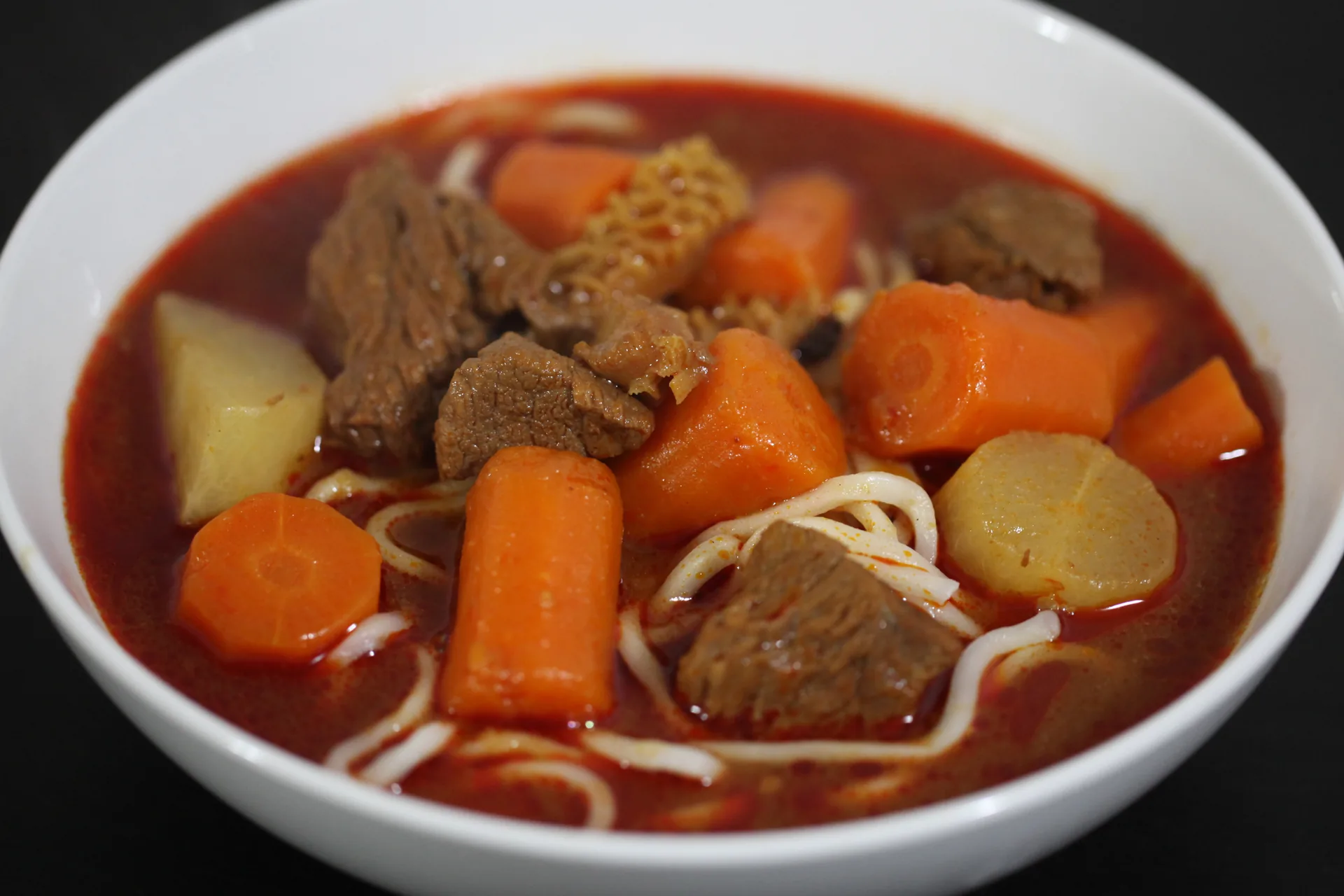
Rich and aromatic Vietnamese beef stew
How to Eat Bò Kho
Tear the bánh mì into manageable pieces and use them to scoop and soak up the stew. The bread should absorb the braising liquid — the oil-rich, intensely flavoured orange sauce is the best part of the dish. Push pieces of tender beef onto the bread. Eat immediately before the bread softens too much.
If eating with noodles, pour the braising liquid generously over the noodles and stir everything together before eating. The broth functions as both sauce and soup.
Where to Find the Best Bò Kho
- Ho Chi Minh City: Bò kho bánh mì carts are widespread throughout the city, particularly in Districts 3, 5, and Bình Thạnh. Morning markets throughout the city reliably have at least one bò kho vendor.
- Phú Yên province: The definitive version, worth seeking out if travelling the south-central coast.
- Mekong Delta: Roadside restaurants throughout the delta serve excellent versions, often with locally raised beef.
Price Guide
| Setting | Typical Price |
|---|---|
| Street cart (with bread) | 35,000–60,000 VND (USD 1.50–2.60) |
| Local restaurant | 55,000–90,000 VND (USD 2.40–3.90) |
| Sit-down restaurant | 80,000–140,000 VND (USD 3.50–6.00) |
Practical Tips
- Order it with bread. The bánh mì bò kho combination is the definitive format.
- Go early. Like most morning street food, the best bò kho is served before 9 a.m.
- Ask for extra sauce. The braising liquid is the most important element — ask for more to soak the bread.
- Try the dry version. Bò kho khô has an intense, concentrated flavour and works well as an evening drinking snack.
Information notice: Prices, opening hours, and travel conditions can change. Content on EnViet is reviewed periodically but may not reflect the most current situation. Please verify important details with official or local sources before travelling or booking. Costs are estimates and may vary by season, exchange rate, and travel style.
EnViet Editorial Team
The EnViet Editorial Team creates practical Vietnam travel and food guides using local knowledge, public sources, and manual editorial review. Content is reviewed before publication and updated periodically.