
Bún Chả — Hanoi's Legendary Grilled Pork Noodles
What Is Bún Chả?
Bún chả is Hanoi's most beloved lunchtime dish — and, since 2016, one of the most famous Vietnamese meals in the world. That was the year Anthony Bourdain sat down with US President Barack Obama at a plastic-stool restaurant on Lê Văn Hưu Street in Hanoi, where the two men shared a meal of bún chả, spring rolls, and cold beer. The images went around the globe, and bún chả went from a local favourite to an item on every serious food traveller's Vietnam bucket list.
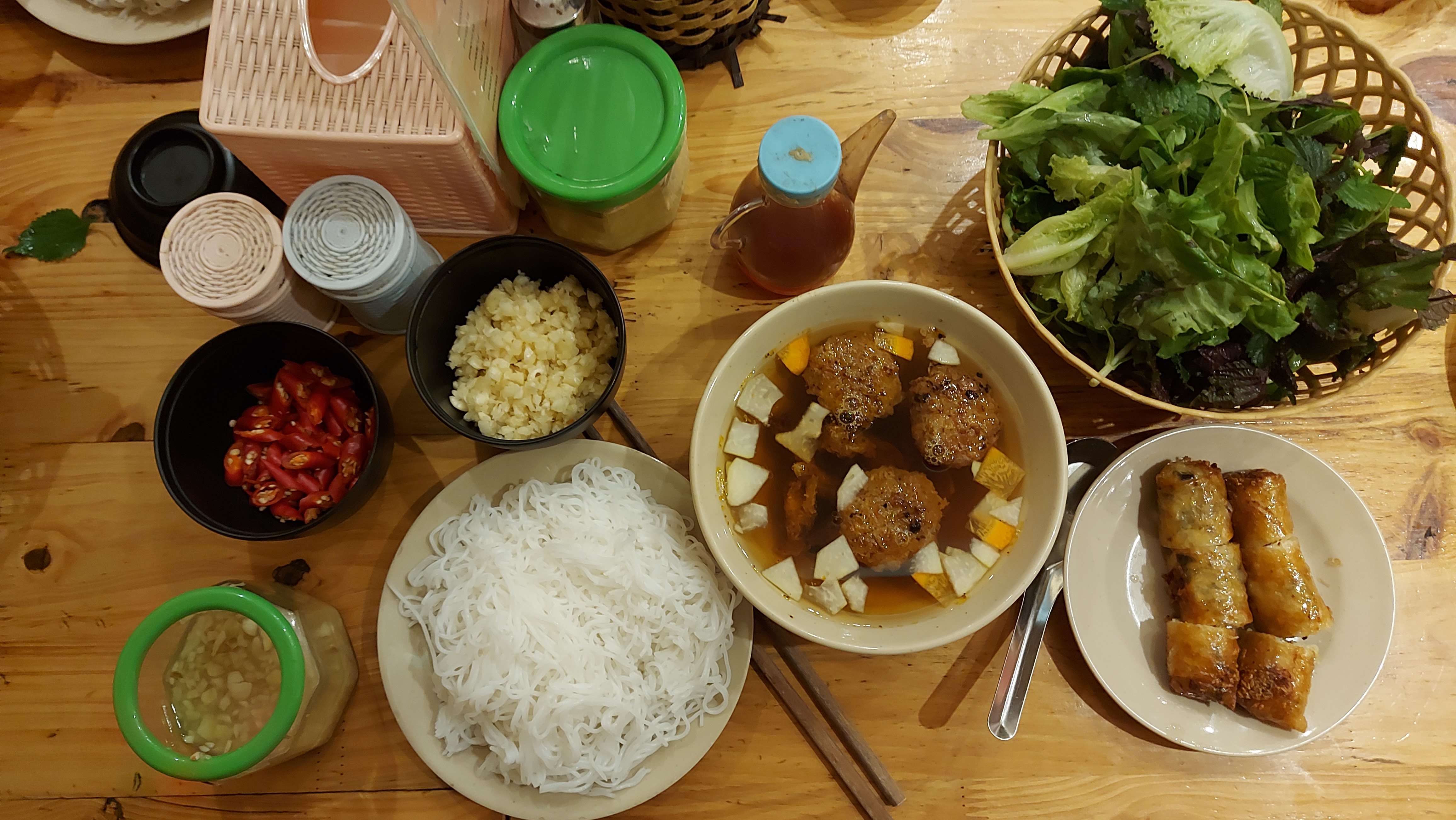
The dish is deceptively simple: grilled pork served in a bowl of warm dipping broth alongside a separate plate of cold white rice vermicelli noodles and a platter of fresh herbs. You build each bite yourself — dipping noodles and herbs into the broth, loading up a piece of grilled pork, and eating it all together. It is one of the great interactive eating experiences in Vietnamese cuisine.

A Hanoi Original
Unlike phở or bánh mì, which have spread across Vietnam and around the world, bún chả has remained stubbornly, proudly Hanoian. It is primarily a lunchtime dish in Hanoi — most bún chả shops open around 11 a.m. and close by 2 p.m., or whenever they sell out, which is usually before that. The dish is rarely served for dinner. This strict schedule is part of its character.
The dish's origins are not precisely documented, but food historians believe it developed in Hanoi during the early 20th century as a dish served by street vendors using portable charcoal grills. The smoke from those grills is still an essential part of the experience — you can often smell a good bún chả shop from half a block away before you see it.
The Three Components
Bún chả has three equally important parts:
Nước chấm (the dipping broth) — This is the heart of the dish. It is not a soup broth in the phở sense; it is a warm, seasoned dipping liquid made from fish sauce, vinegar, sugar, water, garlic, and chilli. The balance between sweet, sour, and salty is everything. Floating in the broth are pieces of grilled pork that continue to steep and absorb the flavours as you eat. Pickled green papaya or carrot and daikon are often added, providing acidity and crunch. A great bún chả rises or falls on its nước chấm.
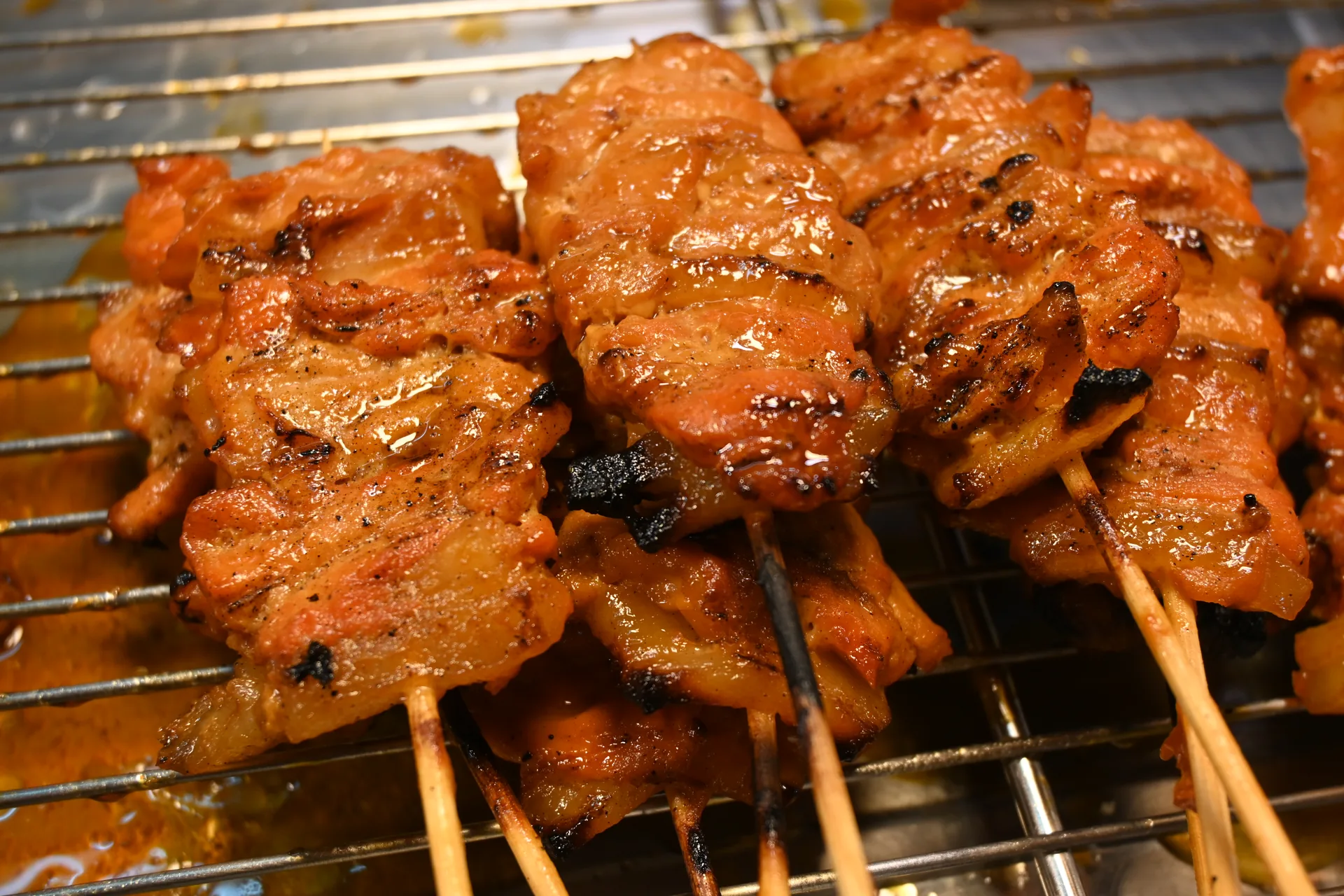
Chả (grilled pork) — There are two types in a standard serving. First is chả miếng — flat patties made from minced pork mixed with fish sauce, sugar, shallots, and black pepper, shaped by hand and grilled over charcoal until slightly charred at the edges. Second is chả băm — slices of pork belly, marinated in the same spice mix, that caramelise beautifully on the grill. Both types are dropped directly into the bowl of broth before serving.
Bún (rice vermicelli) — Thin, white rice vermicelli noodles, served cold at room temperature on a separate plate. The cold noodles against the warm broth and hot pork create a temperature contrast that is fundamental to the dish's appeal.

The Fresh Herb Plate
Alongside the three main components, a large plate of fresh herbs and greens arrives: lettuce leaves, mint, perilla (shiso), Vietnamese balm (kinh giới), bean sprouts, and sometimes sliced chilli. These are not decorative — they are integral to the eating experience. Wrap a leaf of lettuce around a clump of noodles, add some herbs, dip into the broth with a piece of pork, and eat the whole thing in one mouthful.
How to Eat It
There is no single correct method, but the most common approach is: take a small bundle of cold bún from the plate, dip it briefly into the nước chấm bowl to warm it slightly and coat it with the sauce, then add a piece of grilled pork and some herbs. Eat together. The noodles should not be dumped wholesale into the broth bowl — this is a dipping dish, not a soup. Keeping the components separate gives you more control over each bite.
Add garlic and chilli from the table to the broth as you go, adjusting the heat to your preference.
Bún Chả vs. Bún Thịt Nướng
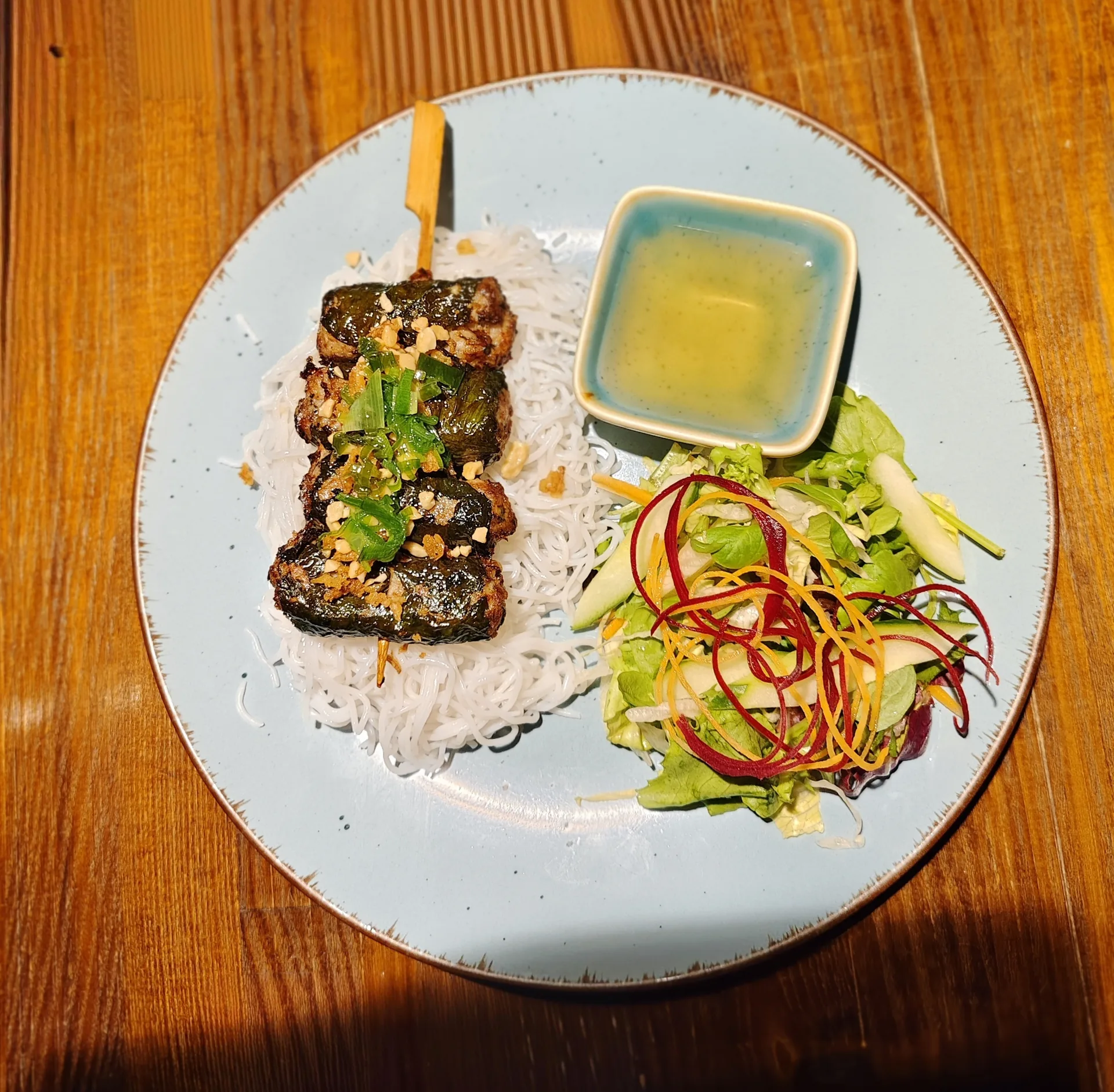
Travellers sometimes confuse bún chả with bún thịt nướng, the grilled pork noodle bowl popular in southern Vietnam. The key difference: bún thịt nướng is a dry noodle bowl (like a Vietnamese rice bowl without rice) served with fish sauce dressing, pickled vegetables, fried shallots, and crushed peanuts. Bún chả involves a warm dipping broth and is a northern dish. The two dishes are related but distinct.
Spring Rolls on the Side
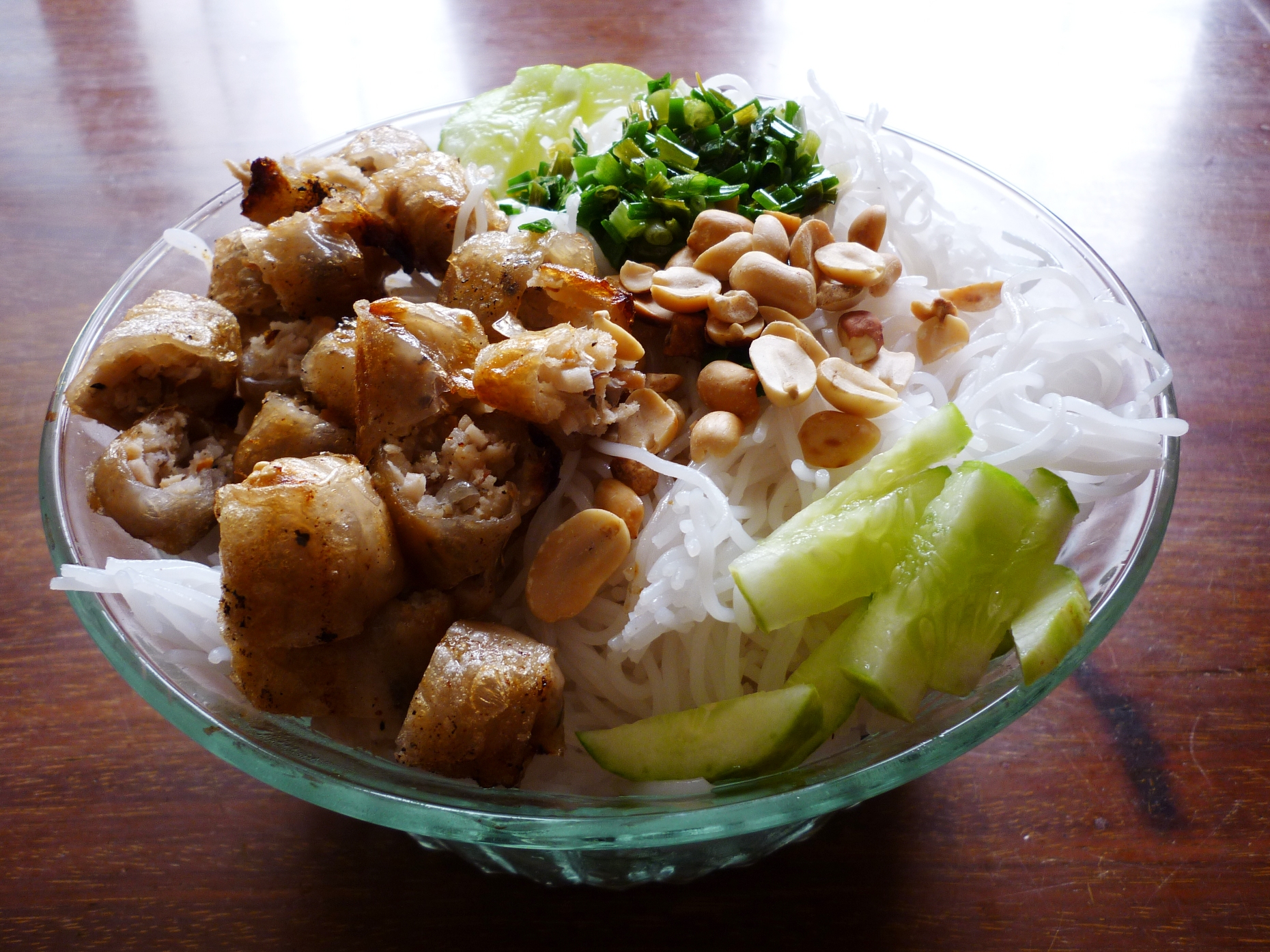
Most bún chả restaurants also offer nem cuốn chiên (fried spring rolls) as an optional side. These small, crispy rolls are dipped into the same nước chấm and are a natural accompaniment. Order them — they are typically very good.
Where to Find the Best Bún Chả in Hanoi
- Bún Chả Hương Liên (24 Lê Văn Hưu) — where Obama and Bourdain ate. Now inevitably touristy but the food remains solid.
- Bún Chả Đắc Kim (1 Hàng Mành) — a Hanoi institution operating since the 1960s, consistently excellent.
- Bún Chả 34 Hàng Than — popular with locals, smaller and less known to tourists.
- Any smoke-trailing street stall near the Old Quarter — the smell of charcoal-grilled pork is your guide.
Price Guide
| Setting | Typical Price |
|---|---|
| Street cart / local shop | 40,000–65,000 VND (USD 1.70–2.80) |
| Sit-down restaurant | 65,000–100,000 VND (USD 2.80–4.30) |
| Tourist-facing restaurant | 90,000–160,000 VND (USD 3.90–7.00) |
Practical Tips
- Go for lunch. Bún chả is strictly a midday dish in Hanoi. Most shops close by 2 p.m.
- The smoke matters. Look for restaurants with a visible charcoal grill near the entrance — the char flavour from real wood charcoal is essential.
- Don't dump your noodles. Keep bún on the separate plate and dip as you eat.
- Order the spring rolls. They are made to be eaten with the same broth and are almost always excellent.
Information notice: Prices, opening hours, and travel conditions can change. Content on EnViet is reviewed periodically but may not reflect the most current situation. Please verify important details with official or local sources before travelling or booking. Costs are estimates and may vary by season, exchange rate, and travel style.
EnViet Editorial Team
The EnViet Editorial Team creates practical Vietnam travel and food guides using local knowledge, public sources, and manual editorial review. Content is reviewed before publication and updated periodically.