


Bún Đậu Mắm Tôm — Hanoi's Pungent Fried Tofu Platter
What Is Bún Đậu Mắm Tôm?
Bún đậu mắm tôm is one of Hanoi's most beloved — and most divisive — street food platters. The dish is built around three elements: soft white rice vermicelli (bún), golden deep-fried tofu (đậu), and a small bowl of intensely pungent fermented shrimp paste (mắm tôm) stirred with lime juice, chilli, and a splash of cooking oil to make it foam. It is a dish that polarises: first-timers are often stopped in their tracks by the smell of the shrimp paste, while devotees claim there is nothing more satisfying on a hot Hanoi afternoon.
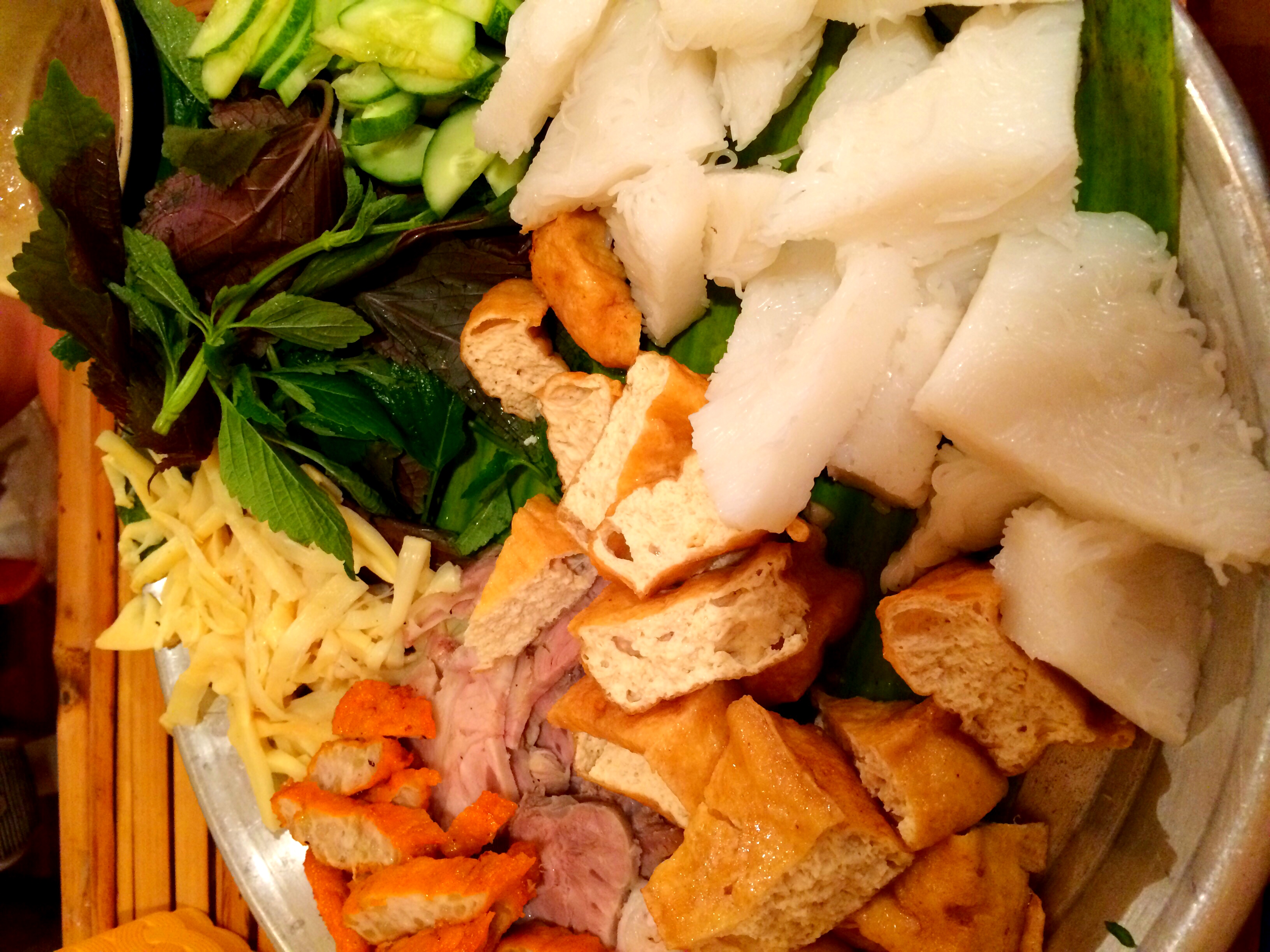
The dish is typically served on a large leaf-lined tray or wooden board, with everything arranged side by side. Alongside the tofu and bún, common additions include boiled pork belly, fried Vietnamese pork roll (chả chiên), fried spring rolls (nem rán), crunchy pork skin, and fresh herbs. You tear, dip, and eat — a shared, communal experience that is as much about the ritual as the food itself.
Origins: A Hanoi Street Food Tradition
Bún đậu mắm tôm is a northern Vietnamese dish through and through, with its heart in Hanoi. For decades it was sold exclusively by street vendors — women who set up low tables and plastic stools on pavements, typically in the older residential neighbourhoods of the city. The dish was considered humble working-class food, eaten quickly and cheaply.
In the 2010s, the dish underwent a significant cultural shift. A new generation of dedicated bún đậu restaurants opened across Hanoi, serving the same core elements but in more comfortable settings and with expanded menus of dipping components. The concept spread to Ho Chi Minh City, where it found an enthusiastic southern audience despite being restyled to suit local tastes. Today it is one of the most popular lunchtime options in both cities.
The Three Essential Elements
Bún (rice vermicelli) — thick, round, white rice noodles, slightly softer than the bún used in bún chả or bún bò Huế. They are served at room temperature in a coiled mound on the tray. The noodles have a mild, clean flavour designed to absorb the shrimp paste dip.
Đậu phụ chiên (fried tofu) — blocks of firm tofu deep-fried until the exterior is golden and just crispy while the interior remains soft, custard-like, and yielding. The contrast between the crunchy skin and the silky inside is essential. Good fried tofu for bún đậu should be served hot, straight from the oil.
Mắm tôm (fermented shrimp paste) — the soul of the dish and its most confronting element. Vietnamese mắm tôm is a thick, grey-purple paste made from fermented ground shrimp. Its smell is intensely funky, salty, and oceanic. For the dipping sauce, it is mixed with fresh lime juice, a pinch of sugar, sliced fresh chilli, and a spoonful of hot cooking oil, then stirred vigorously until it lightens in colour and froths slightly. The result is pungent, acidic, spicy, and deeply savoury — a flavour that is impossible to replicate with any substitute.
Additional Components
A full platter of bún đậu mắm tôm typically includes some combination of:
- Thịt ba chỉ luộc — sliced boiled pork belly, fatty and yielding, excellent dipped in mắm tôm.
- Chả chiên — sliced Vietnamese pork roll (chả lụa) lightly pan-fried until golden at the edges.
- Nem rán — small crispy fried spring rolls, shatteringly crunchy and served hot.
- Da lợn giòn — crispy fried pork skin, airy and crunchy.
- Rau sống — fresh herbs including mint, perilla, and cucumber for freshness.
Most restaurants let you customise your platter, ordering additional items à la carte. A standard two-person lunch typically includes the basic tofu and bún plus one or two additional proteins.
The Mắm Tôm Challenge
For first-time visitors, mắm tôm is genuinely challenging. The smell is powerful and unlike anything in Western cuisine — it has been described as "aggressively funky," "pungent," and "deeply savoury all at once." Food writers regularly note that it is one of the most acquired tastes in Vietnamese cuisine.
The key is to approach it with an open mind and to eat it in context. A small amount on a piece of crispy tofu with a bit of fresh herb is a completely different experience from smelling the jar alone. Start with a small dip, let the lime and chilli balance the funk, and eat it quickly. Many visitors who are initially sceptical become converts within the same meal.
How to Eat Bún Đậu Mắm Tôm
Everything is eaten together: tear a piece of tofu, wrap it loosely with a tangle of bún and some fresh herb, dip it into the mắm tôm, and eat the whole thing in one or two bites. The lime and chilli in the dip should balance the saltiness of the shrimp paste; adjust by squeezing more lime or adding more chilli to taste.
Eat communally. Bún đậu is a shared dish — individual portions are uncommon. The tray format encourages picking and sharing, with everyone dipping into the same bowl of mắm tôm.
Where to Find the Best Bún Đậu Mắm Tôm
- Hanoi Old Quarter: Dozens of dedicated shops and street-side vendors. Bún Đậu Mắm Tôm Cô Lan (multiple locations) is well-regarded by locals.
- Hanoi – Cầu Giấy and Tây Hồ districts: These residential areas have some of the city's most authentic street-side versions.
- Ho Chi Minh City: Many dedicated restaurants in Districts 1, 3, and Bình Thạnh serve southern adaptations — slightly milder and often served in a more polished setting.
Price Guide
| Setting | Typical Price (per person) |
|---|---|
| Street-side stall | 40,000–70,000 VND (USD 1.70–3.00) |
| Dedicated restaurant | 70,000–120,000 VND (USD 3.00–5.20) |
| Upscale bún đậu concept | 100,000–180,000 VND (USD 4.30–7.80) |
Practical Tips
- Smell it, then try it. Don't let the aroma of mắm tôm alone put you off — it transforms completely when mixed with lime and eaten with tofu.
- Eat the tofu hot. Fried tofu that has gone cold and soft loses most of its appeal. Prioritise the tofu first in your platter.
- Add lime generously. More lime makes the dip more approachable and brightens all the flavours.
- Go for lunch. Bún đậu is primarily a midday dish, and most shops are busiest between 11 a.m. and 2 p.m.
Information notice: Prices, opening hours, and travel conditions can change. Content on EnViet is reviewed periodically but may not reflect the most current situation. Please verify important details with official or local sources before travelling or booking. Costs are estimates and may vary by season, exchange rate, and travel style.
EnViet Editorial Team
The EnViet Editorial Team creates practical Vietnam travel and food guides using local knowledge, public sources, and manual editorial review. Content is reviewed before publication and updated periodically.