Bun Oc
What Is Bun Oc?
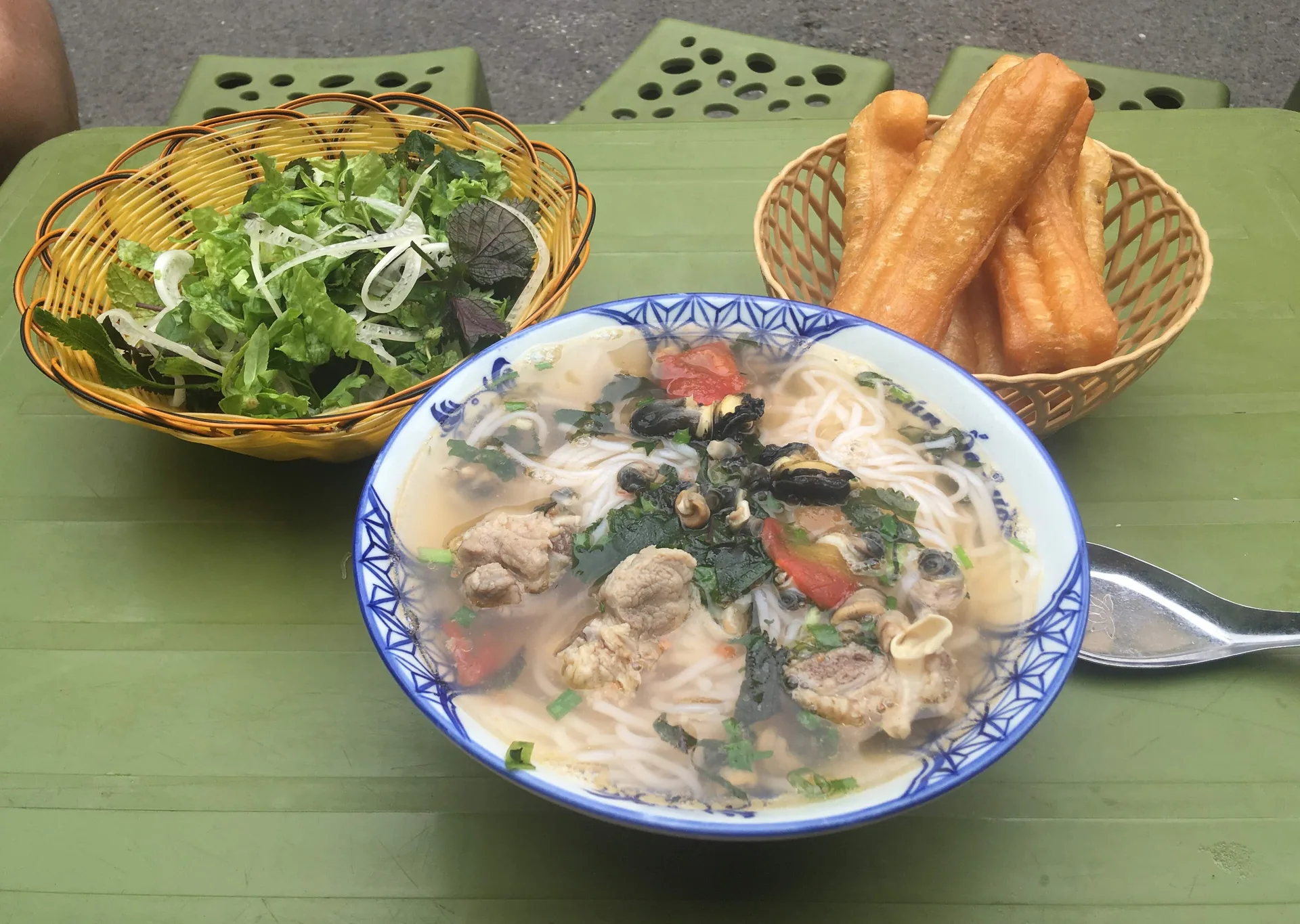
Bun oc is Hanoi's answer to a craving that hits somewhere between comfort food and a bright, palate-waking snack: a bowl of thin rice vermicelli bathed in a tangy tomato-based broth, topped with plump freshwater snails, sometimes fried tofu, and a fistful of fresh herbs. Where pho leans savory and beef-forward, bun oc goes in a completely different direction, sour and sweet and a little punchy from vinegar or tamarind, with a broth color that comes from ripe tomatoes cooked down until they nearly melt into the stock. It's a dish that rewards a bit of an adventurous palate, since the snails themselves have a distinctive chewy, slightly mineral bite that first-time eaters either fall for immediately or need a bowl or two to appreciate.
Street vendors, particularly in Hanoi's Old Quarter, have been serving bun oc for generations, often from tiny stalls with just a handful of plastic stools and a rotating pot of broth kept going all morning. In summer, a cold version called bun oc nguoi (fried tofu, herbs, and cooled broth served on the side rather than poured over) becomes especially popular, offering a refreshing option when Hanoi's heat makes a steaming bowl of noodle soup less appealing.
Origin and Cultural Significance
Bun oc has deep roots in Hanoi's culinary tradition, tracing back to a time when the freshwater canals, ponds, and paddies around the city were a ready and inexpensive source of snails. What began as humble, foraged home cooking gradually became a fixture of the capital's street food scene, sold by vendors who specialized in cleaning and preparing the snails properly, a labor-intensive task that most home cooks were happy to outsource. Certain neighborhoods and even specific alleys in Hanoi became known for having the city's best bun oc, and locals would cross town for a particular vendor's version, a pattern of loyalty that still holds today.
The dish also carries a seasonal rhythm that many Vietnamese diners associate with cooler months, when snails are considered at their best and a hot, tangy broth feels especially welcome. That said, the popularity of the cold summer variation shows how the dish has adapted over time, proving flexible enough to suit Hanoi's swing between chilly winters and sweltering summers.
What It Tastes Like
The first thing most people notice about bun oc is the broth's sourness, a bright, clean tang from tomato and often a touch of tamarind or vinegar, layered over a savory pork or bone stock base. It sits somewhere between a light soup and a dressing, thin enough to soak into the rice noodles but concentrated enough to carry real flavor in every spoonful. The snails themselves are firm and slightly springy, with a mild, faintly briny taste that picks up whatever seasoning surrounds it, not unlike how clams or mussels behave in other cuisines.
Fresh herbs are essential to the dish, usually a generous tangle of perilla, Vietnamese coriander, and scallions, along with a squeeze of lime and often a spoonful of chili oil stirred in at the table to taste. The overall effect is layered rather than one-note: sour, savory, faintly sweet, herbal, and with just enough heat to keep things interesting, all built around the distinct textural pop of the snails themselves.
Where to Find the Best Version
Hanoi remains the undisputed home of bun oc, and the Old Quarter in particular has several long-running stalls, some run by the same families for two or three generations, that locals consider the gold standard. Look for a stall with a constantly bubbling pot of reddish broth and a line of regulars rather than tourists, usually a reliable sign that the snails are fresh and the broth has been simmering properly all morning. Many of the best-known vendors operate only during specific hours, often finishing their daily batch by early afternoon, so a late lunch attempt can mean arriving to an empty pot.
Outside Hanoi, bun oc has spread to other cities, though it is far less common than dishes like pho or bun cha, and versions found further south sometimes adjust the sourness or spice level to suit local tastes. For visitors serious about trying an authentic bowl, Hanoi is worth the trip, and asking a local for their family's preferred stall usually yields a far better result than searching blindly.
How to Eat It
Bun oc arrives as a full bowl already assembled, though most stalls set out a small tray of extras: fresh lime wedges, extra chili, and sometimes a saucer of shrimp paste or fermented fish sauce for those who want to push the sourness even further. The dish is meant to be eaten hot and immediately, since the noodles will continue to soften the longer they sit in the broth, so it's best enjoyed at a leisurely but not overly delayed pace, chopsticks for the noodles and snails and a spoon for the broth.
For the cold variation, bun oc nguoi, the components arrive deconstructed: noodles, snails, tofu, and herbs on one plate, and the tangy broth in a separate bowl for dipping or pouring over as you go, a format that keeps everything crisp and cool even on the hottest Hanoi afternoons. Either way, don't be shy about asking for extra herbs or a bit more chili if the first bites feel like they need more brightness; Hanoi vendors are generally happy to oblige.
A Dish Worth Seeking Out
Bun oc rarely makes it onto a first-timer's must-try list the way pho or banh mi does, but for travelers willing to step slightly outside their comfort zone, it offers one of the most distinctive flavor profiles in Vietnamese cuisine. The combination of tangy tomato broth, herbal freshness, and the snail's singular texture is unlike anything else on the street food scene, and once the initial hesitation passes, it's easy to see why generations of Hanoi residents have kept coming back to their favorite stall.
Information notice: Prices, opening hours, and travel conditions can change. Content on EnViet is reviewed periodically but may not reflect the most current situation. Please verify important details with official or local sources before travelling or booking. Costs are estimates and may vary by season, exchange rate, and travel style.
EnViet Editorial Team
The EnViet Editorial Team creates practical Vietnam travel and food guides using local knowledge, public sources, and manual editorial review. Content is reviewed before publication and updated periodically.