
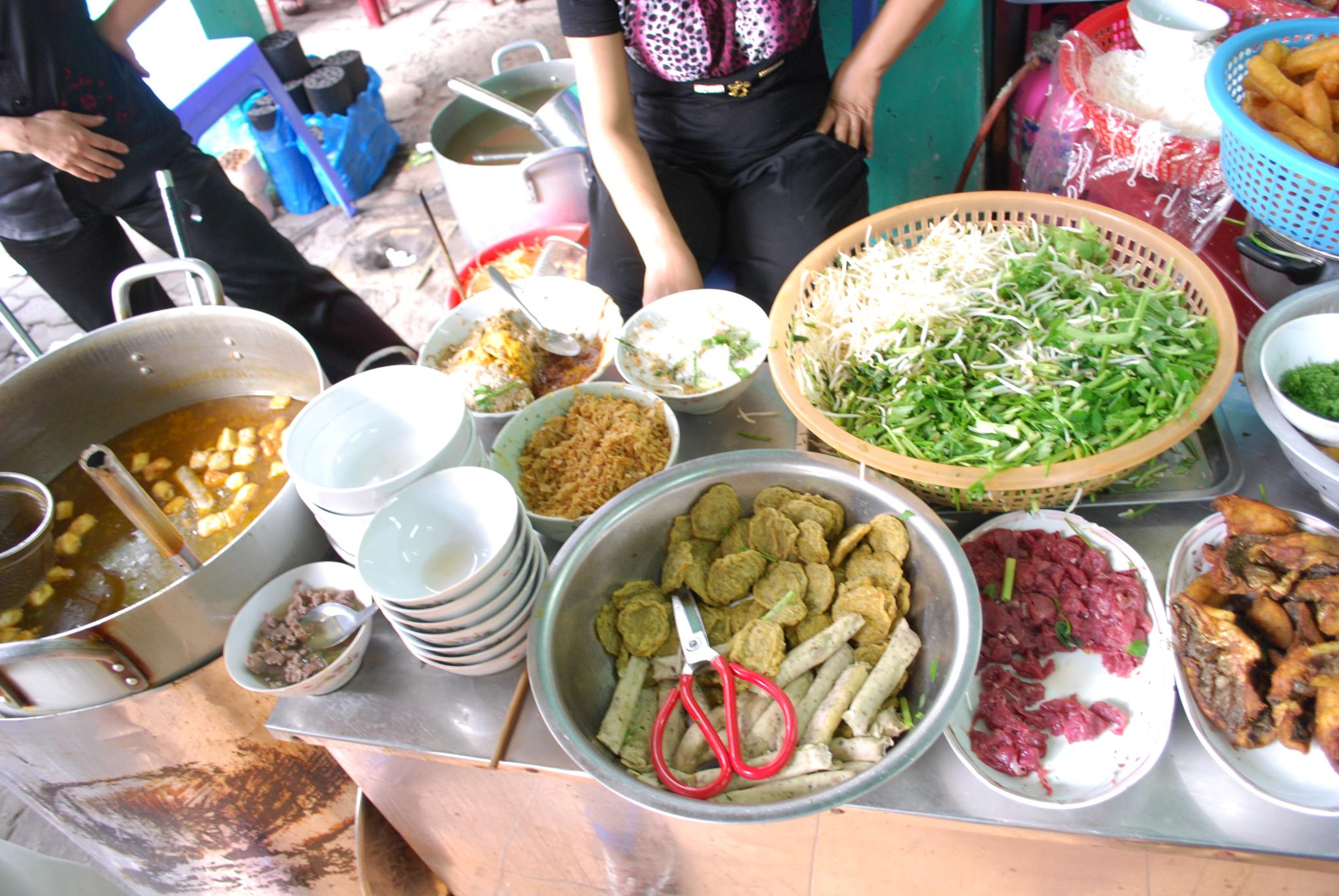

Bún Riêu — Vietnam's Tangy Crab Noodle Soup
What Is Bún Riêu?
Bún riêu is one of Vietnam's most distinctive noodle soups — a tangy, tomato-red broth built on a base of crab and shrimp paste, topped with pillowy crab and pork dumplings, fresh tomatoes, tofu, and a tangle of thin white rice vermicelli. It has a bright, assertive acidity that sets it apart from the gentler flavours of phở or bún bò Huế, and a umami depth from the crab paste that is unlike anything else in Vietnamese cuisine.
The full name is most commonly bún riêu cua — cua meaning freshwater crab — though variations with shrimp (bún riêu tôm) and snails (bún ốc) also exist. In many households and street stalls across northern Vietnam, bún riêu is a weekend treat, made from scratch with whole freshwater crabs that are ground into a paste and combined with egg to form the iconic floating crab dumplings.
Origins: A Northern Classic
Bún riêu is a northern Vietnamese dish at heart, with its spiritual home in Hanoi and the Red River Delta. The dish developed as a way to use the small, brown freshwater crabs (cua đồng) harvested from the rice paddies and waterways of the delta — inexpensive and abundant, but intensely flavourful. These field crabs are ground whole, shell and all, and strained to produce a concentrated crab "stock" that forms the broth's backbone.
The dish became a street food staple in Hanoi, sold from mobile carts by women who would carry the ingredients on shoulder poles. It has since spread across Vietnam, though the southern and central versions often substitute ocean crab meat or canned crab paste for the fresh field crabs, producing a milder flavour.
The Broth: Tangy, Tomatoey, and Complex
The broth of bún riêu is unlike any other Vietnamese soup. Its components work together in layers:
Crab and shrimp paste base — the ground freshwater crab paste is stirred into hot oil with dried shrimp paste (mắm tôm) to create an intensely savoury starting point. This mixture is then combined with water or pork bone broth.
Tomatoes — fresh, ripe tomatoes are a defining ingredient. They are sautéed first to concentrate their flavour, then added to the broth to provide acidity, sweetness, and the dish's characteristic red-orange colour.
Tamarind or vinegar — additional sourness is added via tamarind paste or rice vinegar, giving the broth its signature tang.
Fish sauce — for seasoning and saltiness.
The result is a broth that is at once sour, savoury, slightly sweet from the tomatoes, and deeply umami from the crab and shrimp paste. It is one of the most layered and satisfying broths in all of Vietnamese cooking.
The Crab Dumplings
The centrepiece of bún riêu is the riêu — loose, soft dumplings made from a mixture of crab paste, minced pork, egg, and seasonings. When these are added to the hot broth, the egg sets and the mixture rises to the surface in irregular, fluffy clouds. These dumplings are soft, slightly spongy, and richly flavoured — they absorb the broth as you eat them and release a concentrated burst of crab flavour with each bite.
The quality of the riêu is the primary marker of a great bowl of bún riêu. It should be tender and flavourful, not rubbery or bland.
Toppings and Garnishes
A complete bowl of bún riêu contains:
- Bún — thin white rice vermicelli noodles, the same type used in bún bò Huế and bún chả.
- Đậu phụ chiên — fried tofu cubes that absorb the broth while retaining a slightly crispy skin.
- Cà chua — tomato wedges, both cooked in the broth and sometimes added fresh.
- Huyết — cubes of cooked pork blood, optional but traditional.
- Chả — slices of Vietnamese pork roll (chả lụa).
- Mắm tôm — fermented shrimp paste, served on the side for those who want additional depth and punch.
The Herb and Garnish Plate
Bún riêu is served with a substantial garnish plate: shredded banana blossom (bắp chuối), bean sprouts, fresh mint, perilla, Vietnamese balm, water spinach (rau muống), and sliced chilli. Diners add these as they eat, giving each spoonful a balance of hot broth, soft noodles, and cold fresh herbs.
A teaspoon of fermented shrimp paste (mắm tôm) stirred into the broth adds an extraordinary level of fermented umami funk that transforms the bowl — divisive for newcomers, beloved by locals.
How to Eat Bún Riêu
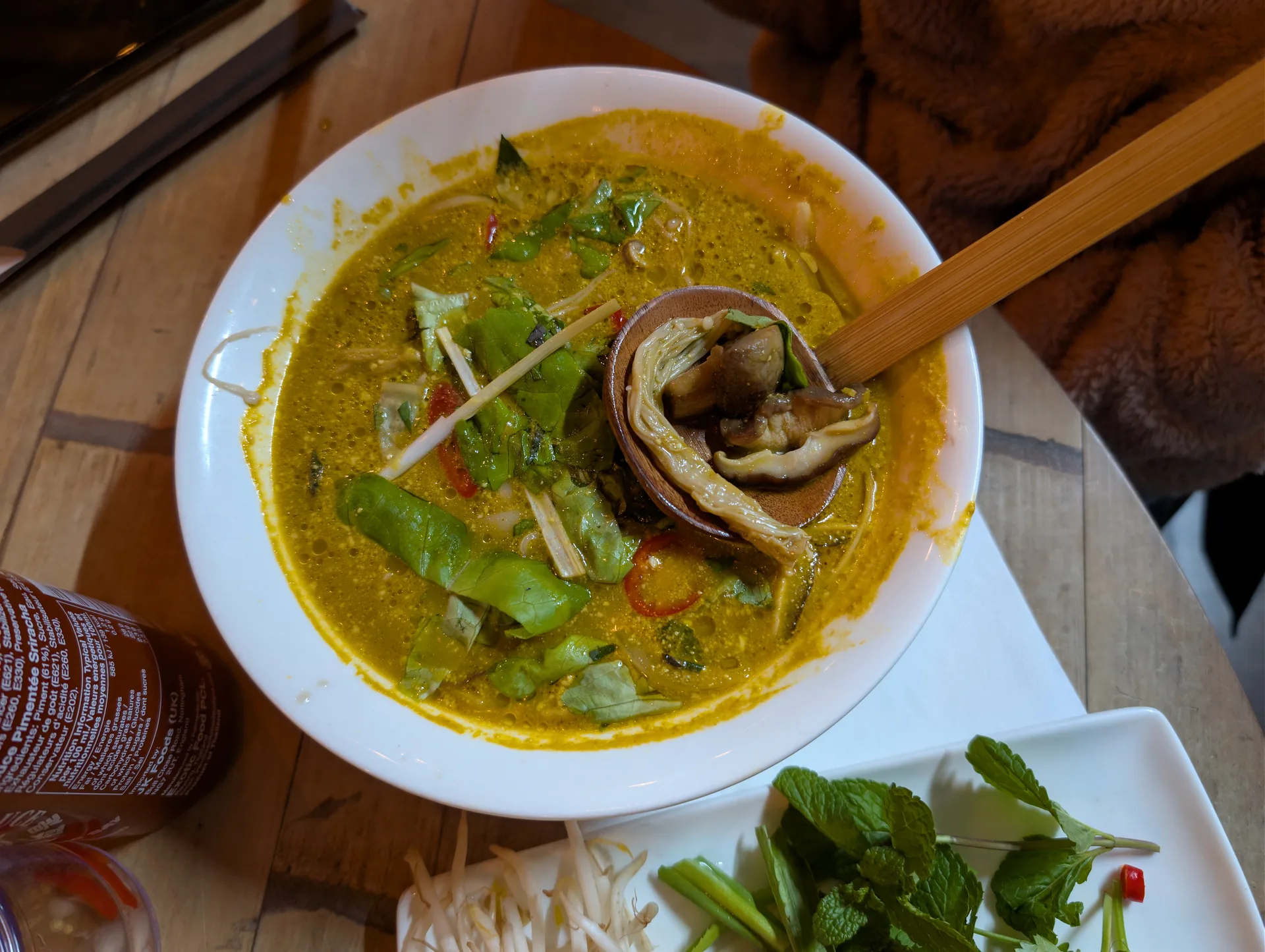
A steaming bowl of Vietnamese noodle soup
Add the herbs and bean sprouts first, then a small amount of mắm tôm if you are feeling adventurous. Squeeze fresh lime over the top. Use chopsticks to combine noodles, crab dumplings, tofu, and herbs in each bite, collecting broth with a deep spoon. The broth should be sipped frequently — it is the heart of the dish.
Do not rush. Bún riêu rewards slow eating as the ingredients continue to absorb the broth and the flavours develop in the bowl.

Where to Find the Best Bún Riêu
- Hanoi: Bún Riêu Cua Hàng Bè near Hàng Bè Street in the Old Quarter is widely praised. Morning stalls around Đồng Xuân Market are also excellent.
- Ho Chi Minh City: The southern version is milder and often richer; Bún Riêu Cô Bảy in District 3 is a reliable option.
- Home kitchens: Many Vietnamese families consider their grandmother's bún riêu recipe the definitive version. If you are invited to eat it homemade, accept immediately.
Price Guide
| Setting | Typical Price |
|---|---|
| Street stall / morning market | 35,000–60,000 VND (USD 1.50–2.60) |
| Local restaurant | 55,000–90,000 VND (USD 2.40–3.90) |
| Tourist restaurant | 80,000–150,000 VND (USD 3.50–6.50) |
Practical Tips
- Ask for mắm tôm on the side. The fermented shrimp paste is powerful — smell it before adding, and start with just a small amount.
- The more riêu, the better. When ordering, ask for extra crab dumplings (thêm riêu) — they are the star of the bowl.
- Go early. Like most Vietnamese noodle soups, bún riêu is best in the morning when the broth is freshest.
- Squeeze lime generously. The acidity brightens all the flavours at once.
Information notice: Prices, opening hours, and travel conditions can change. Content on EnViet is reviewed periodically but may not reflect the most current situation. Please verify important details with official or local sources before travelling or booking. Costs are estimates and may vary by season, exchange rate, and travel style.
EnViet Editorial Team
The EnViet Editorial Team creates practical Vietnam travel and food guides using local knowledge, public sources, and manual editorial review. Content is reviewed before publication and updated periodically.