
Cao Lầu — Hội An's Unrepeatable Noodle Dish
What Is Cao Lầu?
Cao lầu is one of Vietnam's most intriguing and localised dishes — a noodle bowl that exists, in its authentic form, only in the ancient trading port of Hội An. While phở and bánh mì have spread across Vietnam and around the world, cao lầu has remained fiercely tied to its hometown. Food lovers make the trip to Hội An specifically to eat it, and locals will tell you that what you find anywhere else simply is not the real thing.
The dish consists of thick, chewy noodles with a pale yellow-grey colour, served with slices of char-siu-style roasted pork, crispy rice cracker shards, fresh bean sprouts, mint, and a small amount of deeply savoury braising liquid — not quite a broth, more a concentrated sauce. The combination of textures — soft noodles, tender meat, crunchy crackers, cool herbs — is unlike anything else in Vietnamese cuisine.
A Dish Rooted in One Place
The story of cao lầu is the story of Hội An itself. From the 16th to the 18th centuries, Hội An was one of the most important trading ports in Southeast Asia — a cosmopolitan hub where Japanese, Chinese, Dutch, and Portuguese merchants lived and traded alongside Vietnamese. This multicultural history is written into the dish.
The noodles show clear Japanese influence — some food historians draw comparisons to Japanese udon, and local legend holds that the noodles were introduced by Japanese traders. The char-siu pork preparation has obvious Chinese roots, reflecting the large Fujianese Chinese merchant community that settled permanently in Hội An. The fresh herbs and dipping sauce sensibility are unmistakably Vietnamese. Cao lầu is, in a very real sense, an edible record of Hội An's trading past.

The Secret of the Noodles
What makes cao lầu noodles unique — and what makes them so difficult to replicate elsewhere — is the water used to make them. According to long-standing tradition, authentic cao lầu noodles must be made with water from the Ba Lễ well, an ancient Cham-era well in central Hội An. The water from this well is said to have specific mineral properties that give the noodles their distinctive texture and colour. The noodles are also soaked in lye water made from ash of trees sourced from the Cham Islands, which further contributes to their unusual colour and chewiness.
Modern production has somewhat relaxed these requirements, but the most respected cao lầu makers in Hội An still use the original well water and traditional ash lye. The result is a noodle that is firmer, denser, and more textured than standard rice noodles — almost toothsome in a way that stands up to the bold toppings without becoming soggy.
Key Components
A proper bowl of cao lầu contains:
- Cao lầu noodles — thick, round, slightly chewy noodles with a pale yellowish-grey colour from the ash lye preparation. They are served at room temperature or slightly warm, never in a hot broth.
- Thịt xá xíu — Chinese-style char-siu roasted pork, marinated in five-spice and red fermented tofu, then roasted until caramelised at the edges. Sliced thickly and arranged over the noodles.
- Bánh đa giòn — crispy fried rice cracker pieces, giving a crucial textural contrast. These are made from the same dough as the noodles, deep-fried until shatteringly crunchy.
- Rau sống — fresh herbs and greens: mint, bean sprouts, sliced banana blossom, and local Hội An herbs not commonly available outside the town.
- Nước sốt — a small amount of the braising liquid from the pork, darkly savoury and slightly sweet. This is not a soup — there is just enough sauce to coat the noodles.

How to Eat Cao Lầu
Cao lầu arrives assembled in the bowl. Mix everything together gently before eating — the liquid from the pork should coat the noodles evenly. Use chopsticks to combine the noodles, pork, herbs, and cracker pieces. Each bite should contain a little of everything.
Unlike phở or bún bò Huế, cao lầu is not eaten primarily for its broth — it is a dry-ish noodle dish where the focus is on the interplay of textures and the seasoning of the meat and noodles themselves. Do not add fish sauce or chilli sauce aggressively; the dish is already carefully seasoned. A small squeeze of lime brightens the flavours nicely.
Why You Can Only Get the Real Version in Hội An
Beyond the question of water and ash, cao lầu is also dependent on specific local ingredients — particularly the Hội An herbs and the specific variety of banana blossom — that are not available elsewhere. Restaurants in Hanoi and Ho Chi Minh City serve versions labelled "cao lầu," but even Vietnamese food writers acknowledge that these are approximations. The dish is genuinely inseparable from its hometown in a way that few dishes anywhere in the world can claim.
Where to Find the Best Cao Lầu in Hội An
- Cao Lầu Bà Bé on Trần Phú Street — widely regarded as the benchmark, run by the same family for generations.
- Phố Hội Hội An Restaurant — popular with both locals and travellers, reliable quality.
- Hội An Central Market (Chợ Hội An) — the covered market has several cao lầu stalls with some of the best and most affordable bowls in town.
- Morning street carts around the Old Town — look for the metal braziers with pork roasting and women assembling bowls by hand.

Price Guide
| Setting | Typical Price |
|---|---|
| Market stall / street cart | 35,000–55,000 VND (USD 1.50–2.30) |
| Local restaurant | 55,000–80,000 VND (USD 2.30–3.40) |
| Tourist-facing restaurant | 80,000–150,000 VND (USD 3.40–6.50) |

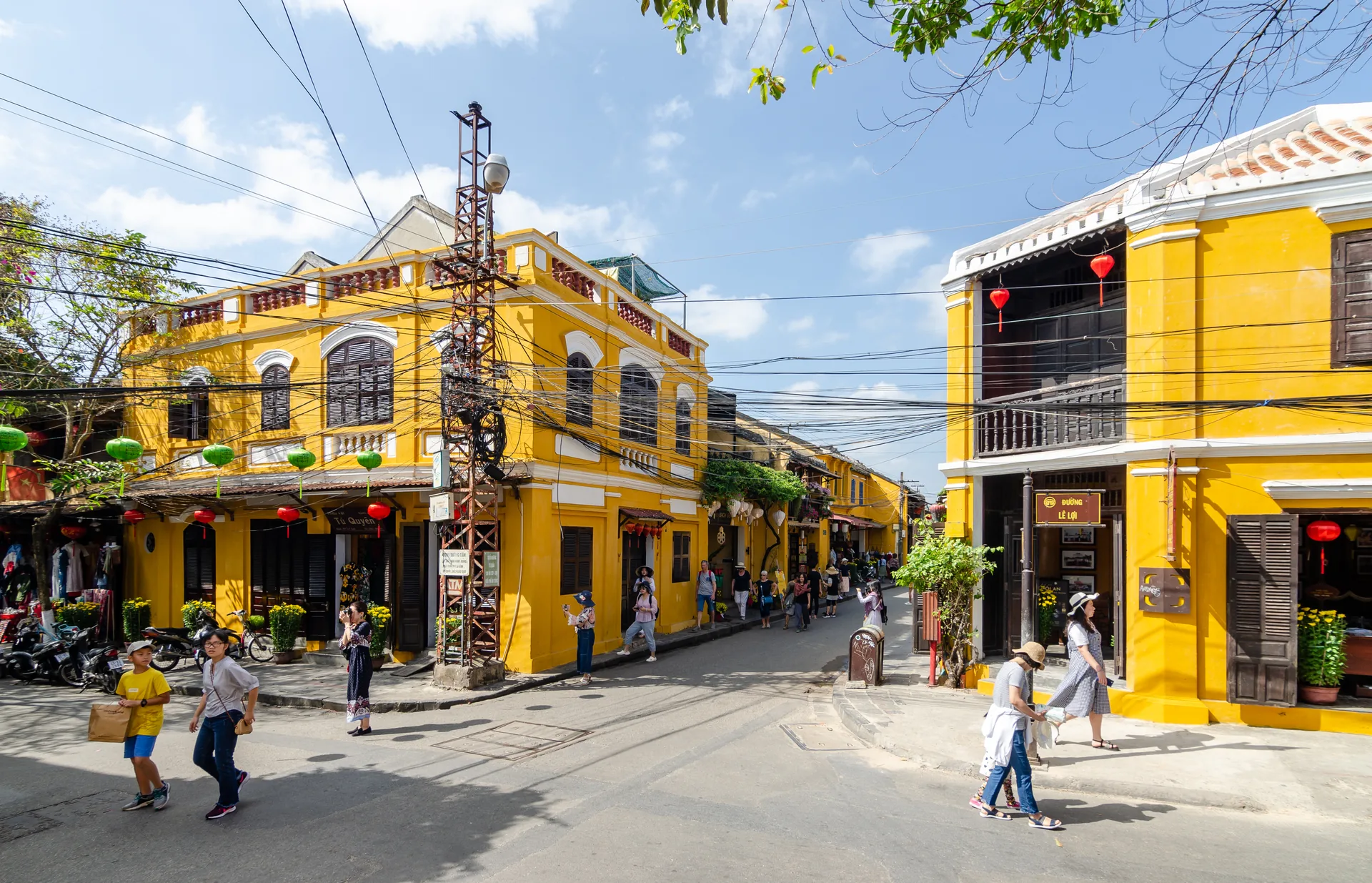
Hội An's Old Town — Cao Lầu is inseparable from this UNESCO-listed town; the dish's distinctive noodles require water from a specific local well, making it unrepeatable elsewhere
Practical Tips
- Order it at breakfast or lunch. Cao lầu is primarily a morning and midday dish. Many stalls close by early afternoon.
- Don't skip the crackers. The bánh đa giòn croutons are essential — they go soft quickly, so eat promptly after mixing.
- Try it at the market. The Hội An covered market offers the most authentic and affordable experience, eaten at plastic stools among local shoppers.
- One bowl is rarely enough. Cao lầu portions are moderate by design. Ordering two bowls is not unusual.
Information notice: Prices, opening hours, and travel conditions can change. Content on EnViet is reviewed periodically but may not reflect the most current situation. Please verify important details with official or local sources before travelling or booking. Costs are estimates and may vary by season, exchange rate, and travel style.
EnViet Editorial Team
The EnViet Editorial Team creates practical Vietnam travel and food guides using local knowledge, public sources, and manual editorial review. Content is reviewed before publication and updated periodically.