Cơm Tấm — Saigon's Beloved Broken Rice
What Is Cơm Tấm?
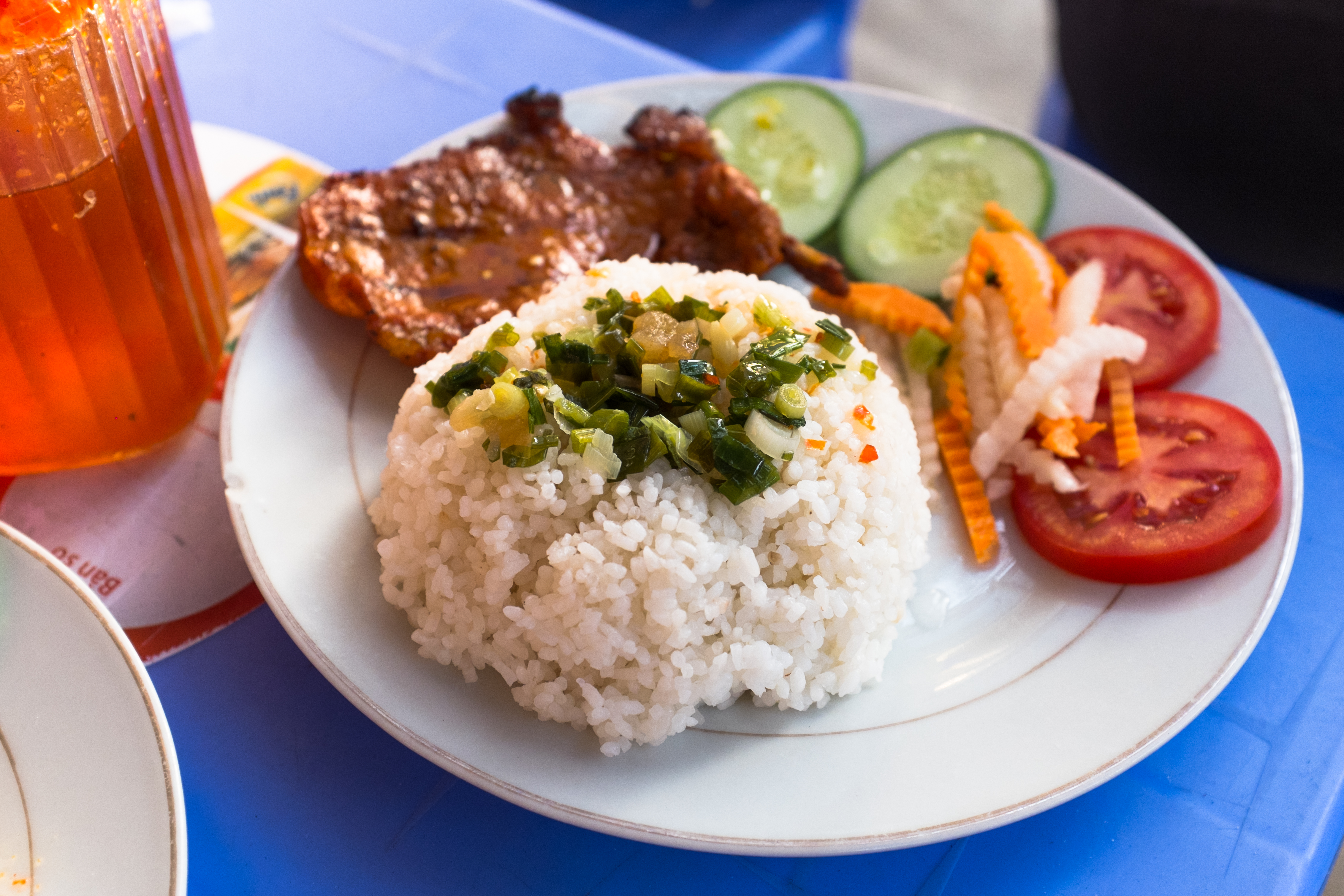
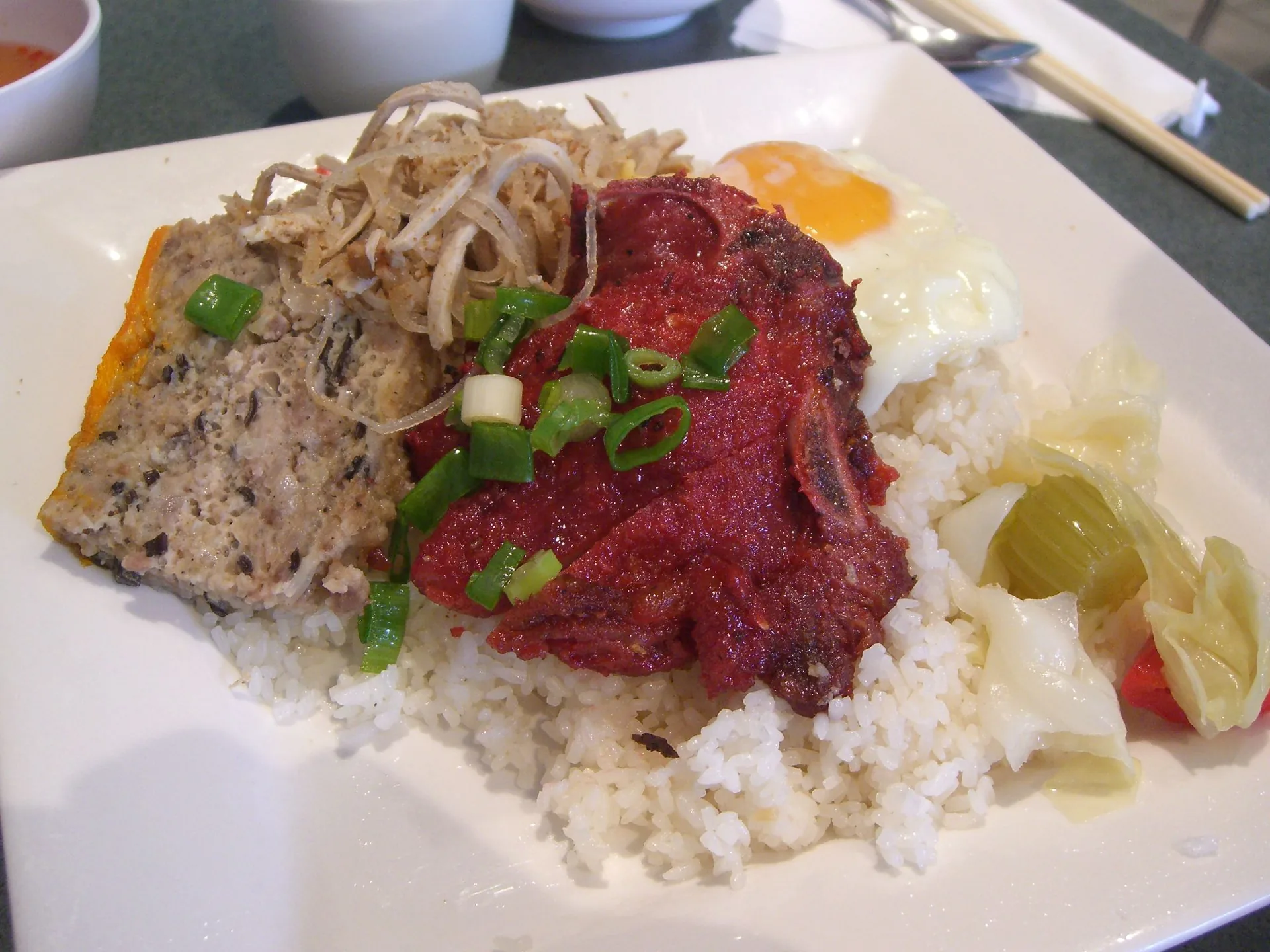
Cơm tấm is one of the defining dishes of Ho Chi Minh City — a plate of broken rice topped with grilled pork, served with a fried egg, a wedge of steamed egg meatloaf, pickled vegetables, and a small bowl of sweet fish sauce dressing. It is eaten at all hours of the day, from early breakfast through to midnight, and it is impossible to walk more than a few blocks in Saigon without passing a cơm tấm stall.
The name means "broken rice" — tấm refers to the fragmented grains that were historically considered inferior to whole, long-grain rice and were sold cheaply to the poor. What began as a dish of economic necessity became, over generations, a culinary institution. Today, broken rice is deliberately produced and sought after for its distinctive texture — slightly sticky, with a pleasant resistance that absorbs sauce beautifully.

Origins: From Leftover Grain to Saigon Icon
Broken rice — the small, fragmented grains that result from the milling process — was once discarded or sold at a steep discount in the rice markets of southern Vietnam. In the early 20th century, workers and the urban poor of Saigon began buying these cheap broken grains and building meals around them, topping the rice with whatever proteins and vegetables they could afford. Street vendors recognised the demand and began serving cơm tấm from mobile carts and roadside stalls.
By the mid-20th century, cơm tấm had evolved from a poverty food into a fully developed culinary tradition with its own vocabulary of toppings, its own style of grilling, and its own dedicated nước mắm (fish sauce) recipe. Today, it is one of the most popular dishes in southern Vietnam across all income levels, served at both plastic-stool street stalls and sit-down restaurants.

The Classic Toppings
A full plate of cơm tấm — known as cơm tấm sườn bì chả — contains multiple distinct components:
Sườn nướng (grilled pork ribs or pork chop) — the centrepiece of the plate. Thin cuts of pork — typically rib meat or butterfly-cut pork chops — are marinated in a blend of fish sauce, sugar, lemongrass, garlic, and sometimes five-spice, then grilled over charcoal until caramelised and slightly charred at the edges. The pork should be tender, sweet-savoury, and fragrant with smoke.
Bì (shredded pork skin) — thin strips of cooked pork skin mixed with ground roasted rice powder and shredded pork. It is dry, slightly chewy, and intensely savoury — a textural contrast to the tender grilled meat.
Chả trứng (steamed egg and pork meatloaf) — a round or oval portion of minced pork mixed with glass noodles, wood ear mushrooms, and egg, steamed in a banana leaf or bowl until set. Its texture is firm yet soft, its flavour mild and savoury.
Trứng ốp la (fried egg) — sunny-side up, with crispy, lacy edges and a runny yolk. The yolk mixes with the nước mắm dressing to create a rich sauce that coats the rice.
Đồ chua (pickled vegetables) — julienned daikon and carrot, pickled in vinegar, sugar, and salt. Essential for cutting through the richness of the meat and egg.
Mỡ hành (scallion oil) — a spoonful of scallion-infused oil drizzled over the rice, adding fragrance and preventing the grains from clumping.

The Nước Mắm Dressing
Cơm tấm is served with a small bowl of nước mắmpha — diluted, sweetened fish sauce dressing with garlic, chilli, lime, and sometimes a small amount of shredded carrot. This is not a dipping sauce; it is poured directly over the entire plate and mixed in. The ratio of sweet to sour to salty is critical, and every cơm tấm shop guards its recipe carefully. A great nước mắm can elevate a good plate of cơm tấm to an exceptional one.
How to Eat Cơm Tấm
Pour the fish sauce dressing over the rice first, then mix everything together. The yolk from the fried egg should be broken and stirred into the rice, combining with the sauce to create a rich, golden coating on the grains. Eat the grilled pork in pieces, alternating bites of rice with bites of pickled vegetables to balance the richness.
Cơm tấm is typically eaten with a spoon and fork rather than chopsticks — the broken rice requires a spoon to eat comfortably. This is one of the few Vietnamese dishes where chopsticks are not the primary utensil.

When Is Cơm Tấm Eaten?
Cơm tấm is a true all-day dish in Saigon — but it is particularly beloved as a breakfast or early morning meal. Many stalls open at 5 or 6 a.m. and are busiest before 9 a.m., when locals stop in on their way to work. The combination of rice, protein, and egg provides substantial energy for the day, and the flavours — sweet grilled pork, rich egg, tangy pickles — are satisfying at any hour.
Variations Across Vietnam
While cơm tấm is quintessentially a southern dish, versions exist across Vietnam:
- Cơm tấm sườn — just grilled pork, simpler and cheaper, common at lunch-only stalls.
- Cơm tấm hải sản — with grilled prawns or seafood instead of pork, popular in coastal cities.
- Cơm tấm chay — a vegetarian version with grilled tofu and mushroom-based toppings.
In central and northern Vietnam, the dish is less common and often simplified compared to the Saigon original.
Where to Find the Best Cơm Tấm
- Ho Chi Minh City: Cơm Tấm Bà Ghẻ (246 Võ Văn Tần, District 3) and Cơm Tấm Ba Ghiền (84 Đặng Văn Ngữ) are among the most celebrated. But the best cơm tấm in Saigon is often the one smoking on the corner nearest to where you are standing.
- Smoke is a good sign. Charcoal-grilled pork is non-negotiable for the full experience.
- Street stalls before 9 a.m. offer the freshest grill and the most authentic setting.
Price Guide
| Setting | Typical Price |
|---|---|
| Street stall | 35,000–60,000 VND (USD 1.50–2.50) |
| Local restaurant | 55,000–90,000 VND (USD 2.30–3.80) |
| Tourist restaurant | 80,000–150,000 VND (USD 3.50–6.50) |
Practical Tips
- Pour the sauce over everything. The nước mắm dressing should coat the whole plate, not be used as a dip.
- Break the egg yolk immediately. It thickens the sauce around the rice as it mixes.
- Try it for breakfast. Early morning cơm tấm is a genuinely great experience in Saigon.
- The charcoal grill matters. Gas-grilled versions exist but lack the caramelisation and smokiness of charcoal — look for the real thing.
Information notice: Prices, opening hours, and travel conditions can change. Content on EnViet is reviewed periodically but may not reflect the most current situation. Please verify important details with official or local sources before travelling or booking. Costs are estimates and may vary by season, exchange rate, and travel style.
EnViet Editorial Team
The EnViet Editorial Team creates practical Vietnam travel and food guides using local knowledge, public sources, and manual editorial review. Content is reviewed before publication and updated periodically.