


Hủ Tiếu — Saigon's Chinese-Vietnamese Noodle Soup
What Is Hủ Tiếu?
Hủ tiếu is one of southern Vietnam's most versatile and beloved noodle dishes — a clear, sweet pork broth served with a choice of noodles, pork, shrimp, squid, quail eggs, and a mound of fresh herbs and bean sprouts. Less internationally famous than phở, it is arguably more popular in Ho Chi Minh City itself, where hủ tiếu stalls and push-cart vendors have served the dish since the early morning hours for generations.
What sets hủ tiếu apart from other Vietnamese noodle soups is its remarkable flexibility. The noodle type, protein combination, and even the format — wet (with broth) or dry (mixed) — can all be customised. A single hủ tiếu shop might offer a dozen variations. This adaptability reflects the dish's multicultural roots and the southern Vietnamese love of customisation and abundance.
Origins: A Chinese-Vietnamese Classic
Hủ tiếu has deep Chinese roots. The dish descended from Teochew (Chaozhou) Chinese noodle soups brought to southern Vietnam by Teochew immigrants, primarily from Guangdong province, who settled in large numbers in the Mekong Delta and Saigon throughout the 18th and 19th centuries. The Teochew community became dominant in the rice-milling and pork-trading industries of the south, and their food traditions merged fluidly with Vietnamese ingredients and tastes.
The most famous variant — hủ tiếu Nam Vang — is named after Phnom Penh (Nam Vang in Vietnamese), reflecting the dish's development among the Vietnamese and Chinese communities of Cambodia. It spread to Saigon with waves of migration in the 20th century and became firmly embedded in the city's food culture.
The dish is also known as bánh canh in some regional contexts, though strictly speaking these are distinct dishes. In the Mekong Delta town of Mỹ Tho, a local variant called hủ tiếu Mỹ Tho has earned regional fame.
The Broth
A great hủ tiếu broth is the foundation of everything. Unlike the spiced, complex broths of phở or bún bò Huế, hủ tiếu broth is deliberately clean and sweet — built on pork bones (and sometimes dried squid or shrimp) simmered for many hours until the natural sugars of the pork produce a gently sweet, clear stock. The broth is typically seasoned with fish sauce and rock sugar, and finished with fried shallots and a drizzle of lard or scallion oil.
The clarity and sweetness of the broth is the mark of a skilled hủ tiếu cook. It should be golden, slightly shimmery from the fat, and deeply satisfying without being heavy.
Noodle Types
Hủ tiếu offers more noodle variety than almost any other Vietnamese dish:
- Hủ tiếu (rice noodles) — flat or round dried rice noodles, the most traditional choice, with a smooth, slightly chewy texture.
- Mì (egg noodles) — thin yellow egg noodles, the Chinese-influenced option, springier and more flavourful.
- Bún (rice vermicelli) — the same soft white noodles used in bún riêu and bún chả.
- Miến (glass noodles) — transparent mung bean noodles, delicate and gelatinous.
Many shops allow you to mix two types of noodles in the same bowl — a popular choice is half hủ tiếu and half mì.
Wet vs. Dry
One of the most important decisions when ordering hủ tiếu is whether you want it wet or dry:
Hủ tiếu nước (wet) — the traditional format, served with the full broth ladled over the noodles and toppings. The broth is the star.
Hủ tiếu khô (dry) — the noodles are drained and tossed with a savoury sauce (typically a mixture of soy sauce, oyster sauce, lard, and vinegar), then served with a small bowl of broth on the side for sipping. This version has a more intense, concentrated flavour and is particularly popular as a breakfast or lunch option.
Popular Variants
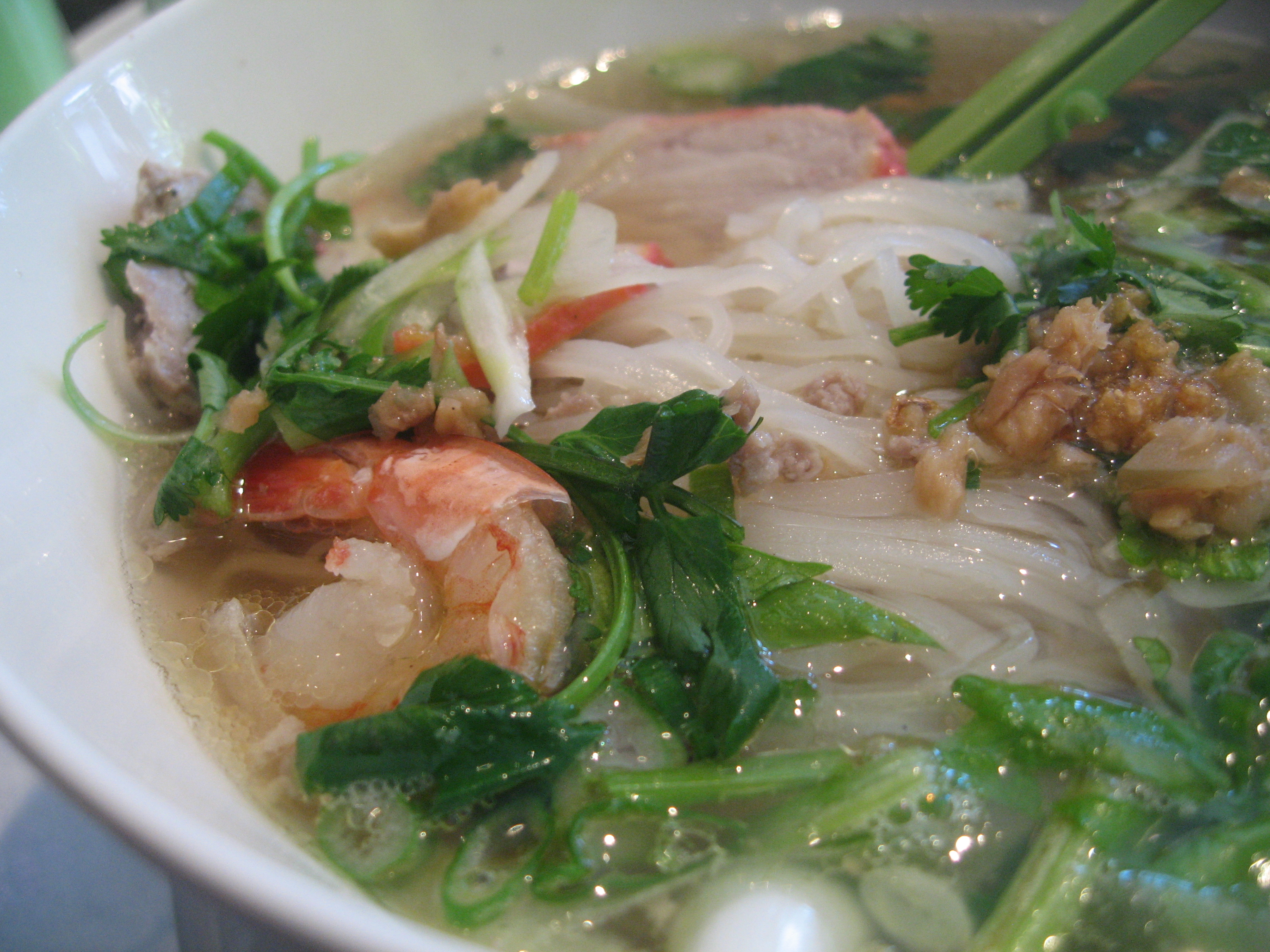
Hủ tiếu Nam Vang (Phnom Penh style) — the most famous and widely available version. The broth includes dried squid for extra depth, and the toppings typically include minced pork, sliced pork, shrimp, quail eggs, pork liver, and crispy fried shallots. A raw egg is sometimes cracked over the top of the hot broth.
Hủ tiếu Mỹ Tho — from the Mekong Delta city of Mỹ Tho, known for its particularly sweet and clean pork broth and the use of locally grown rice noodles. A pilgrimage dish for food lovers.
Hủ tiếu Sài Gòn — the general Saigon street version, with pork bones broth, boiled pork slices, shrimp, and a full herb plate. Eaten at almost any hour.
Hủ tiếu chay (vegetarian) — tofu, mushrooms, and vegetable broth replace the meat. Available at Buddhist vegetarian restaurants throughout the south.
Toppings and Garnishes
A standard hủ tiếu bowl includes: boiled pork slices (thịt heo luộc), minced pork (thịt băm), whole shrimp (tôm), quail eggs (trứng cút), pork liver (gan heo), fried shallots (hành phi), and scallion oil (mỡ hành). The garnish plate includes bean sprouts, Chinese chives, lime wedges, fresh chilli, and hoisin sauce.
Hủ tiếu is typically served with a bottle of rice vinegar with sliced chillies — a few drops added to the broth lift its flavour immediately.
Hủ Tiếu Khô — The Dry Version
The dry version deserves special attention. In hủ tiếu khô, the drained noodles are tossed tableside with a dark, glossy sauce and a spoonful of lard, then topped with the same proteins as the wet version. The flavour is more intense and savoury, and the texture of the noodles is more pronounced without the broth softening them. A small bowl of clear broth comes on the side, to be sipped between bites or poured over the noodles at the end.

Where to Find the Best Hủ Tiếu
- Ho Chi Minh City: Hủ Tiếu Nam Vang Thanh Xuân (278 Võ Văn Tần, District 3) is widely regarded as the city benchmark. Early morning push-cart vendors in districts 5 and 6 (the Chinatown areas) also serve outstanding versions.
- Mỹ Tho (Tiền Giang province): The city is 70 km from Saigon and makes an excellent day trip — hủ tiếu Mỹ Tho from a riverside stall is worth the journey.
- Everywhere in the south: Unlike phở, which is available nationwide, the best hủ tiếu is almost always in the south.
Price Guide
| Setting | Typical Price |
|---|---|
| Street cart / morning stall | 35,000–60,000 VND (USD 1.50–2.60) |
| Local restaurant | 55,000–90,000 VND (USD 2.40–3.90) |
| Tourist restaurant | 80,000–150,000 VND (USD 3.50–6.50) |
Practical Tips
- Order Nam Vang for the full experience. The Phnom Penh style is the richest and most complete version for first-timers.
- Try it dry. Hủ tiếu khô is a revelation if you have only eaten the wet version.
- Mix noodle types. Asking for half hủ tiếu and half mì is a locals' trick that gives the best of both textures.
- Eat it early. The best push-cart vendors operate 6–10 a.m. and sell out quickly.
Information notice: Prices, opening hours, and travel conditions can change. Content on EnViet is reviewed periodically but may not reflect the most current situation. Please verify important details with official or local sources before travelling or booking. Costs are estimates and may vary by season, exchange rate, and travel style.
EnViet Editorial Team
The EnViet Editorial Team creates practical Vietnam travel and food guides using local knowledge, public sources, and manual editorial review. Content is reviewed before publication and updated periodically.