
Lẩu — Vietnam's Ultimate Shared Hot Pot
What Is Lẩu?
Lẩu is Vietnamese hot pot — a simmering pot of broth placed in the centre of the table, around which diners cook raw ingredients to their liking throughout the meal. It is the most social food in Vietnamese culture: a shared experience that slows the pace of eating, encourages conversation, and can stretch over two or three hours. Lẩu is eaten at family gatherings, birthday celebrations, winter evenings, and long weekend lunches. To be invited to a lẩu meal in Vietnam is to be welcomed into someone's inner circle.
The word lẩu simply means "hot pot" in Vietnamese, and the category encompasses an enormous range of styles — from delicate seafood broths to fiery beef and lemongrass soups to rich tomato-tamarind broths packed with fish. What unites them is the shared pot, the communal table, and the unhurried rhythm of cooking and eating together.
The Lẩu Experience
A lẩu meal works as follows. A portable gas burner or induction cooktop is placed in the centre of the table. A large pot of seasoned broth is brought to the boil. Around the pot, the table is covered with plates of raw ingredients: sliced beef or pork, whole shrimp and squid, fresh fish fillets, tofu, mushrooms, leafy greens, noodles, and vermicelli. A small bowl of dipping sauce sits beside each person's rice bowl.
Diners cook ingredients themselves in the hot broth, usually in small batches — a few slices of beef here, a handful of greens there — and eat as they go. The broth grows richer and more complex as the meal progresses, absorbing the flavours of each ingredient cooked in it. At the end of the meal, noodles are added to the broth for a final course of noodle soup that has absorbed all the flavours of everything cooked before it. This final bowl of noodles is often considered the best part.
Popular Lẩu Varieties
Vietnam's diversity of climates, ingredients, and culinary traditions has produced an extraordinary range of lẩu styles:
Lẩu thái hải sản — Thai-style seafood hot pot, the most popular variety nationwide. The broth is sour, spicy, and fragrant with lemongrass, kaffir lime leaves, and galangal, loaded with shrimp, squid, fish balls, and mushrooms. Despite the name, this is a fully Vietnamese dish with a very loose Thai influence.
Lẩu bò — beef hot pot. Thin slices of beef are cooked briefly in a light, slightly sweet bone broth. Popular in Ho Chi Minh City and the south, where quality beef is abundant.
Lẩu mắm — fermented fish hot pot from the Mekong Delta. The broth is built on mắm cá sặc (fermented snakehead fish) and mắm prawn paste, producing an intensely savoury, pungent, deeply southern flavour. It is considered challenging for newcomers but beloved by locals.
Lẩu riêu cua — crab and tomato hot pot, a northern and central specialty with a tangy, tomato-red broth based on freshwater crab paste — the same foundation as bún riêu.
Lẩu gà lá é — chicken hot pot with lemon basil, a central Vietnamese specialty from Đà Nẵng and the surrounding region. Light, aromatic, and fragrant.
Lẩu nấm — mushroom hot pot, vegetarian, using a variety of fresh and dried mushrooms for an earthy, umami-rich broth. Popular among Buddhist diners and increasingly common at health-conscious restaurants.
Key Ingredients
A standard lẩu spread typically includes:
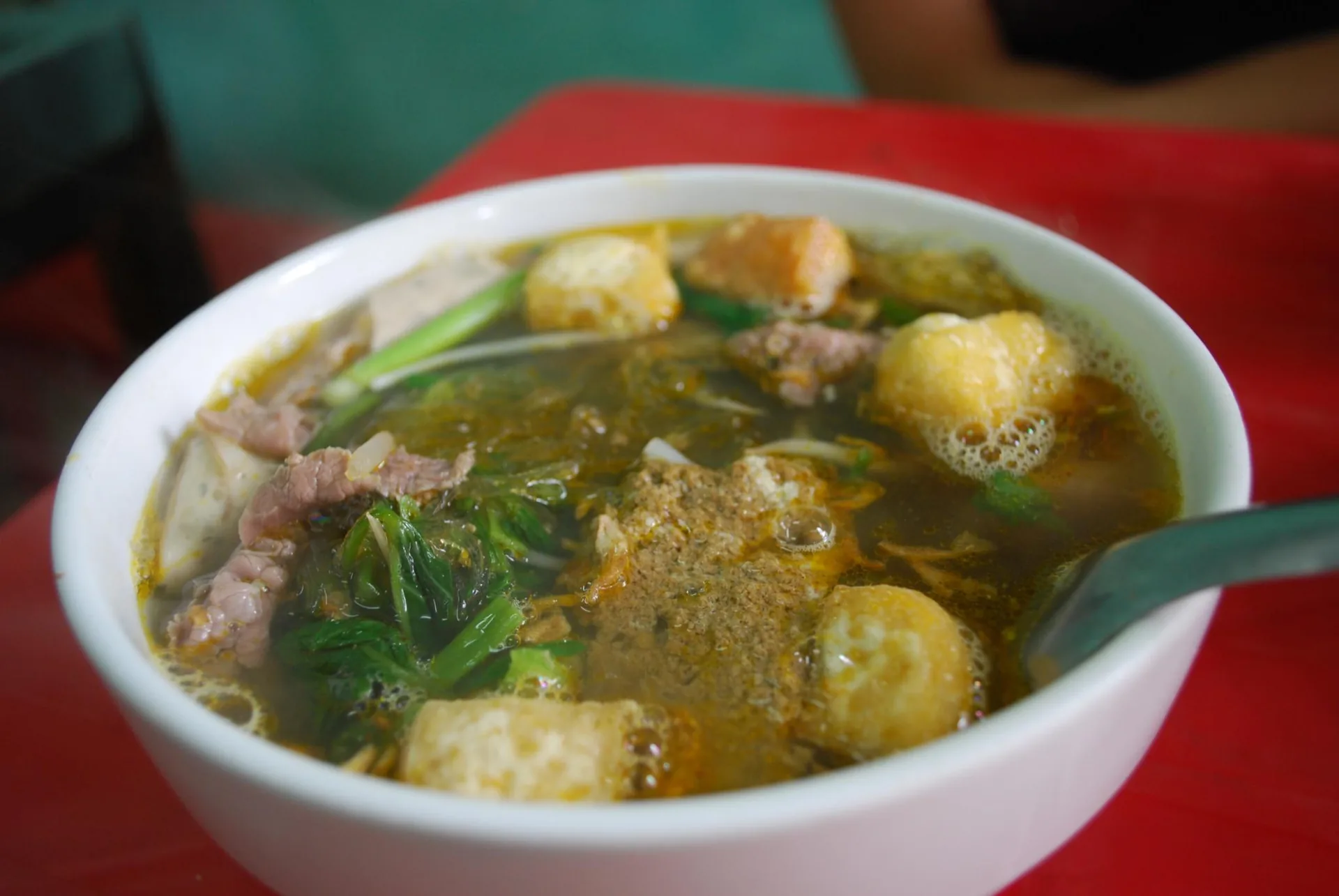
Seafood and vegetables simmering in a Vietnamese hot pot broth
- Broth (nước lẩu) — the centrepiece; varies completely by style.
- Protein — raw sliced beef, pork, shrimp, squid, fish fillet, fish cakes, pork meatballs, or tofu.
- Mushrooms — enoki, oyster, shiitake, king oyster; added in bunches and cooked briefly.
- Vegetables — water spinach (rau muống), morning glory, cabbage, bok choy, Vietnamese herbs.
- Noodles — rice vermicelli (bún), flat rice noodles (bánh phở), or instant noodles added at the end.
- Tofu — firm tofu, fried tofu puffs, or silken tofu depending on the style.
The Dipping Sauces
Each lẩu style comes with its own specific dipping sauce, which is as important as the broth:
- Mù tạt (mustard) — for beef lẩu, a mix of soy sauce, mustard, and sesame.
- Muối ớt chanh (salt, chilli, lime) — for seafood; the clean acidity cuts through rich shellfish.
- Mắm nêm — fermented anchovy paste sauce; for the Mekong Delta-style lẩu mắm.
- Giấm tỏi ớt (chilli garlic vinegar) — a universal all-purpose dipping sauce.
Lẩu Etiquette
Use the long communal chopsticks (not your personal ones) to add raw ingredients to the pot. Never put already-cooked items back into the pot. Add ingredients in stages — denser items like mushrooms and firm tofu first, delicate leafy greens and thin beef last. Do not let the pot boil dry; add more broth from a separate pot kept warm on the side. The host traditionally manages the heat and the broth level.
Where to Eat Lẩu in Vietnam
Dedicated lẩu restaurants are found across Vietnam. Most are open for lunch and dinner, with some specialising in a single style:
- Ho Chi Minh City: Lẩu Thái and seafood lẩu restaurants cluster around Bình Thạnh, District 3, and along Nguyễn Trãi Street in District 5.
- Hanoi: Lẩu riêu cua shops around the Old Quarter are excellent in autumn and winter.
- Mekong Delta: Any local restaurant in Cần Thơ or Sóc Trăng will serve a genuine lẩu mắm.
Price Guide
| Setting | Typical Price per person |
|---|---|
| Local lẩu restaurant | 100,000–200,000 VND (USD 4–8.50) |
| Mid-range restaurant | 200,000–400,000 VND (USD 8.50–17) |
| Upmarket all-you-can-eat | 350,000–600,000 VND (USD 15–26) |
Practical Tips
- Go in a group. Lẩu is almost never eaten alone — the minimum is two people, and four to six is ideal.
- Don't rush. A lẩu meal should take at least 90 minutes. If you are in a hurry, choose a different dish.
- Eat the noodles last. The final bowl of noodles in the enriched broth is the crescendo — do not skip it.
- Ask about spice level. Lẩu thái, in particular, can be made fiery enough to cause genuine physical discomfort. Ask for nhẹ (mild) if you are unsure.
Information notice: Prices, opening hours, and travel conditions can change. Content on EnViet is reviewed periodically but may not reflect the most current situation. Please verify important details with official or local sources before travelling or booking. Costs are estimates and may vary by season, exchange rate, and travel style.
EnViet Editorial Team
The EnViet Editorial Team creates practical Vietnam travel and food guides using local knowledge, public sources, and manual editorial review. Content is reviewed before publication and updated periodically.