
Vietnam's Ethnic Minorities: A Cultural Traveler's Guide
Vietnam is home to 54 officially recognised ethnic groups. The Kinh (Viet) majority makes up about 86% of the population; the remaining 53 groups — collectively called the dân tộc thiểu số or "ethnic minorities" — live mostly in the highland and mountainous regions of the north and central highlands. For travellers, encountering this cultural diversity is one of Vietnam's most rewarding and distinctive experiences.
Who Are Vietnam's Ethnic Minorities?
The 53 non-Kinh groups divide broadly into several language families:
Tày, Thái, Mường, Nùng: Largest non-Kinh groups, living in the northern lowlands and valleys. Many practice wet-rice cultivation in valley floors, often in stilt houses above the water.
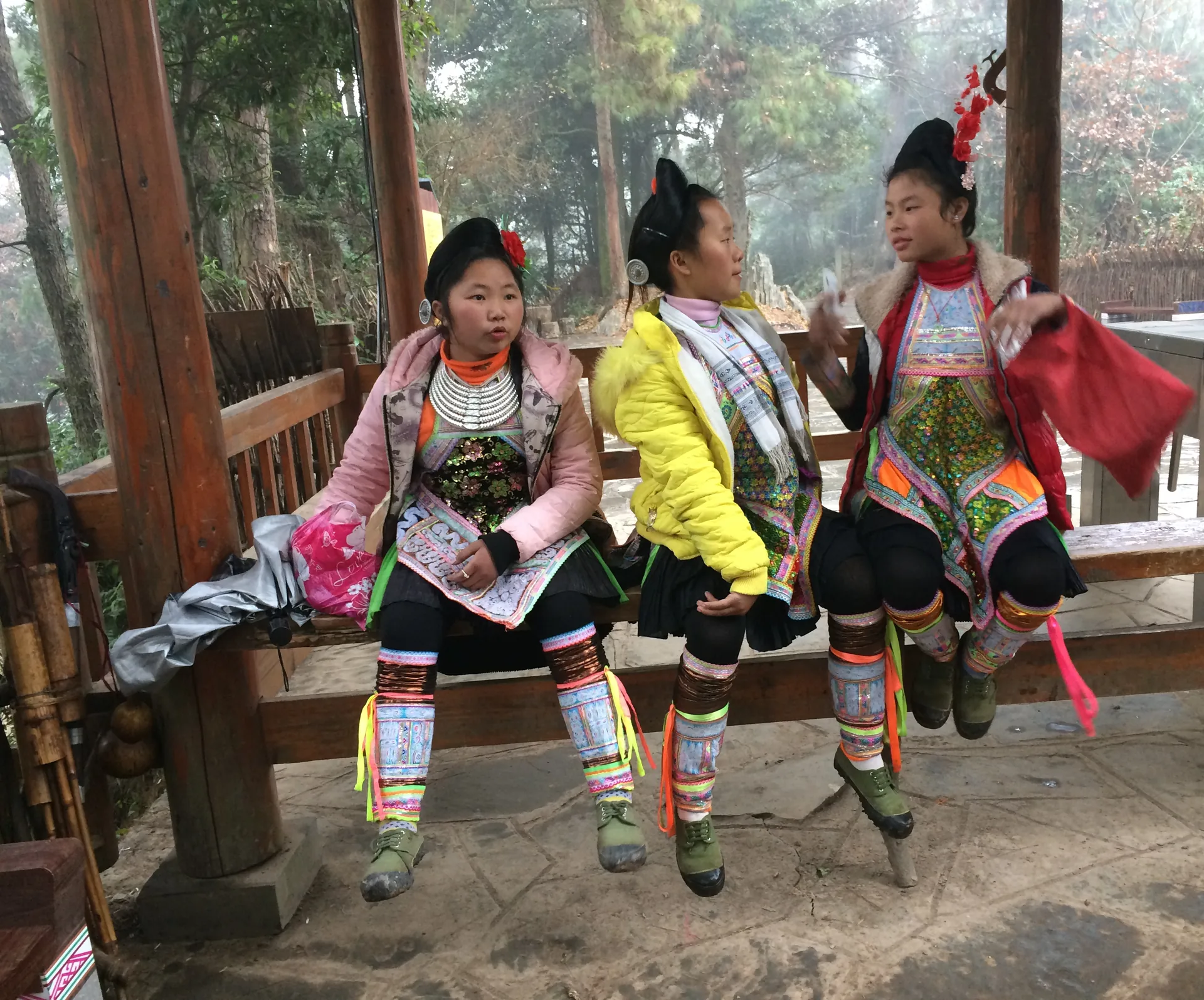
Hmong (H'Mông): The most visually distinctive group to many travellers — known for embroidered indigo-dyed clothing and silver jewellery. Live at higher elevations (above 1,000m) in the northwest. Subdivided into Black Hmong, Flower Hmong, Red Hmong, and others, each with distinct dress codes.
Dao (Yao): Found across the north, particularly around Sapa and in Hoàng Su Phì. Red Dao women are recognisable by their striking red headdresses and silver coin jewellery.
Jarai, Ê Đê, Ba Na: Central Highlands groups with distinct long-house traditions, communal culture, and (historically) animist religious practices.

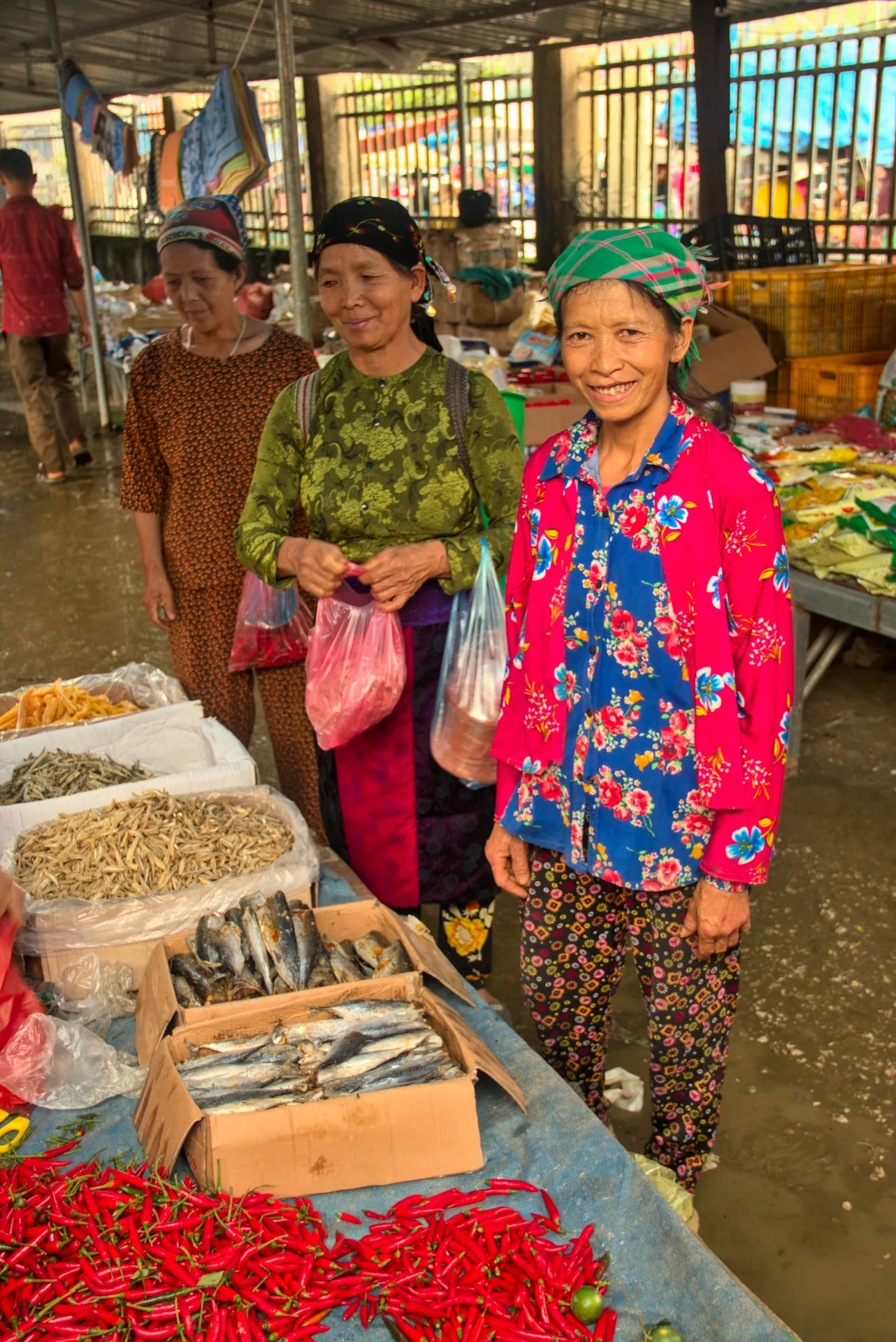
The Sunday market at Đồng Văn — ethnic minority groups from surrounding villages travel hours to trade and socialise
Where to Encounter Minority Cultures
Sapa and the Muong Hoa Valley (Lào Cai Province)
Sapa is the most visited highland town for ethnic minority encounters. The Black Hmong and Red Dao communities have lived in this area for centuries; today they run homestays, guide treks, and sell textiles in the town market.
Trekking from Sapa into the villages of Cát Cát, Lao Chải, and Tả Van gives a closer look at daily life — rice paddy farming on terraced fields, stilt house architecture, and the constant presence of embroidery work. Guides from the local communities are strongly preferred over outside tour operators.
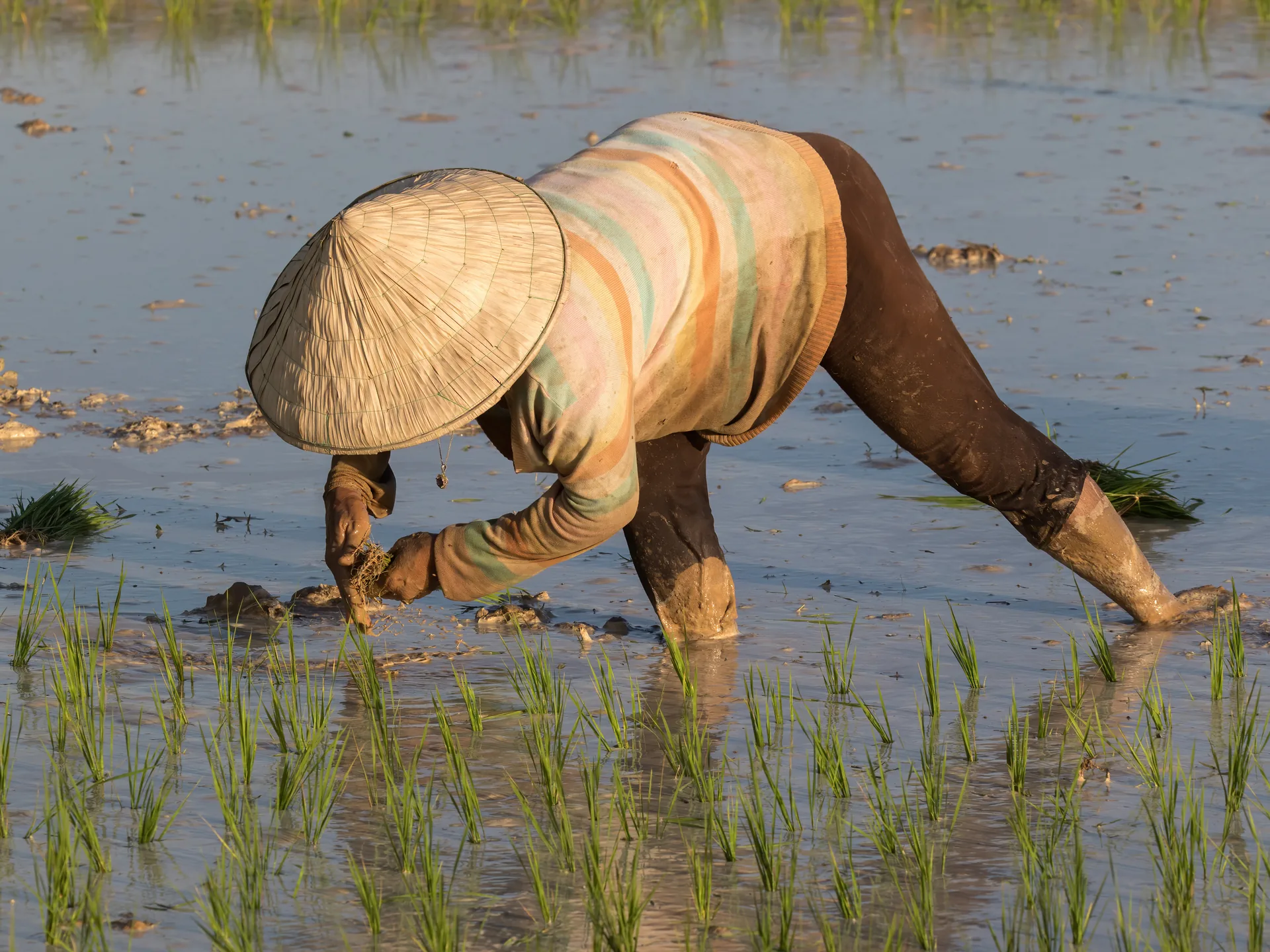
The terraced rice fields around Sapa — cultivated by ethnic minority communities for centuries using sophisticated water management
Bắc Hà (Lào Cai Province)
Bắc Hà's Sunday market is one of the most vibrant in the north — primarily serving the Flower Hmong, whose clothing uses a riot of embroidered colour quite different from the darker indigo of Sapa's Black Hmong. The market is a genuine trade event (livestock, produce, textiles) rather than a tourist showcase.

Bắc Hà Sunday market — Flower Hmong dress is some of the most elaborate in Southeast Asia, with each embroidered panel taking weeks to complete
Hà Giang Loop
The Hà Giang province — particularly the Đồng Văn Karst Plateau — is home to Hmong, Dao, Lô Lô, and Cờ Lao communities in villages that see relatively few tourists. The landscape is dramatically different from Sapa: drier, more rugged, with rock-wall villages perched on cliff edges. The 4-day motorbike loop through Mèo Vạc and Đồng Văn is considered the finest ride in northern Vietnam.
Central Highlands (Kon Tum, Buôn Ma Thuột)
The Jarai and Ba Na communities of the Central Highlands maintain longhouse traditions, communal meeting halls (nhà rông), and — in more remote villages — animist practices including elaborate funeral effigy carving. Kon Tum is the best base for organised village visits.
Etiquette for Village Visits
Visiting ethnic minority communities requires care:
Ask before photographing. This is not optional — photographing people without permission, particularly women and children, is disrespectful regardless of how remote the setting.
Use community-based tourism operators. Revenue from guides, homestays, and craft purchases should flow directly to families rather than outside intermediaries. Look for operators based in the villages themselves.
Dress modestly. Particularly when visiting areas with strong traditional or religious customs. Cover shoulders and knees.
Don't give sweets or money directly to children. This incentivises begging and creates dependency. If you want to contribute, donate to the homestay operator or buy crafts.

Indigo-dyed cloth — the production process takes weeks per piece; buying directly from the maker is the most ethical and economical option
Traditional Crafts
Highland ethnic minorities produce some of the finest textiles in Southeast Asia:
- Hmong embroidery: Cross-stitch and appliqué on indigo-dyed hemp cloth; used for clothing, bags, and wall hangings
- Dao weaving: Intricate geometric patterns on handlooms; red and black predominate
- Tày brocade: Floral and animal motifs woven on backstrap looms
- Ba Na basket weaving: Large conical and flat baskets using split bamboo and rattan
Buying directly from the maker — at village markets or community craft cooperatives — pays the full price to the artisan. Market resellers in Sapa and tourist shops take 40–60% margins.
Homestays
Staying with ethnic minority families is one of Vietnam's most authentic travel experiences. Meals are shared from communal dishes; the rhythm of agricultural life — early starts, evening fires — provides structure. Sapa, Bắc Hà, and the Mộc Châu plateau all have well-established homestay networks.

Stilt house villages — traditional elevated wooden homes keep floors dry during monsoon flooding and deter ground-level pests
Key things to know: electricity may be limited, squat toilets are standard, and sleeping arrangements are communal in some homes. The food — steamed rice, grilled vegetables, river fish, home-distilled corn wine — is usually excellent.
Information notice: Prices, opening hours, and travel conditions can change. Content on EnViet is reviewed periodically but may not reflect the most current situation. Please verify important details with official or local sources before travelling or booking.
EnViet Editorial Team
The EnViet Editorial Team creates practical Vietnam travel and food guides using local knowledge, public sources, and manual editorial review. Content is reviewed before publication and updated periodically.