Vietnam's Hill Stations: Sapa, Da Lat, Tam Dao, and Ba Na Hills
Vietnam's colonial-era hill stations were built by the French as retreats from the lowland heat — cooler, forested, and elevated above the mosquito line. Several survive as distinct travel destinations today, each with a different character: Sapa is dramatic and trekker-focused, Đà Lạt is genteel and urban, Bà Nà Hills is a theme park curiosity, and Tam Đảo is a quiet escape near Hanoi. Understanding what each offers helps choose the right one — or plan a route that includes several.
Sapa (Elevation: 1,600m)
Sapa is Vietnam's most visited highland town and its most famous trekking destination. The Muong Hoa Valley below it — a cascade of terraced rice paddies dropping 800 metres between the town and the Sino-Vietnamese border — is genuinely extraordinary. Black Hmong villages dot the hillsides; the terraces are at their most vivid in early June (planting, flooded and reflective) and September–October (harvest, golden).

Sapa's terraced valleys — the rice paddies cascade down to the valley floor over 800 vertical metres, farmed by Black Hmong communities
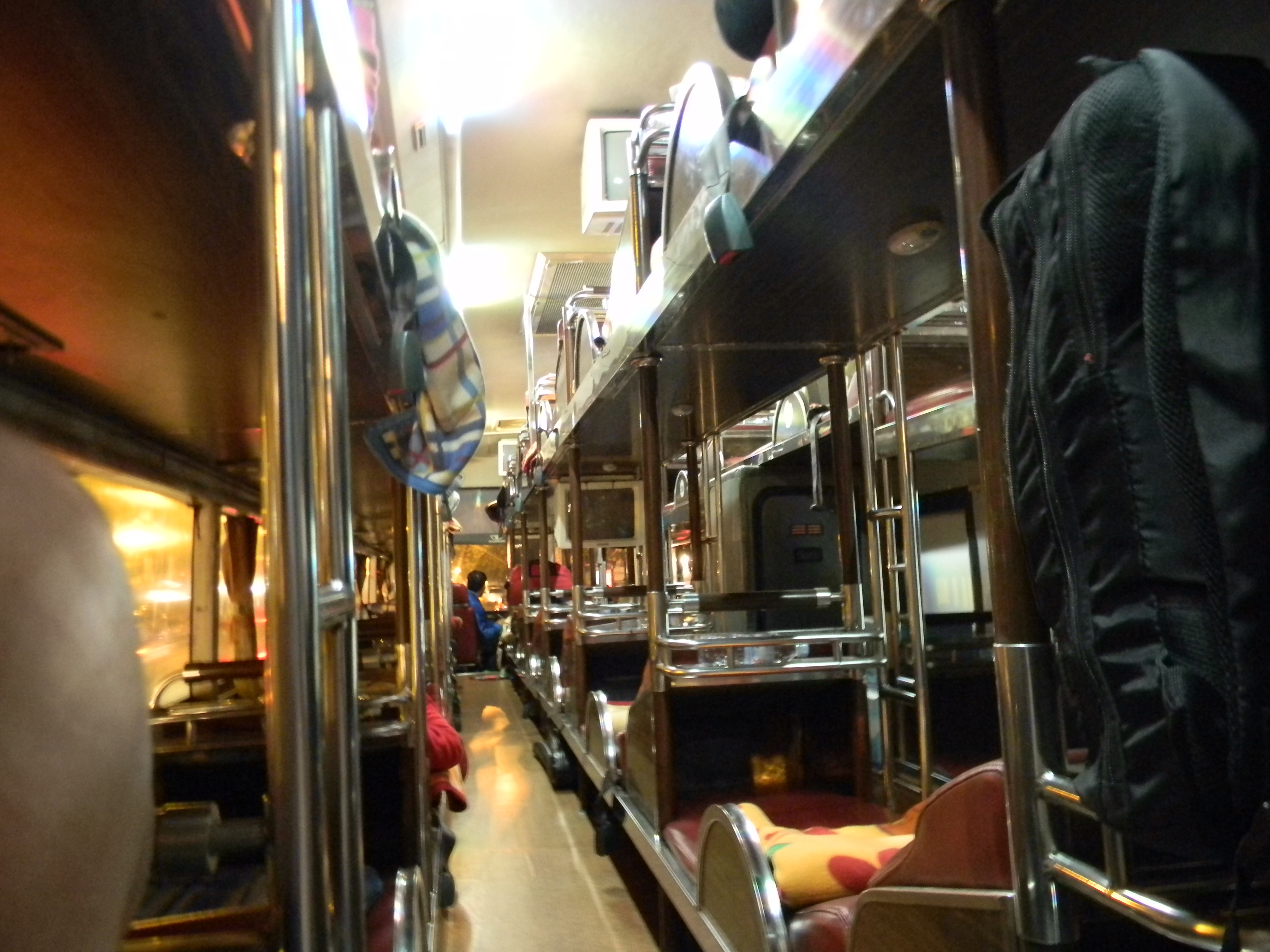
Getting there: Overnight train from Hanoi to Lào Cai (8–9h), then bus or taxi to Sapa (40min). Or direct bus 5–6h.
Trekking: The standard 1–2 day trek visits Cát Cát, Lao Chải, and Tả Van villages. For more remote trekking — Tả Phìn, Bản Hồ, or multi-day routes — hire a local guide from the Hmong community rather than a Sapa town agency.
Fansipan: Vietnam's highest peak (3,147m) is accessible by cable car (15 minutes from town) or on foot (2–3 day trek). The cable car is remarkably good engineering; the trek is more rewarding.
Weather: Sapa has distinct seasons. December–February is cold (occasionally below freezing), foggy, and sometimes dramatic. March–May brings warmer temperatures and blooming flowers. June–August is warm but wet. September–October is the best combination of warmth and clear skies.
Đà Lạt (Elevation: 1,500m)
Đà Lạt is covered in detail in its own article, but in the hill station context it stands out for being a full-sized city (population 250,000+) with exceptional food, architecture, and produce, rather than a small mountain town oriented around trekking.
Its French colonial legacy — villas, a train station, a university campus — is the most intact of any Vietnamese highland destination. The cool climate (15–24°C year-round) and surrounding farms make it Vietnam's most domestically popular highland escape.
Best for: Couples, food-focused travellers, coffee enthusiasts, those seeking cool weather without strenuous hiking.
Bà Nà Hills (Elevation: 1,500m, Da Nang Province)
Bà Nà Hills is a different kind of hill station entirely — a privately developed resort and theme park accessible by the world's longest non-stop single-track cable car (5,800m, operated by Sun Group). The destination centres on a reproduction French village, amusement rides, and the famous Golden Bridge (held up by giant stone hands).
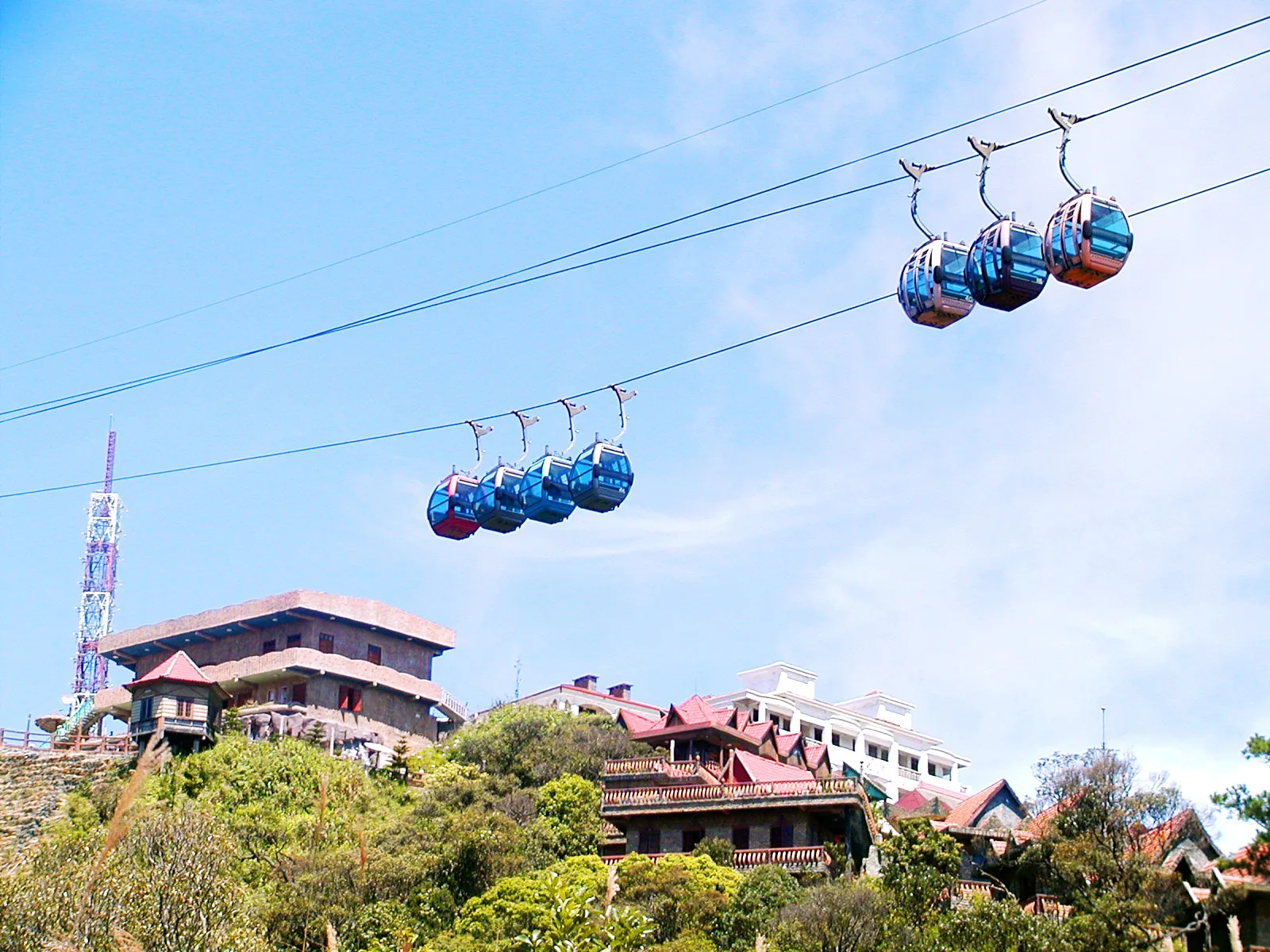
Bà Nà Hills cable car — the 20-minute ride climbs from tropical forest to a mock-French village perched above the clouds
It's explicitly a tourism product rather than a historic hill station — but it's a remarkable one. The cable car ride itself, passing through distinct vegetation zones and often emerging above the cloud layer, justifies the visit. 30km from Đà Nẵng.
Best for: Day trips from Đà Nẵng, families with children, visitors curious about Vietnam's domestic tourism aesthetic.
Tam Đảo (Elevation: 900m, Vĩnh Phúc Province)
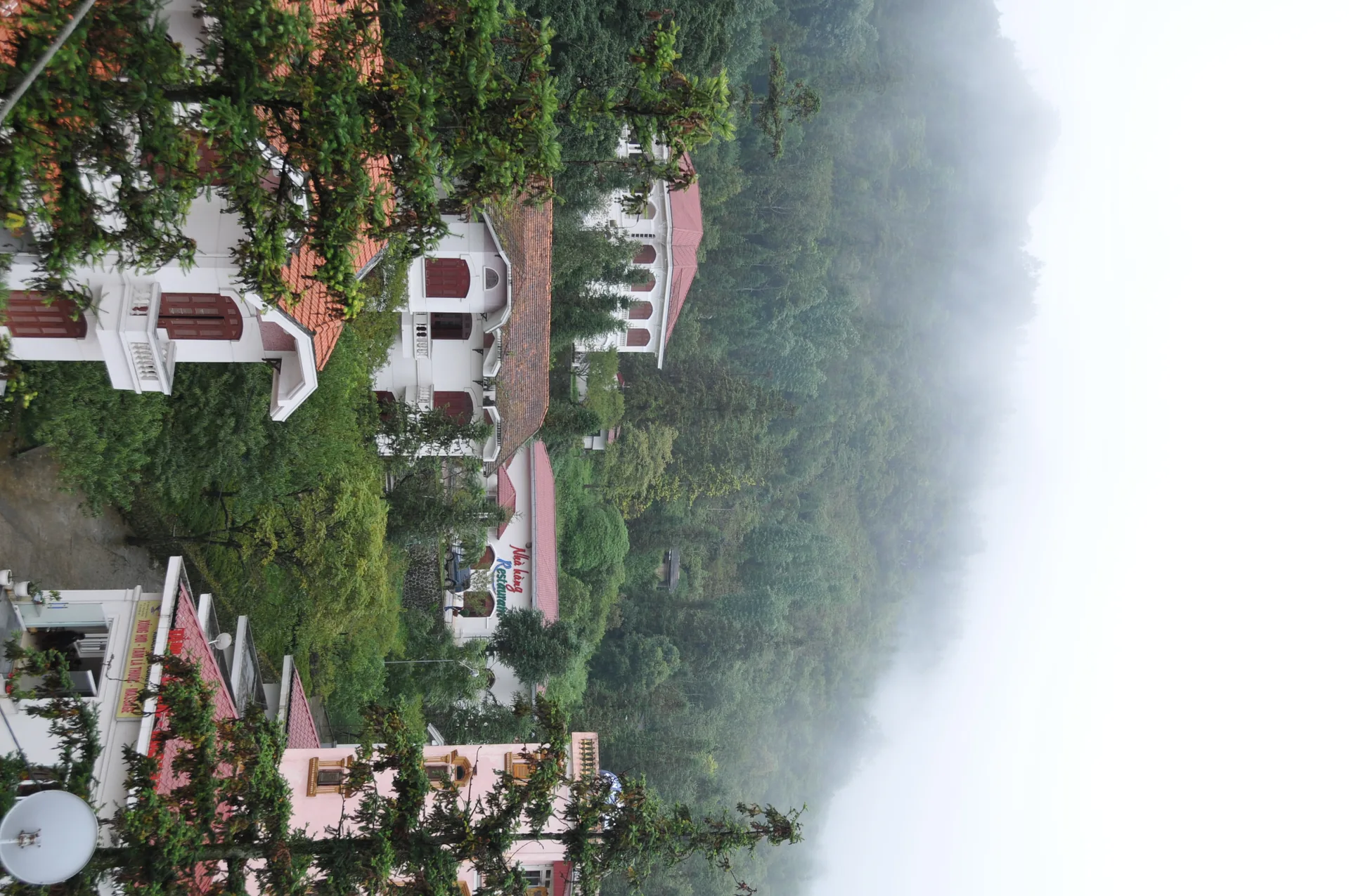
Tam Đảo is the hill station nearest to Hanoi — 85km north, 2 hours by road — making it a popular weekend retreat for the capital's residents. Three peaks (tam đảo means "three islands") rise above a small resort town of French-era villas and newer guesthouses.
The national park surrounding the town protects old-growth forest and good birdwatching. The town itself has a quiet, slightly melancholy hill station atmosphere — half the villas are shuttered, clouds drift through regularly, and the streets are nearly empty on weekdays.

The mountain terrain of northern Vietnam — Sapa, Tam Đảo, and Mộc Châu all lie within this highland zone north and west of Hanoi
Best for: Hanoi residents wanting a weekend escape, birdwatchers, those who prefer quiet over development.
Mộc Châu (Elevation: 1,050m, Sơn La Province)
Mộc Châu is a high plateau 200km west of Hanoi, known for its tea plantations, plum orchards, and the ethnic minority communities (Thái, Mường, H'Mông) that farm the plateau. It receives far fewer foreign visitors than Sapa and retains a more authentic quality.
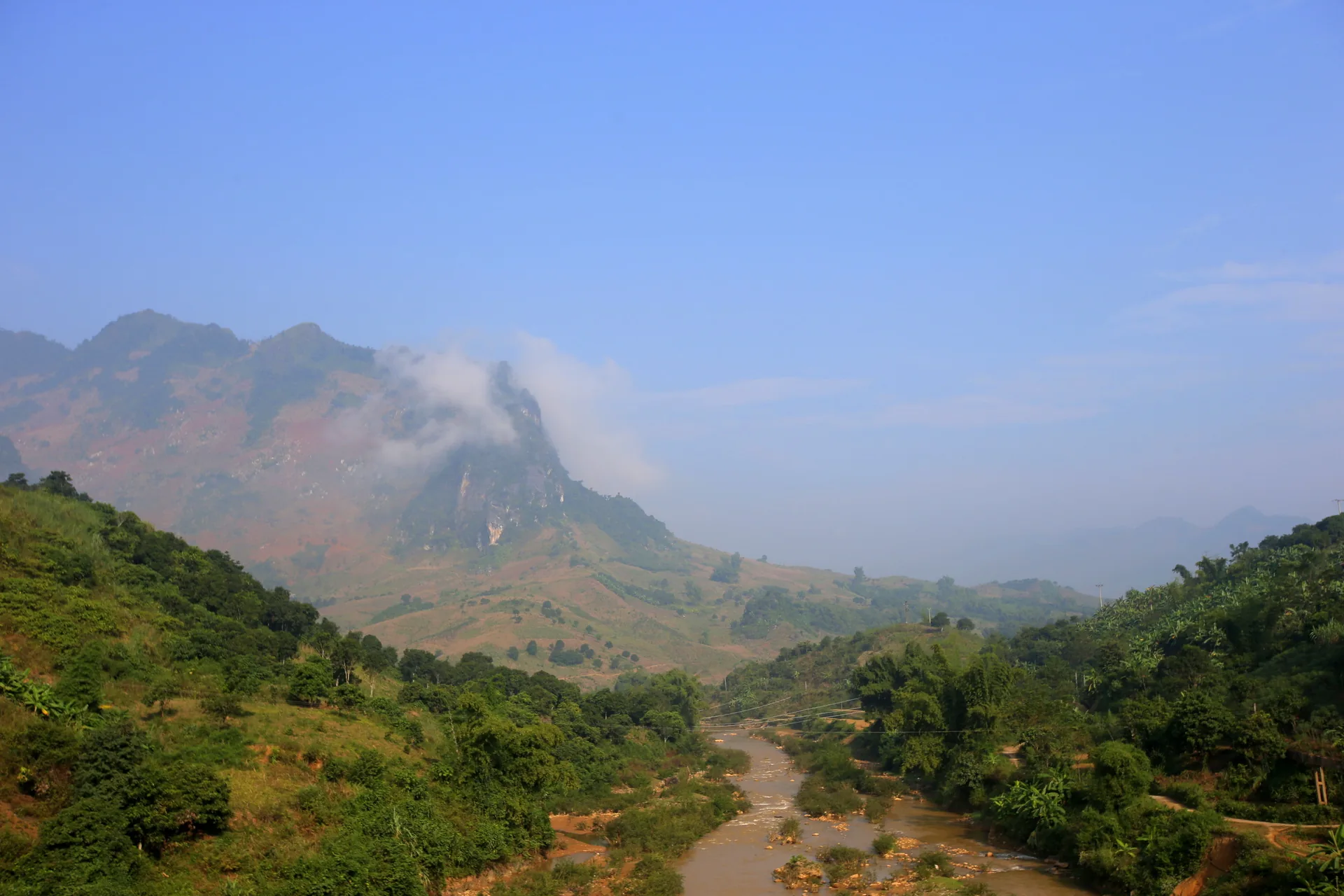
The Sơn La highlands approaching Mộc Châu — vast tea and fruit orchards spread across a high plateau that few foreign visitors reach
Best time: February (plum blossom), April–May (tea harvest), October–November (harvest festival season).
Cao Bằng and the Northeast
Cao Bằng Province is Vietnam's most remote highland region — a landscape of karst mountains, waterfalls (Bản Giốc is Vietnam's largest), and minority villages close to the Chinese border.

Cao Bằng's karst landscape — limestone pinnacles, river gorges, and minority villages in a region most foreign visitors never reach
Bản Giốc Waterfall (half on Vietnamese territory, half on Chinese) is genuinely impressive — 300m wide, multi-tiered, and framed by karst cliffs. The journey there (6h from Hanoi) passes through extraordinary highland scenery.
Bắc Hà (Elevation: 950m, Lào Cai Province)
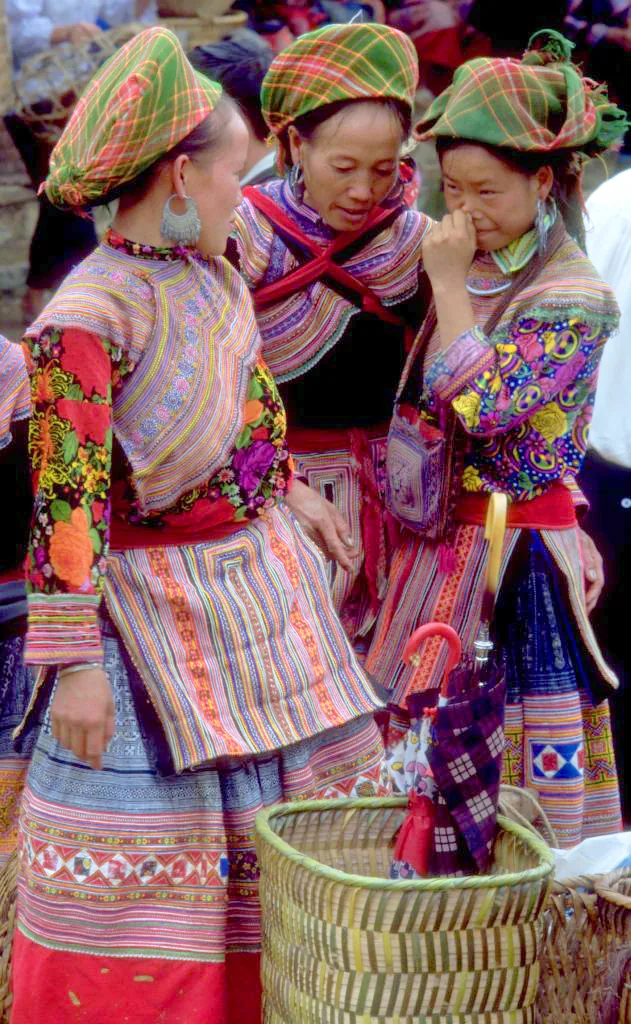
Bắc Hà sits 65km north of Lào Cai town, known primarily for its Sunday market — the most spectacular in northern Vietnam, primarily serving the Flower Hmong communities whose embroidered costumes are among the most elaborate in Southeast Asia.

Bắc Hà Sunday market — arrive early; the livestock section (8–9am) and the main market (9–11am) are both worth seeing
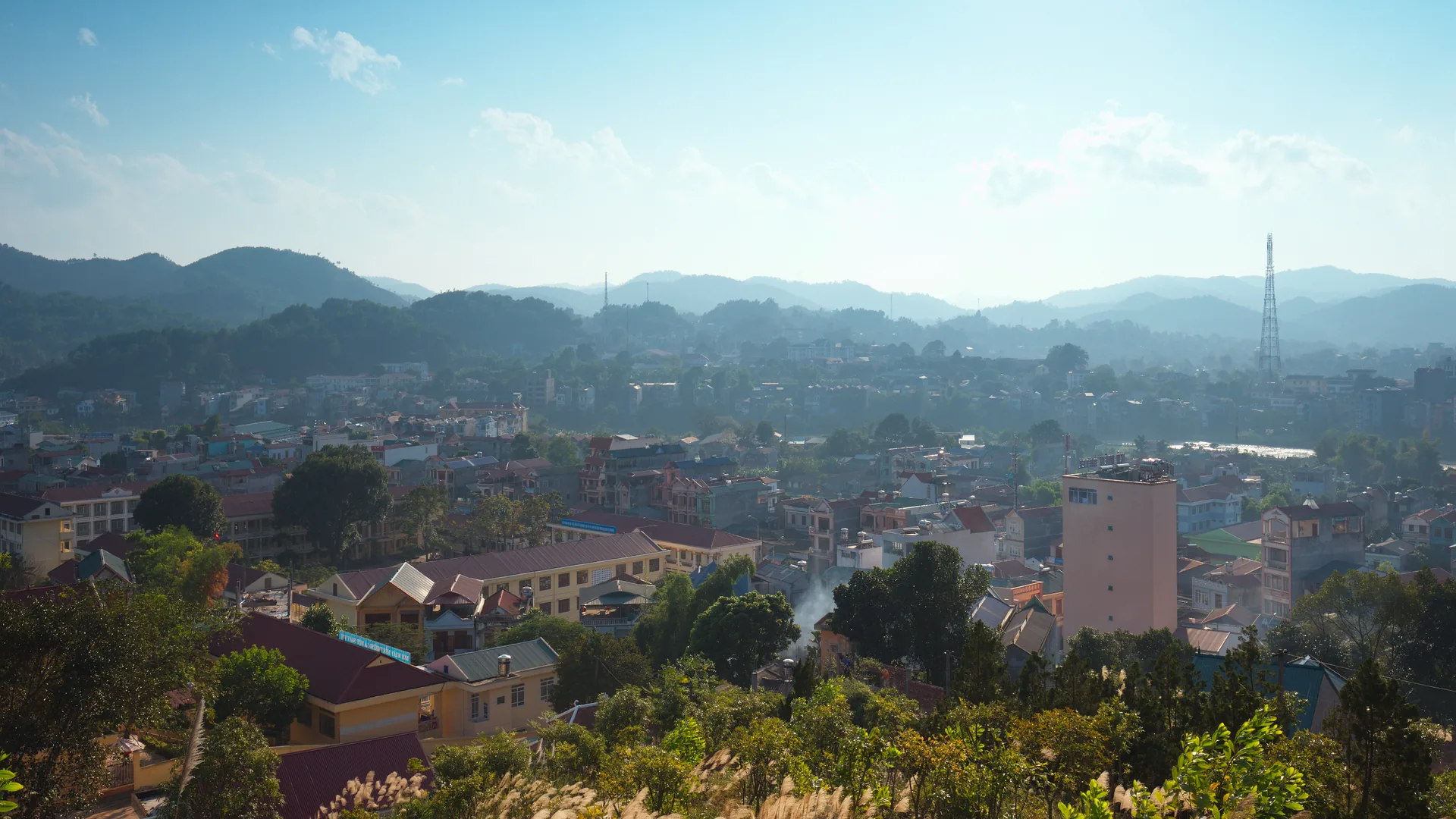
The town itself is quieter than Sapa with less tourist development, making it a good complementary stop if you're already visiting Sapa via Lào Cai.
Choosing Between Hill Stations
| Station | Best for | Avoid if |
|---|---|---|
| Sapa | Trekking, ethnic culture | Crowds bother you in peak season |
| Đà Lạt | Food, architecture, couples | You want remote wilderness |
| Bà Nà Hills | Families, day-tripping from Đà Nẵng | You dislike theme parks |
| Tam Đảo | Quiet weekend, birds | You need nightlife or restaurants |
| Mộc Châu | Tea, orchards, authenticity | You need easy transport connections |
| Bắc Hà | Sunday market, Flower Hmong | You can't visit on a Sunday |
Information notice: Prices, opening hours, and travel conditions can change. Content on EnViet is reviewed periodically but may not reflect the most current situation. Please verify important details with official or local sources before travelling or booking.
EnViet Editorial Team
The EnViet Editorial Team creates practical Vietnam travel and food guides using local knowledge, public sources, and manual editorial review. Content is reviewed before publication and updated periodically.