
Vietnam Photography Guide: Tips, Locations, and Ethics
Vietnam is one of Southeast Asia's most photogenic countries — a fact that creates both opportunity and responsibility. The landscapes, markets, and street scenes that draw photographers are also lived-in places where people work, worship, and raise families. Understanding how to photograph ethically and technically gives you better images and leaves a better impression.
Light and Timing
Vietnam's tropical latitude means golden hour (the hour after sunrise and before sunset) is brief but intense. Midday light is harsh — flat, high-contrast, and unflattering for portraiture or landscape. The best photographic days start early.
Sunrise photography: Most of Vietnam's most-photographed landscapes are best at sunrise: the rice terraces at Mù Cang Chải and Sapa, the mist over Xuân Hương Lake in Đà Lạt, the fishing boats departing at dawn in coastal villages, and Hoàn Kiếm Lake in Hanoi before the city wakes.
Blue hour: The 20–30 minutes before sunrise and after sunset produce the softest, most even light. Hội An's lanterns look best in the blue hour, when the sky is deep blue rather than black.

Early morning light in Vietnam — arrive at your location before sunrise and the landscape rewards patience with a quality of light unavailable at any other time
Top Photography Locations
Hà Giang and Mù Cang Chải
The rice terrace landscapes of the northwest — particularly Mù Cang Chải in Yên Bái Province and the Đồng Văn Karst Plateau in Hà Giang — are among the most extraordinary in Southeast Asia. The best time for terraces is late September to mid-October (harvest season, golden paddies) or May–June (planting, vivid green water-filled paddies).

Terraced rice paddies in northern Vietnam — both the harvest season (Sep–Oct) and planting season (May–Jun) offer extraordinary colour
Huế at Blue Hour
Huế's citadel walls, Tràng Tiền Bridge, and the Thiên Mụ Pagoda photograph best in the 20 minutes around sunset when the sky is a deep blue and the buildings are illuminated. Hire a xe ôm (motorbike taxi) and ask the driver to wait at each location.

Huế at twilight — the imperial city's ochre walls and river reflections are best captured in the brief blue hour after sunset
Ninh Bình
The flooded karst landscape around Tràng An and Tam Cốc is best photographed from the boats themselves — low-angle shots across still water with limestone peaks behind. Early morning before tour groups arrive is essential. A light mist sitting in the valleys transforms the scene.
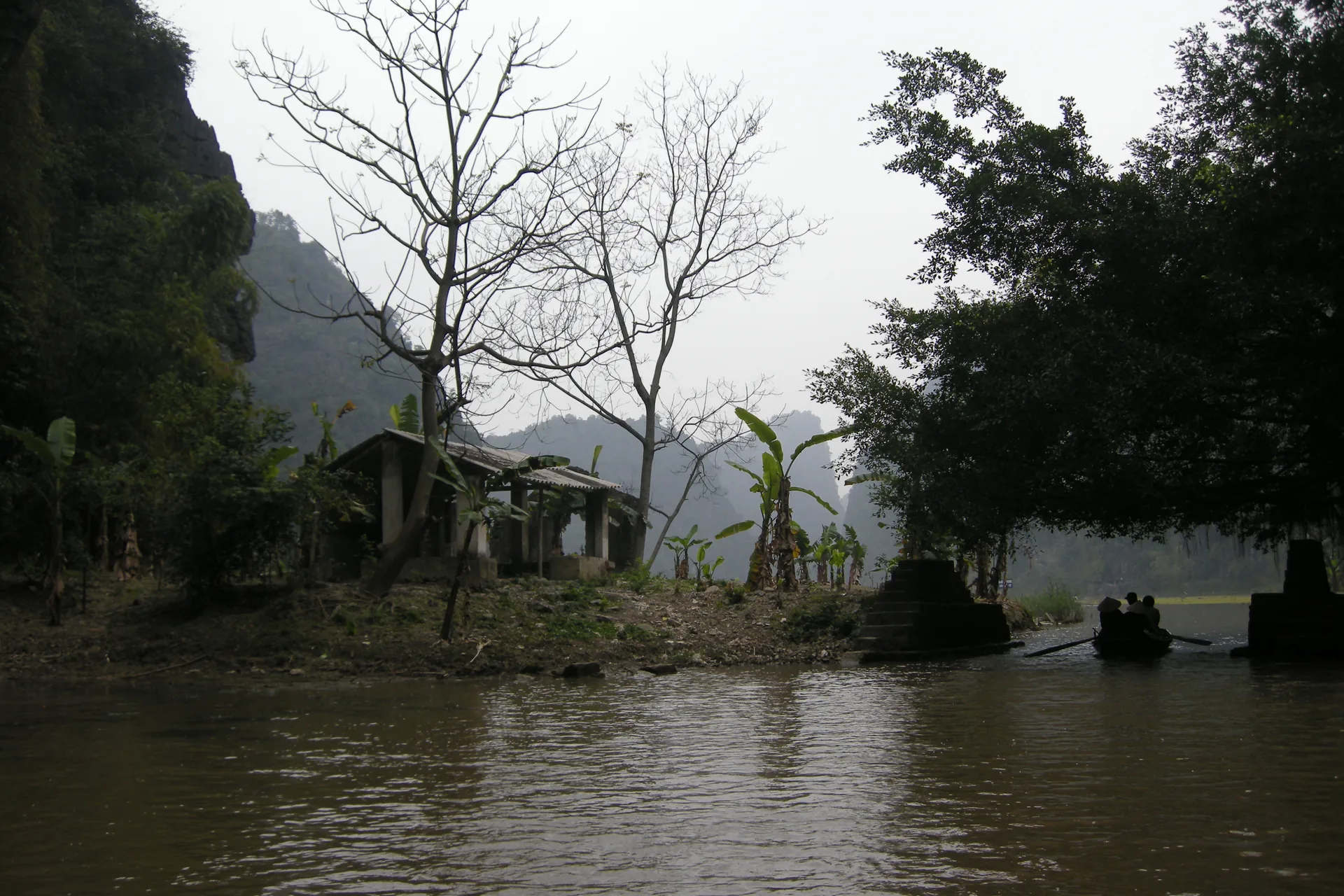
Ninh Bình at dawn — get on the water before 7am for reflections and low-angle light before tour boat traffic starts
Hội An at Full Moon
The monthly full moon lantern festival transforms the Ancient Town. Shoot from the Japanese Bridge and along the riverside before 9pm when crowds thin. A tripod is useful for the longer exposures needed to capture lantern glow without blowing out highlights.
Street and Portrait Photography
Ask First
Photographing people without permission is disrespectful regardless of setting or cultural context. Most Vietnamese people are happy to be photographed — particularly market vendors, farmers, and people in festive dress — but asking (even with a gesture toward the camera and a questioning expression) makes a significant difference.

Vietnam street life — approach photographically as you would any public space: with awareness of the people around you and a willingness to engage rather than just observe
In some areas — particularly around Sapa and Hà Giang — ethnic minority communities have become fatigued by being treated as photographic subjects. Pay for portraits if asked; leave your camera down if someone clearly doesn't want to be photographed.
Markets
Morning markets (5–7am) are exceptional for photography: low, warm light, genuine activity (not staged for tourists), and the full range of Vietnamese daily life condensed into a few hundred metres. Hanoi's Long Biên Market, Hội An's Central Market, and Đà Lạt's morning market are among the finest.
Practical Notes
Drones: Drone operation requires a permit in Vietnam and is prohibited over many sensitive areas including military installations, government buildings, and some heritage sites. Enforcement is inconsistent but the risk of confiscation is real. Research current regulations before bringing a drone.
Memory cards and storage: Memory cards are available in major cities but can be counterfeit. Bring enough from home. Cloud backup is available with good wifi in hotels and cafés — use it.
Humidity: Vietnam's humidity (especially in the south May–October) affects camera equipment. Silica gel packets in your bag help. Allow equipment to acclimatise when moving between air-conditioned interiors and humid exteriors to prevent condensation.
Sensor cleaning: Dust is constant in dry season Vietnam. A sensor blower and cleaning swabs are worth packing if shooting for more than a week.
Information notice: Prices, opening hours, and travel conditions can change. Content on EnViet is reviewed periodically but may not reflect the most current situation. Please verify important details with official or local sources before travelling or booking.
EnViet Editorial Team
The EnViet Editorial Team creates practical Vietnam travel and food guides using local knowledge, public sources, and manual editorial review. Content is reviewed before publication and updated periodically.