
Tet Holiday in Vietnam: What to Expect and How to Prepare
Tết Nguyên Đán — the Vietnamese Lunar New Year — is the country's most important holiday by a considerable margin. Everything shuts. Streets empty. Families reconvene. Then, on the stroke of midnight, every city in Vietnam erupts simultaneously with fireworks that last for 15 minutes and leave the air smelling of smoke until dawn.
For travellers, Tết is simultaneously one of the most fascinating times to be in Vietnam and one of the most practically inconvenient. Understanding what actually happens — and when — makes the difference between an unforgettable experience and a frustrating one.
What Is Tết?
Tết marks the first day of the lunar calendar's first month. The exact date shifts each year on the Gregorian calendar — usually falling between late January and mid-February. The holiday lasts officially for three days, but the country slows down for at least a week before and after.

Tết — the single most important event in the Vietnamese calendar, combining family reunion, ancestor worship, and the hope of good fortune
The Week Before Tết
The week before Tết (the "Tết market" period) is one of the best times for travellers to observe Vietnamese culture at its most vivid. Flower markets open across every city, selling peach blossoms (hoa đào) in the north and yellow apricot blossoms (hoa mai) in the south. Kumquat trees loaded with fruit appear on every pavement.

The Tết period transforms Vietnamese towns with lights, flowers, and the smell of incense on every corner
Families clean their houses, visit ancestors' graves, and cook Tết-specific foods. The most important preparation dish is bánh chưng — square glutinous rice cakes wrapped in banana leaves with pork and mung bean filling, boiled for 12 hours over an open fire. Making bánh chưng as a family is considered one of the core rituals of Tết.
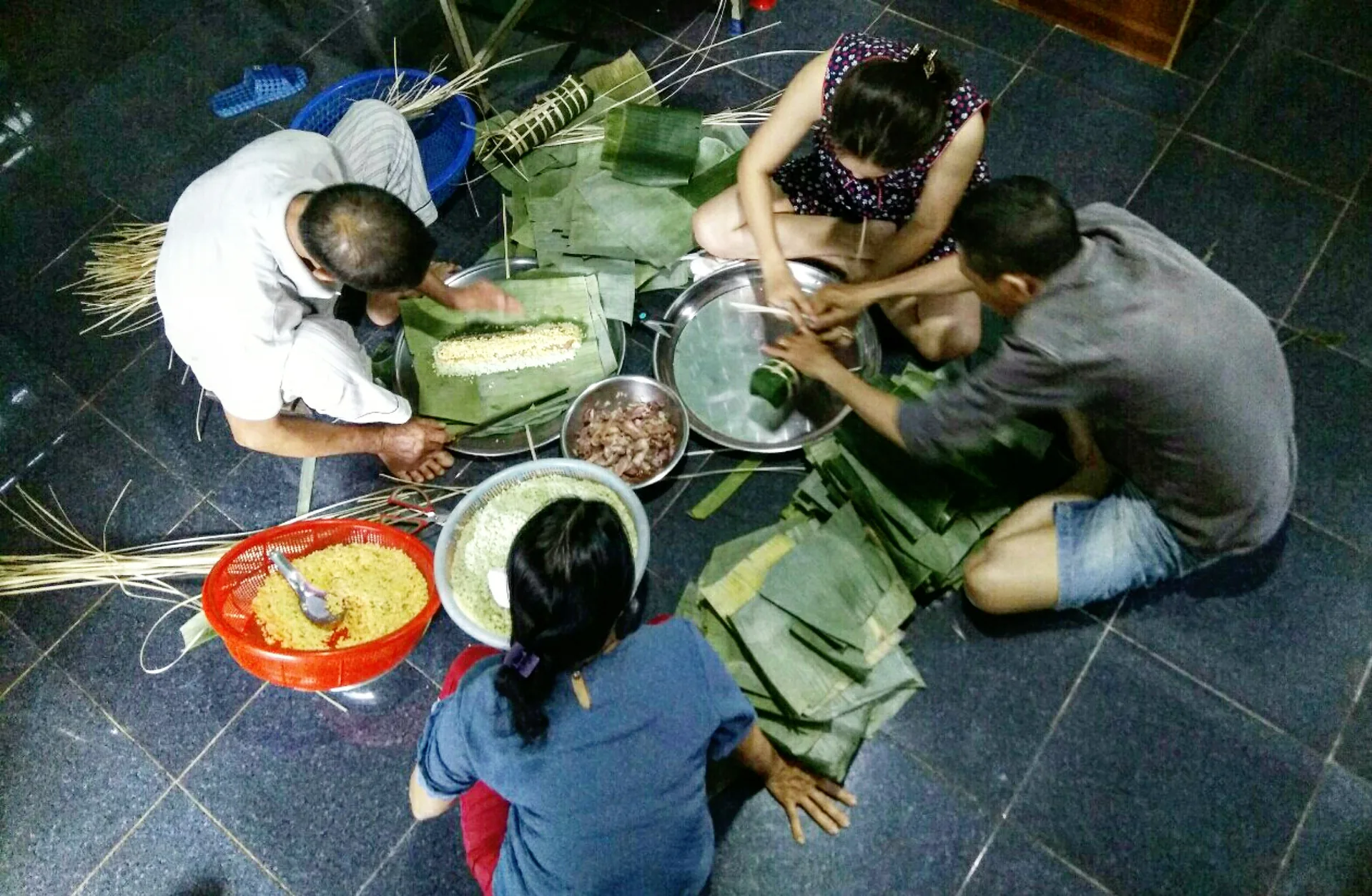
Bánh chưng — making these as a family on the night before Tết is as central to the holiday as the midnight fireworks
Giao Thừa: New Year's Eve
The transition moment — giao thừa — happens at midnight. Cities that were quiet for two days suddenly burst: fireworks, incense smoke, motorbikes circling the central lake in Hanoi, families streaming to temples and pagodas.
In Hanoi, the area around Hoàn Kiếm Lake fills with tens of thousands of people. In Saigon, the riverfront and Nguyễn Huệ walking street become the focal point. Dragon and lion dances appear outside businesses and in temple courtyards.

Dragon and lion dance troupes move through the streets during the first days of Tết, visiting businesses and temples
The First Days of Tết
The first morning of Tết is one of the quietest in Vietnam — almost everything is closed, streets are empty, and families are together at home. Visits to temples for incense and prayer are the main outdoor activity. Older relatives give lì xì (red envelopes with lucky money) to children and unmarried younger family members.
Temple visits on the first morning of Tết — the smell of incense is overwhelming and deeply festive
The first visitor to a house on New Year's morning is considered significant — Vietnamese families are careful about who "opens their house" (xông nhà) because the first visitor's fortune is believed to influence the household's year. Travellers are sometimes explicitly invited to be first visitors, which is a genuine honour.
Tết for Travellers: The Practical Reality
What's open: Almost nothing, for the first 2–3 days. Convenience stores (Circle K, Vinmart), international hotel restaurants, and tourist-facing businesses in Hội An, Đà Lạt, and Sa Pa tend to stay open. Local restaurants, markets, and transport links largely close.
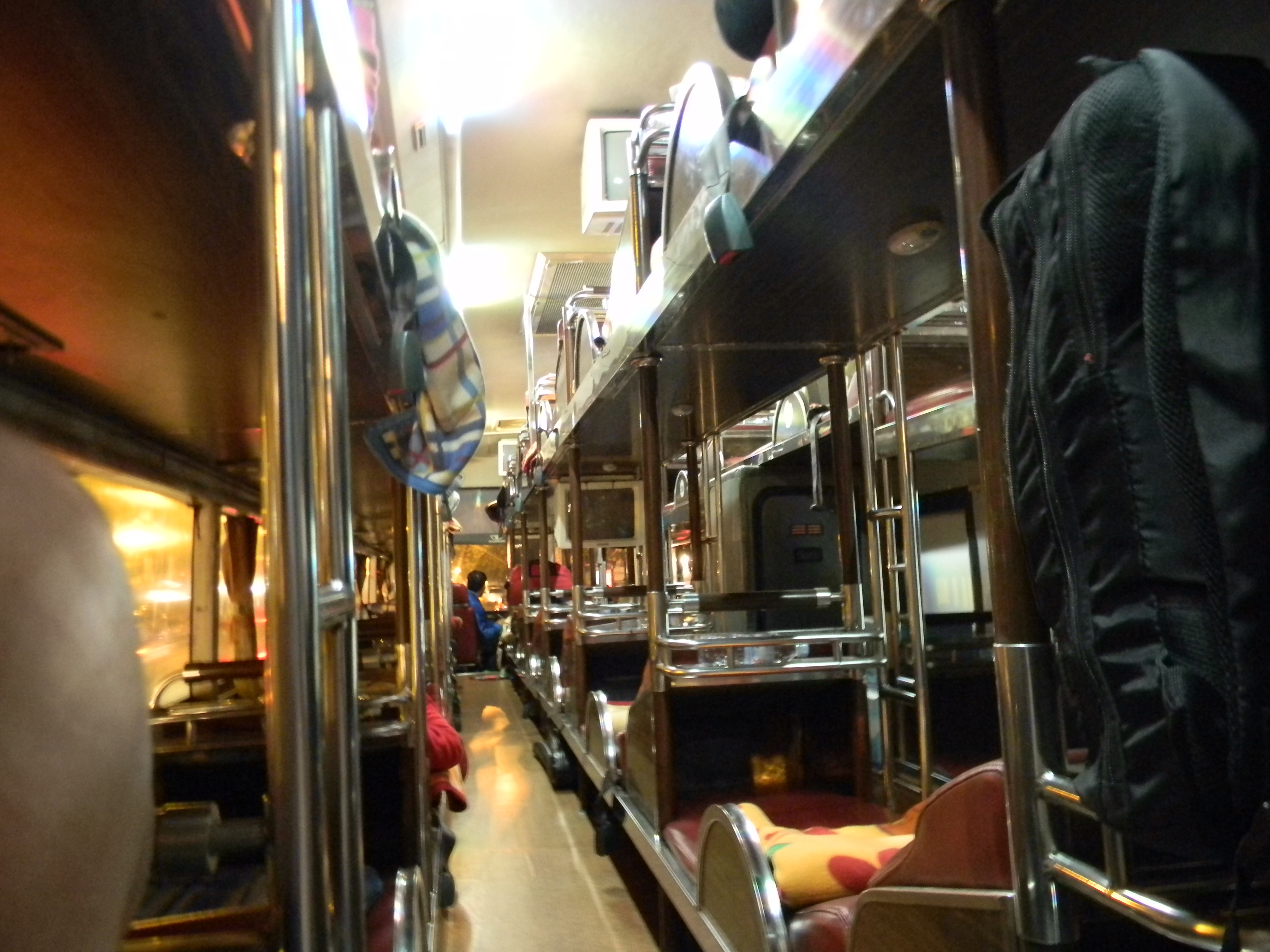
What's available: Flights and trains are packed 7–10 days before and after Tết; book months in advance or pay premium prices. Bus services thin dramatically.
Street life: The empty-city atmosphere on Day 1 of Tết is itself worth experiencing. Hanoi's Old Quarter with no motorbikes is a genuinely surreal sight.

Hanoi's Old Quarter during Tết — usually gridlocked, it empties almost entirely for the first two days of the holiday
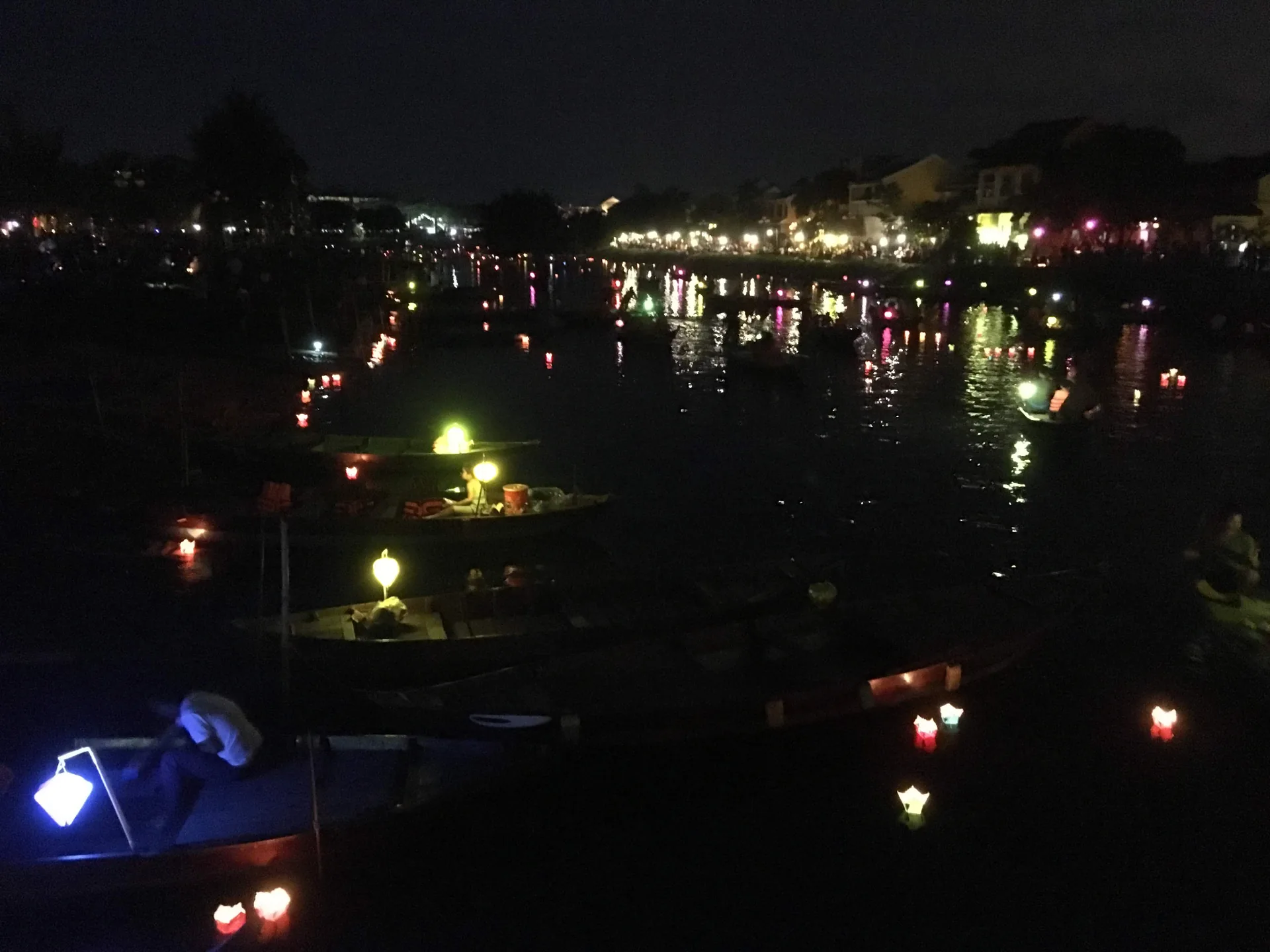
Hội An is a particular favourite for Tết because the Ancient Town stays beautifully decorated and several tourist restaurants remain open. The lantern festival that falls on the 15th day of the first lunar month (the full moon after Tết) is spectacular.
Traditional Dress and Customs
Tết is when Áo dài — Vietnam's traditional tunic-and-trouser dress — returns to everyday wear. Women and girls across the country wear áo dài to temple visits and family gatherings. Seeing this in a city like Huế or Hanoi, where historical buildings form the backdrop, is one of Vietnam's most visually striking experiences.

Áo dài during Tết — the traditional dress is worn to temple visits, family gatherings, and photo sessions at landmark sites
Tết Dates (Coming Years)
| Year | Tết Date |
|---|---|
| 2025 | 29 January |
| 2026 | 17 February |
| 2027 | 6 February |
| 2028 | 26 January |
Plan bookings for transport and accommodation at least 2–3 months in advance for dates within 2 weeks either side of Tết.
Information notice: Prices, opening hours, and travel conditions can change. Content on EnViet is reviewed periodically but may not reflect the most current situation. Please verify important details with official or local sources before travelling or booking.
EnViet Editorial Team
The EnViet Editorial Team creates practical Vietnam travel and food guides using local knowledge, public sources, and manual editorial review. Content is reviewed before publication and updated periodically.