Vietnam by Train: The Reunification Express Guide
The Reunification Express (Tàu Thống Nhất) runs 1,726 km between Hanoi and Ho Chi Minh City — the longest continuous rail journey in Vietnam. The full trip takes 30–35 hours depending on the train. Most travellers take it in segments, using trains to connect destinations rather than riding the whole route at once.
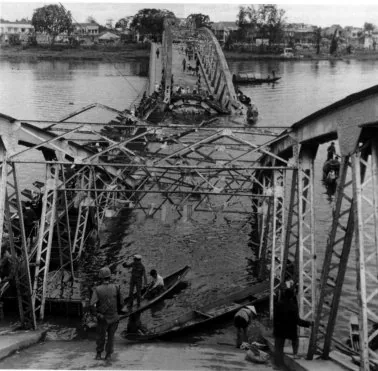
The line was originally built by the French in the early 20th century and completed in 1936. After being severed during the American War, it was reconnected in 1976 — hence the name. Today it's one of the most scenic rail routes in Southeast Asia, particularly the coastal stretch between Đà Nẵng and Huế over the Hải Vân Pass.

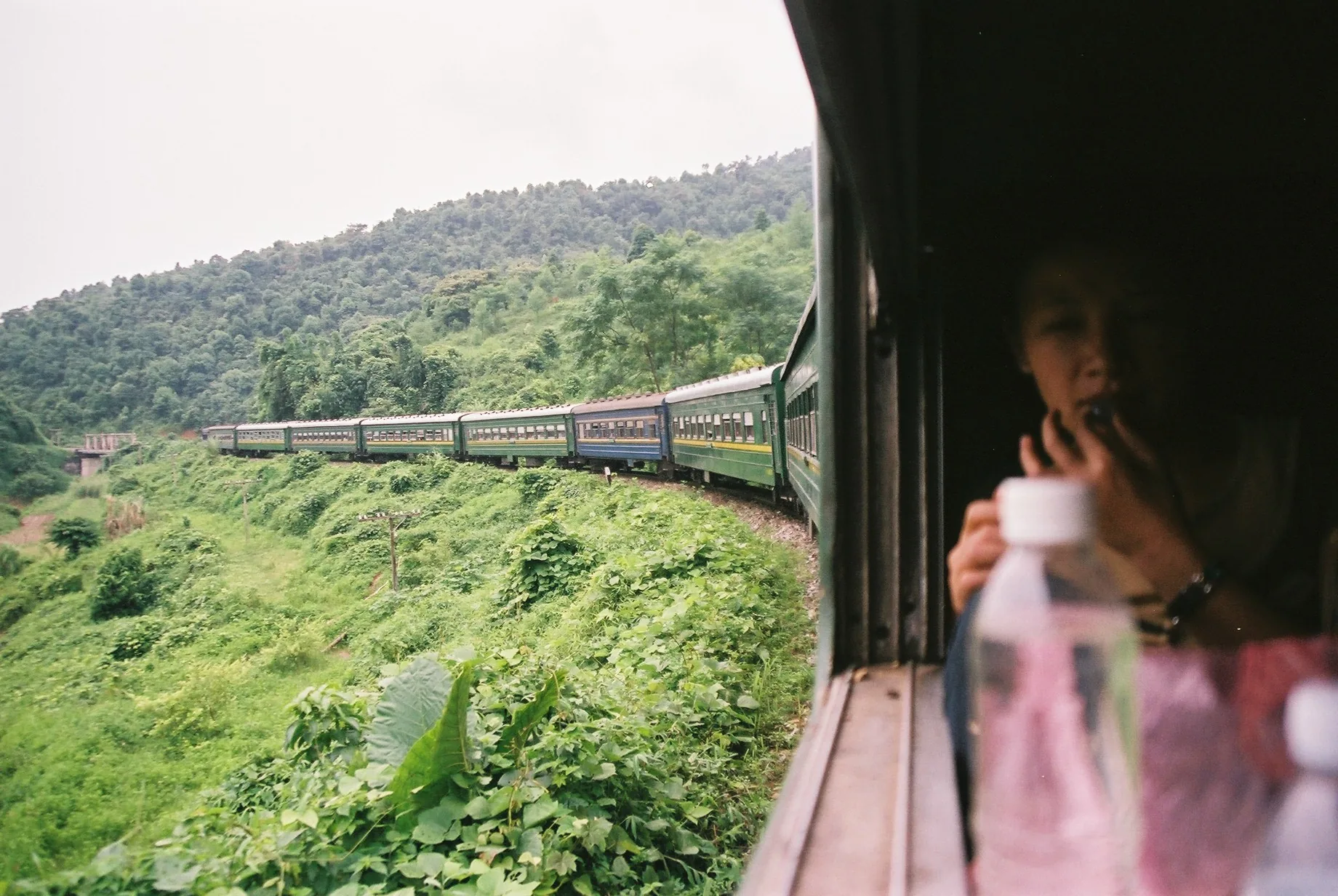
The Reunification Express — slow by international standards, magnificent by scenic ones
The Route: North to South
The full Hanoi–Saigon route passes through the following major stops:
Hanoi → Ninh Bình (2h): The first stretch cuts through the Red River Delta flatlands.
Ninh Bình → Đồng Hới (5–6h): Rice paddies give way to the narrow coastal plain of central Vietnam.
Đồng Hới → Đà Nẵng (4h): Passes near Phong Nha. The Hải Vân tunnel bypasses the pass on most trains; older or slower services cross the pass itself — opt for these if you can.
Đà Nẵng → Huế (2.5h): The most spectacular section. The train rounds the Hải Vân Pass headland with the South China Sea directly below, climbing to 100m before descending to Lăng Cô lagoon.
Huế → Nha Trang (8–10h): Long but comfortable overnight section through the central highlands' eastern edge.
Nha Trang → Ho Chi Minh City (8h): Flat coastal plain and delta approach into Saigon.
Train Classes
Vietnam Railways runs several train categories on the Hanoi–Saigon line. The SE (Express) trains are fastest and most comfortable; the TN and local trains are slower but cheaper.

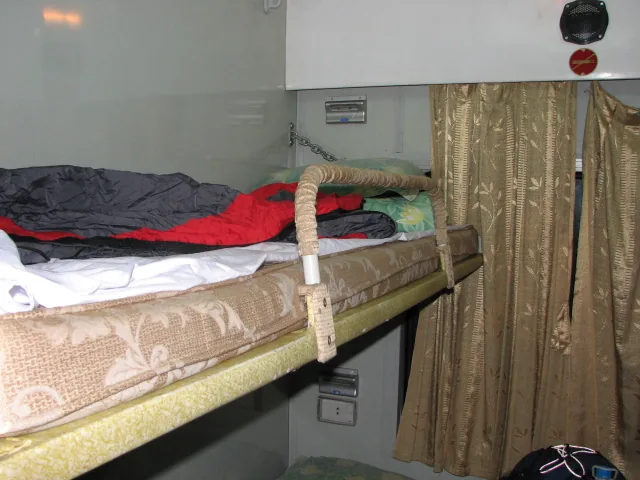
A 4-berth soft sleeper compartment — the gold standard for overnight train travel in Vietnam
Seat classes (short trips under 4h):
- Hard seat (ghế cứng): wooden or padded, cheapest, fine for 2–3h
- Soft seat (ghế mềm): padded, air-conditioned, recommended for 3–5h
Berth classes (overnight trips):
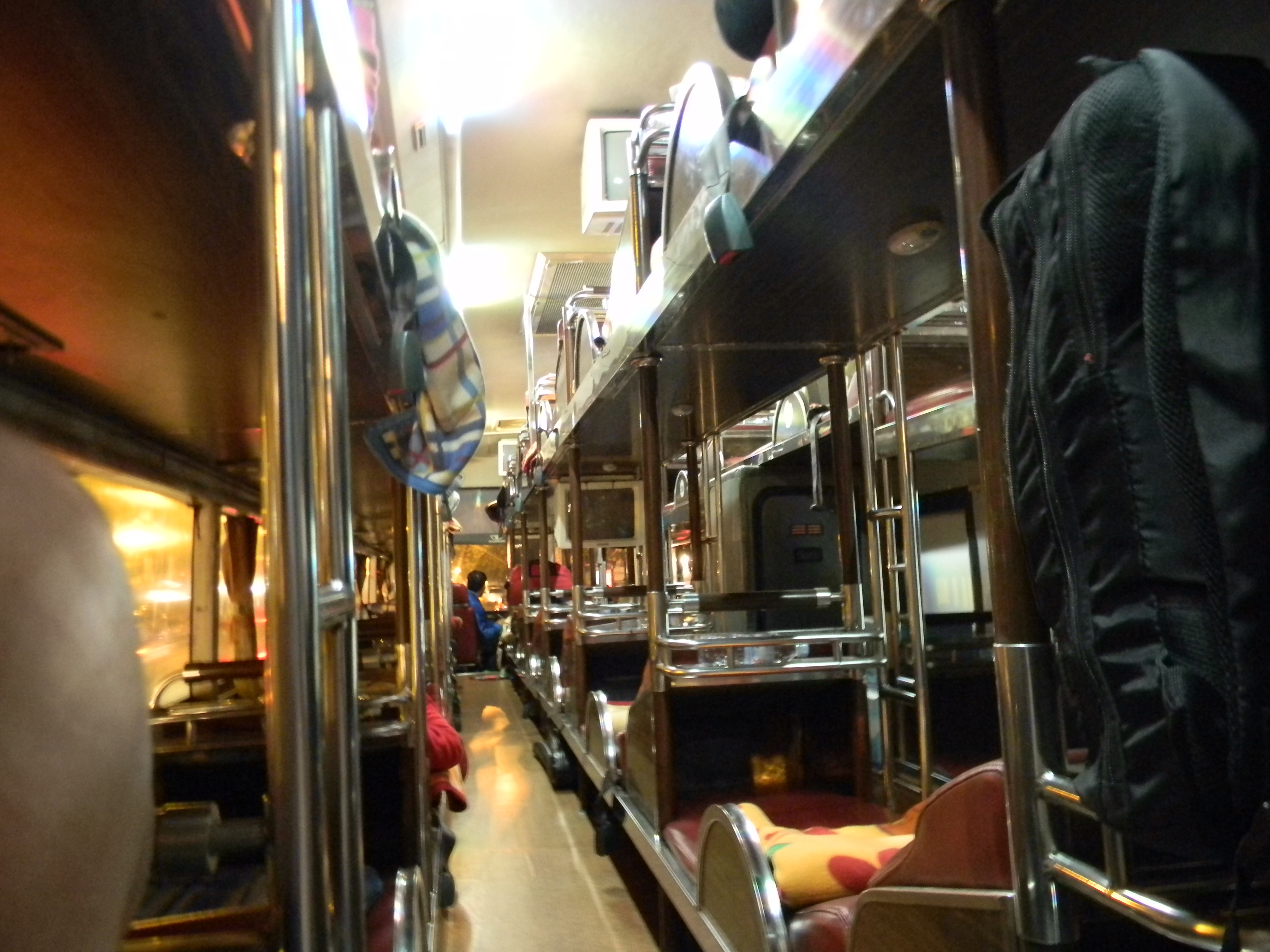
- Hard berth (nằm cứng): 6 berths per open bay, no door, cheapest overnight option
- Soft berth (nằm mềm): 4 berths per closed cabin, air-conditioned, recommended
- VIP 2-berth cabin: available on some SE trains, equivalent to a budget hotel room
The Hải Vân Pass Segment
The 20km stretch between Đà Nẵng and Lăng Cô is unanimously considered the finest train ride in Vietnam. The line hugs the cliff face of the Hải Vân Pass — the mountain that divides northern and southern climates — with the sea on one side and jungle on the other.

Huế seen from the Perfume River — the most atmospheric city on the entire Reunification Express route
Most modern SE trains now use the Hải Vân tunnel, bypassing the pass. To experience the cliff section, book a slower TN train or check schedules specifically for trains routed via Hải Vân (not the tunnel). The journey adds 30–40 minutes but is worth every one of them.
Booking
Tickets can be booked through:
- Vietnam Railways website (dsvn.vn) — official, accepts international cards
- Baolau.com — English-language booking aggregator, small service fee
- 12go.asia — similar to Baolau, slightly higher fees
- Directly at stations — cash only, can be done in person
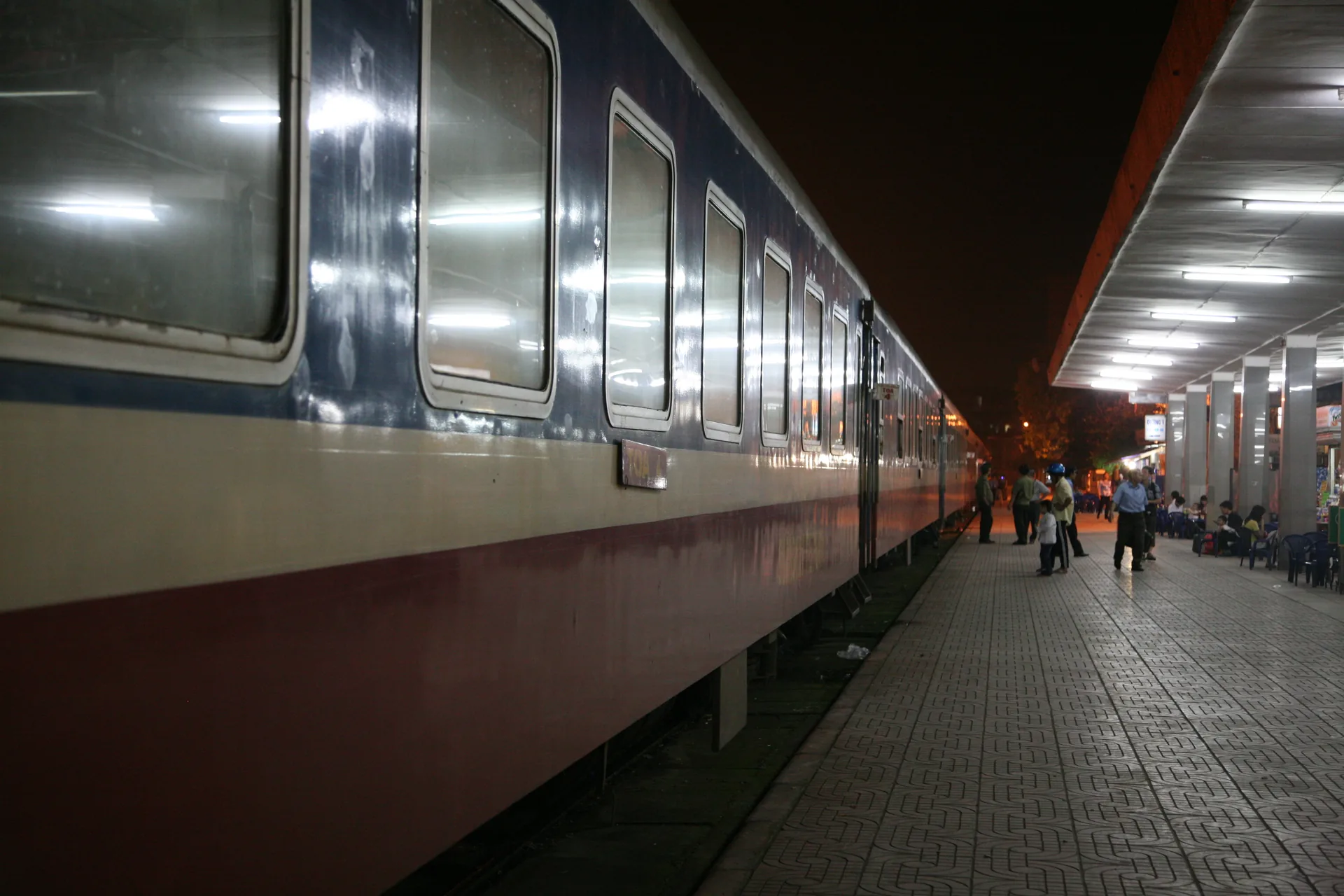
Hanoi's Ga Hà Nội — the northern terminus, an elegant French colonial building that predates the railway line itself
Book 2–4 weeks ahead during high season (July–August, Tết period). For the Đà Nẵng–Huế segment specifically, same-week booking is usually fine as many trains cover this route.
Best Segments for Travellers
| Segment | Duration | Why Take It |
|---|---|---|
| Đà Nẵng → Huế | 2.5h | Hải Vân Pass scenery |
| Hanoi → Sapa (via Lào Cai) | 8h overnight | Sapa gateway, hill scenery |
| Nha Trang → Saigon | 8h | Comfortable overnight, flat |
| Huế → Đồng Hới | 2.5h | Connects Phong Nha region |
Practical Tips
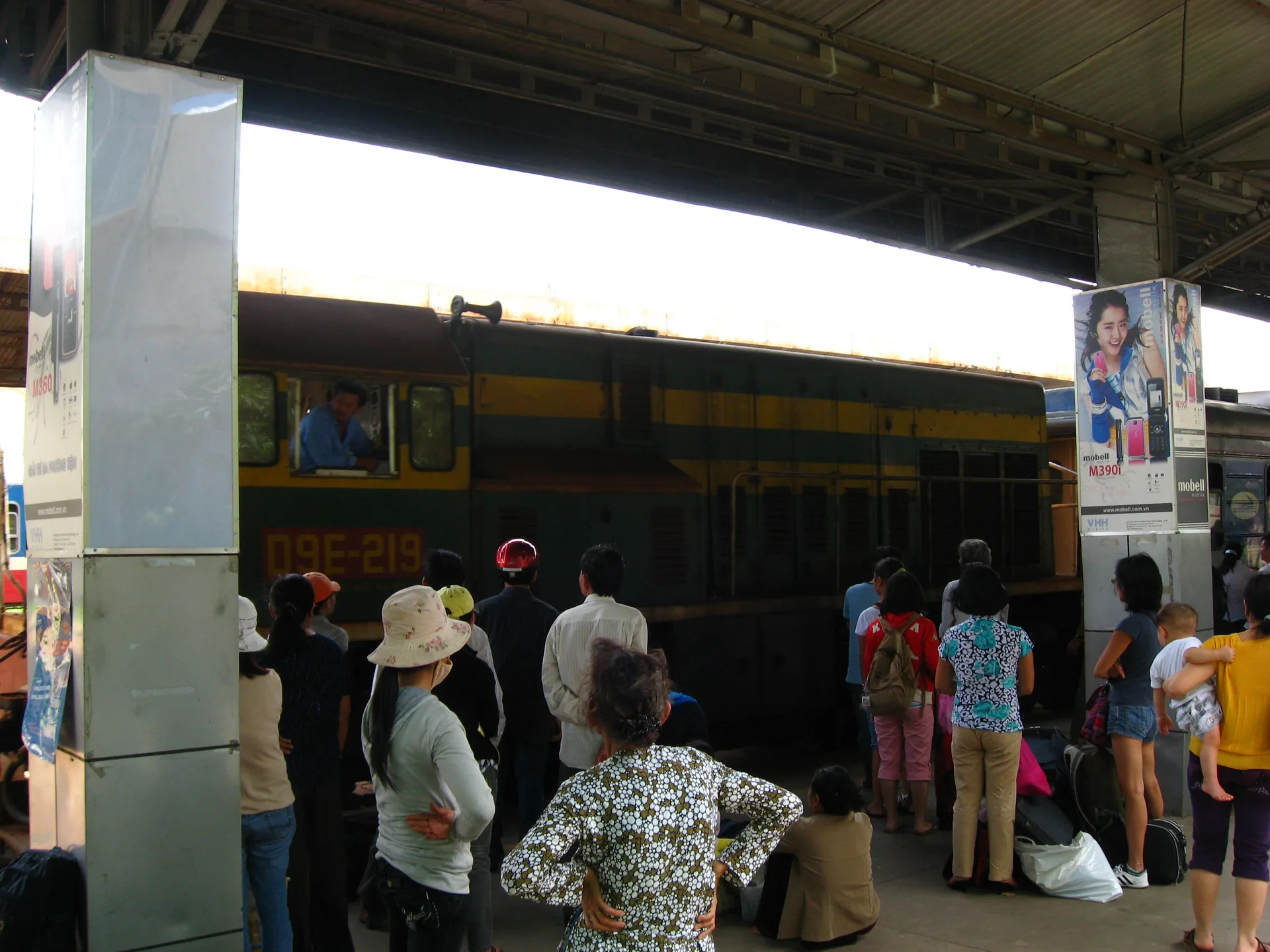
Saigon Station (Ga Sài Gòn) — the southern terminus, a manageable taxi or Grab ride from Bến Thành Market
- Bring snacks for long journeys — train food is available but limited
- The dining car on SE trains serves decent rice dishes and instant noodles
- Power outlets exist in soft berth cabins; hard berths may not have them
- Toilets are squat-style on most trains; bring your own paper
- Luggage goes overhead or under the bottom berth — no size restriction but bring padlocks for bags in open hard berth bays
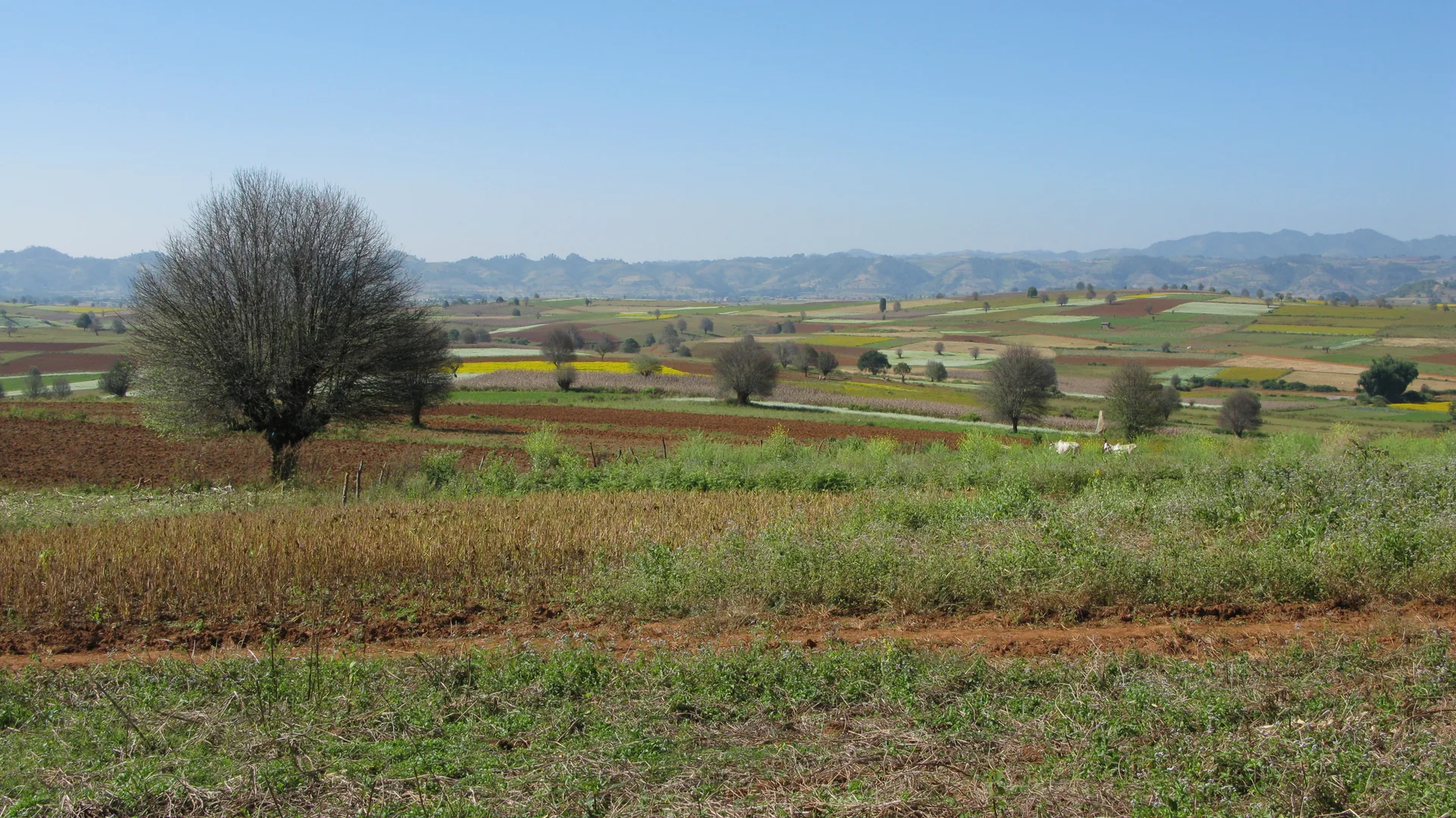
The view from the train window across the central Vietnamese lowlands — flat, green, and punctuated by water buffalo
The train in Vietnam is not the fastest option — flights are cheaper on many routes, buses faster on some. But the train offers something flights cannot: the country at ground level, moving past at the pace you can actually see it.
Information notice: Prices, opening hours, and travel conditions can change. Content on EnViet is reviewed periodically but may not reflect the most current situation. Please verify important details with official or local sources before travelling or booking.
EnViet Editorial Team
The EnViet Editorial Team creates practical Vietnam travel and food guides using local knowledge, public sources, and manual editorial review. Content is reviewed before publication and updated periodically.